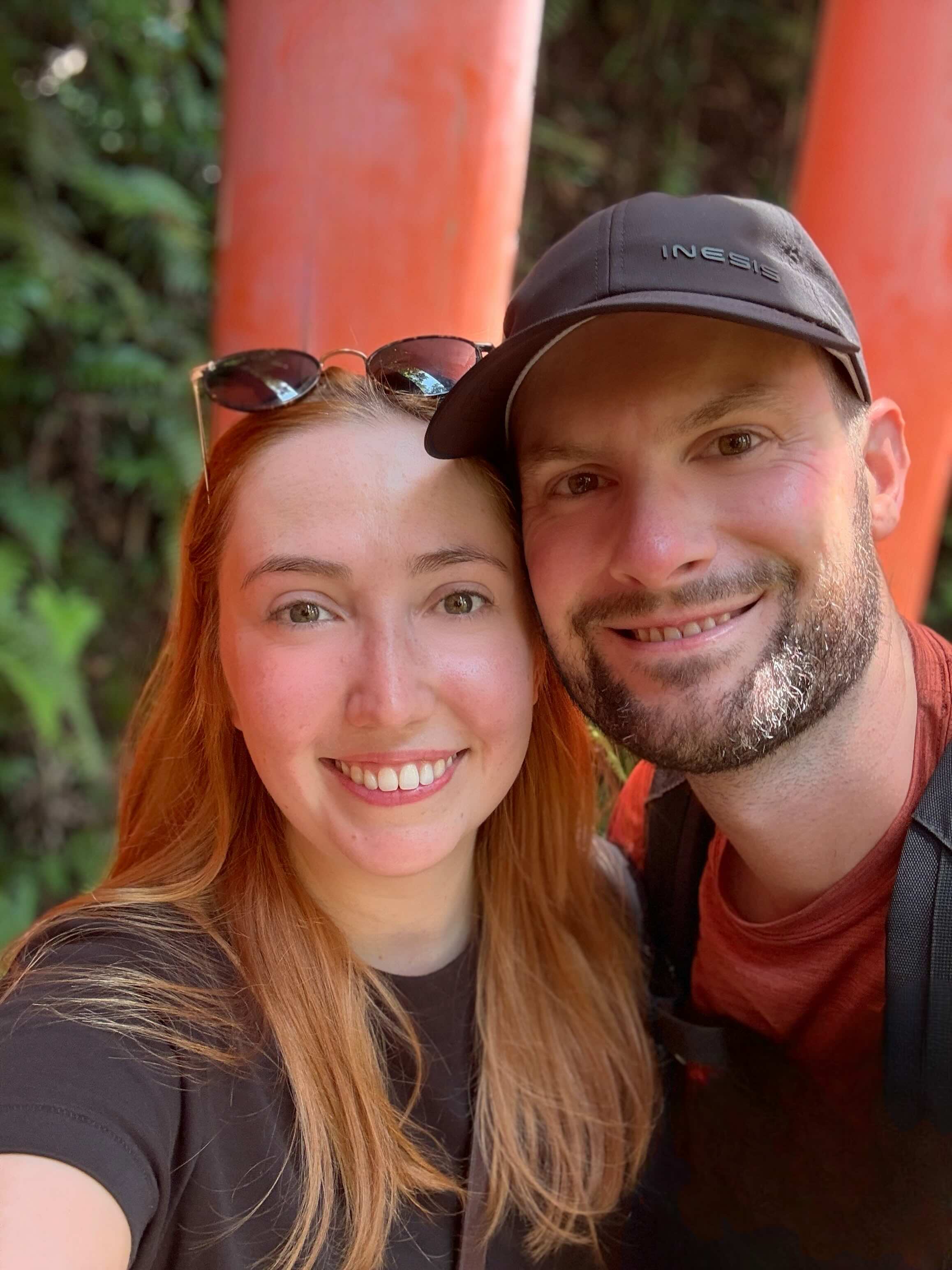
Chongqing is one of the world's great megacities, and most Western travellers have never heard of it. This travel guide covers everything you need: how to get around a vertical city of 34 million people, what to eat, and the experiences you won't find in Beijing or Shanghai. A metro that runs through a residential building, a Saturday night drone show over the Yangtze River, and the birthplace of mala hotpot.
We've visited twice. Both times were disorienting in the best possible way. Chongqing is carved into mountain cliffs, connected by sky bridges and cable cars, and lit up at night in ways that feel more like a sci-fi film set than a real place. This guide covers the highlights and how to actually pull them off.
For apps, eSIMs, and payment setup, see our China Travel Essentials guide.
Yes, even if it's a bit out of the way.
The city's three main claims to fame: its extraordinary vertical topography (streets become staircases, buildings connect via sky bridges, the metro runs through apartment blocks), its status as the birthplace of mala hotpot, and its history as the wartime capital of China during the Second Sino-Japanese War. These aren't niche interests; they give you culture, food, architecture, and history in a single destination.
Compared to Shanghai & Beijing, Chongqing is less polished and more futuristic. You spend less time looking at historical buildings and more time being immersed in a neon-soaked, vertically stacked megalopolis that feels like it was designed by a sci-fi director. And somehow, despite all the vertical chaos, it's easy to get around. The monorail is the longest and busiest in the world, with 70 stations threading through the city's sprawl, and it makes the whole place feel surprisingly navigable even when you exit onto a sky bridge 20 stories up.
Three full days is a good minimum. Four is comfortable. Here's a rough itinerary:
- Day 1: Arrive, get over jetlag. Evening at Hongya Cave, hanfu photoshoot, riverside walk.
- Day 2: Liziba Station, cable car over the Yangtze, Longmenhao Old Street. Dinner in Jiefangbei.
- Day 3: Ciqikou Ancient Town in the morning, 1949 musical show (or neighbourhood tour) in the afternoon, drone show on Saturday evening.
- Day 4 (if you have it): Raffles City rooftop, local neighbourhood walking tour, slow morning.
If you're visiting on a Saturday, plan your itinerary around the drone show, as it determines your evening.
There are a lot of things to do in Chongqing, but these are the ones that stood out as unique and memorable. It can be tricky to find information about these activities on Western internet, so we've included details on how to book and what to expect.
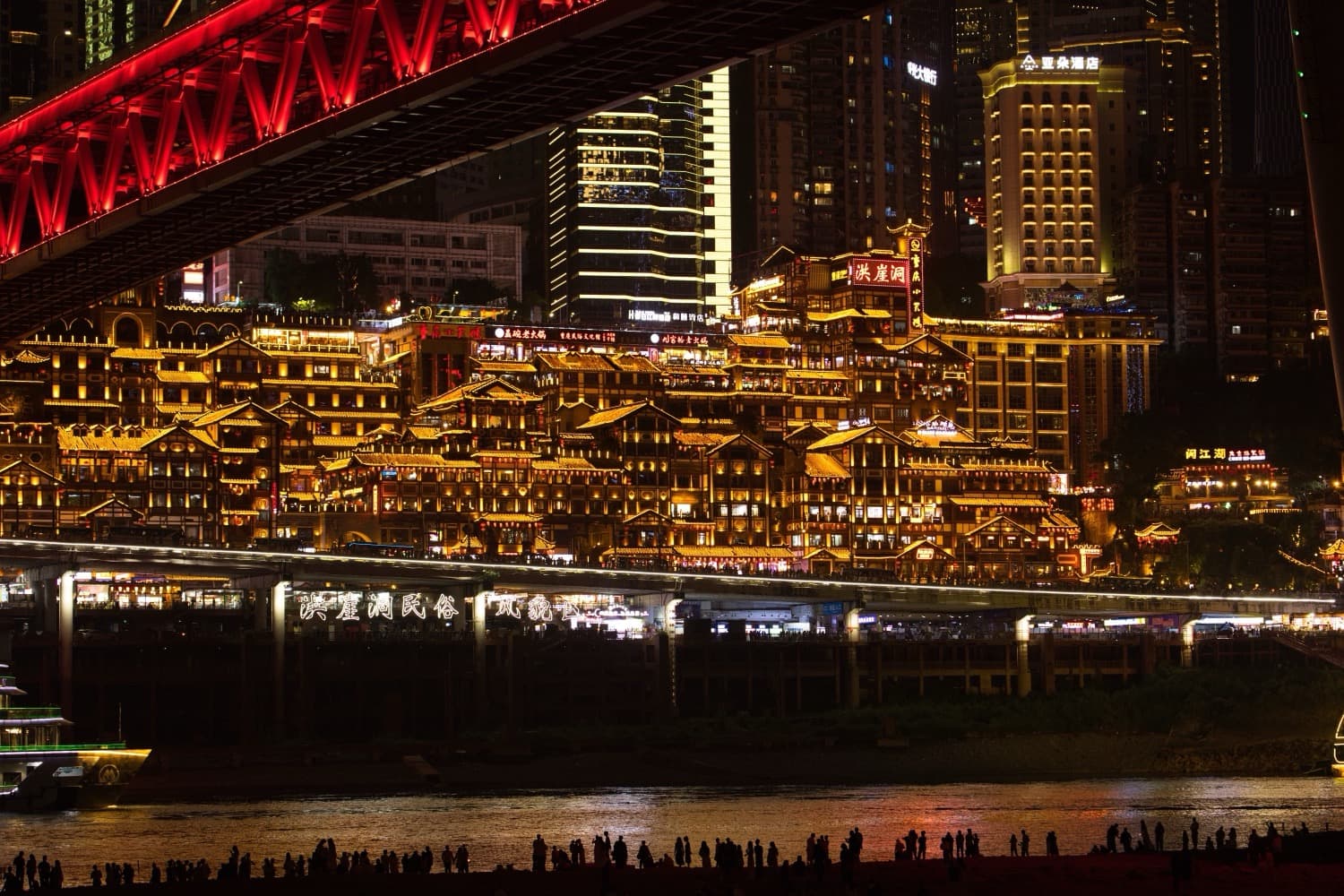
Hongya Cave is one of Chongqing's most iconic landmarks and absolutely worth visiting, ideally in the evening when it comes to life. Built into a cliff face overlooking the Jialing River, it's an 11-storey complex of traditional Bayu-style stilt houses (diaojiaolou) packed with restaurants, bars, teahouses, and shops. At night, thousands of red lanterns glow from every level and the entire structure reflects on the river below. It's genuinely stunning.
Despite its touristy reputation, it's a legitimately beautiful place and worth at least an hour or two of wandering. Walk up through the levels, grab a hotpot meal, and make your way down to the riverside boardwalk for the best view looking back at the complex. There is a maze of souvenir shops and food vendors, plenty of free samples, and it is quite magical to amble around.
The best exterior view is from the Qiansimon Bridge (just across the river), or from the riverside walkway below. If you want the famous photo of the whole building lit up at night, cross the bridge and look back. Another great view is from the "coffee shop street" to the left of the building (Google maps Amap).
Getting there: Linjiangmen Station (Line 2), 5-minute walk.
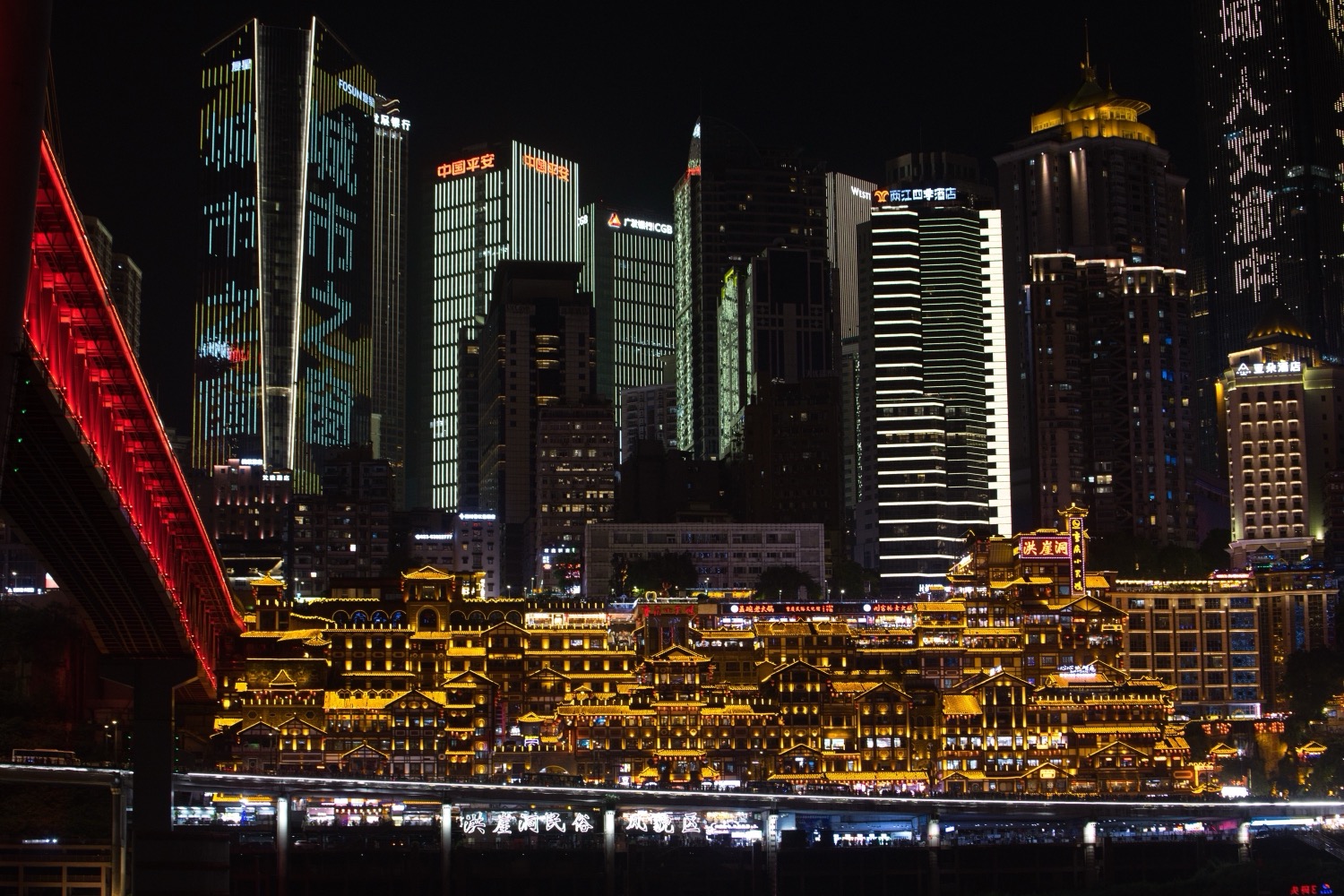
Riverbank view
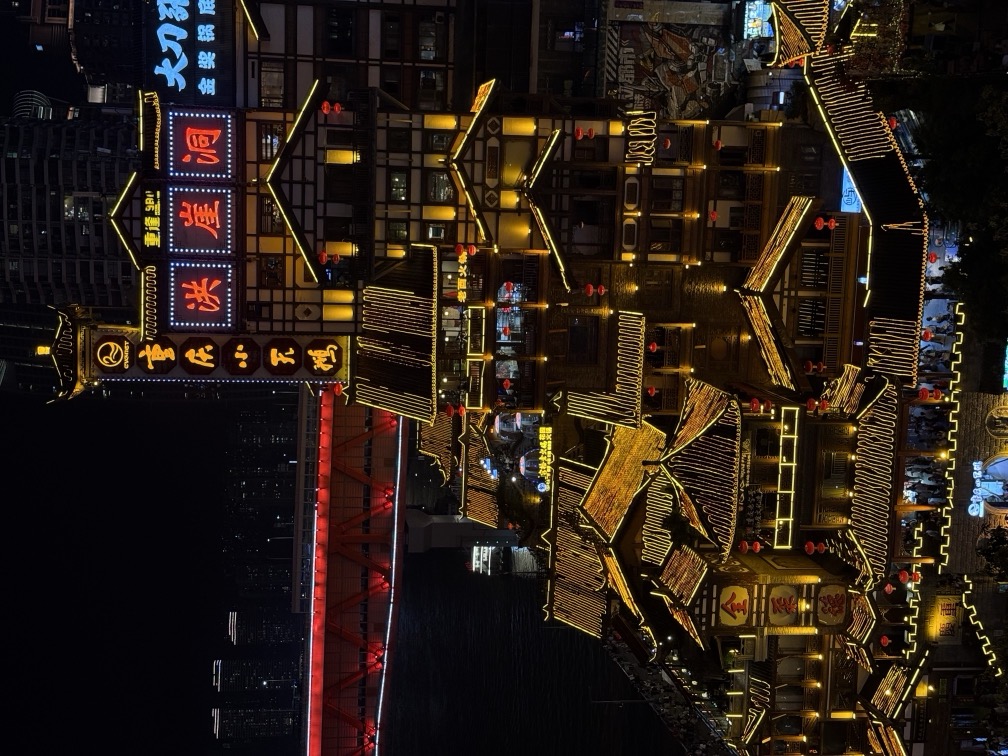
Coffee Shop Street view
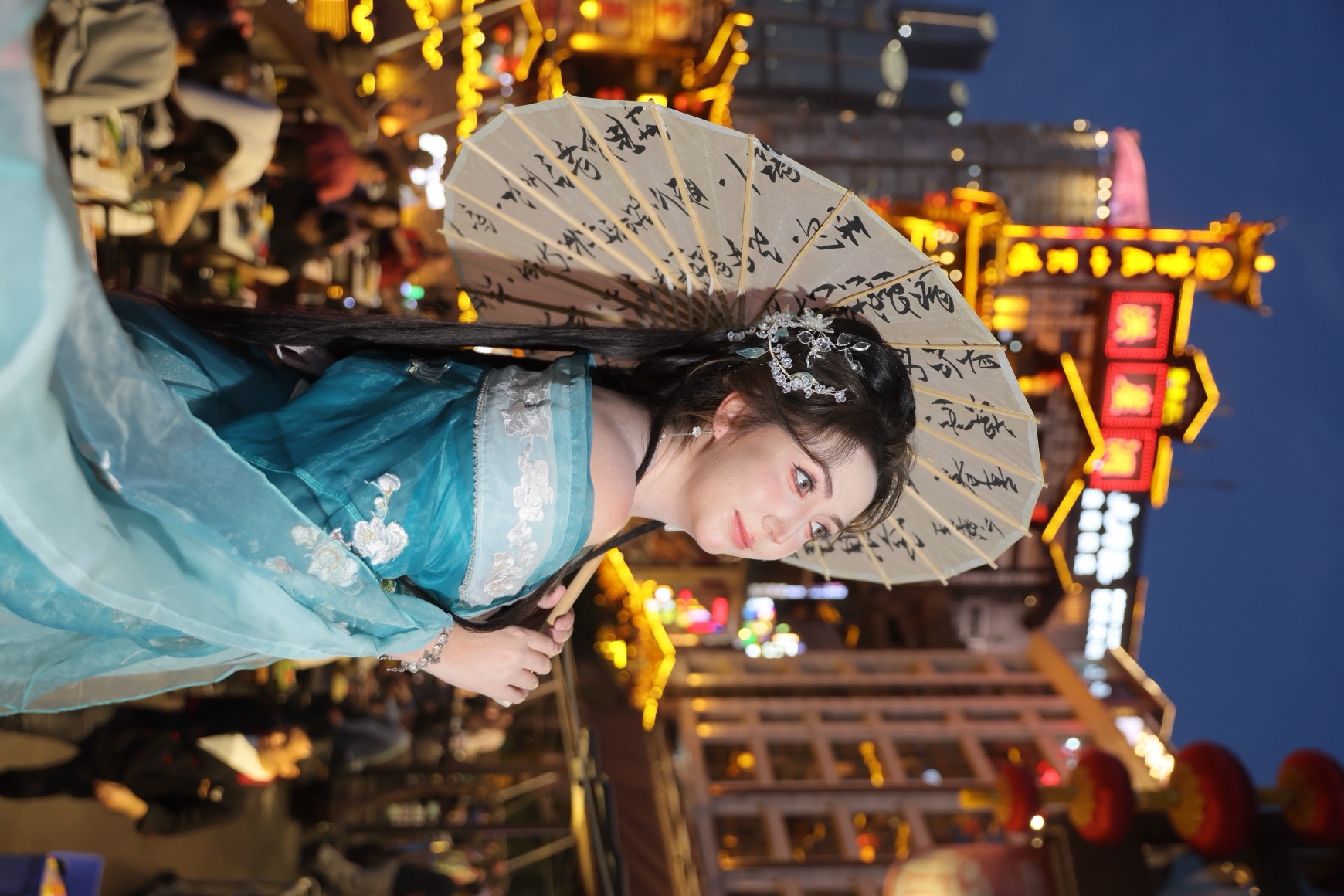
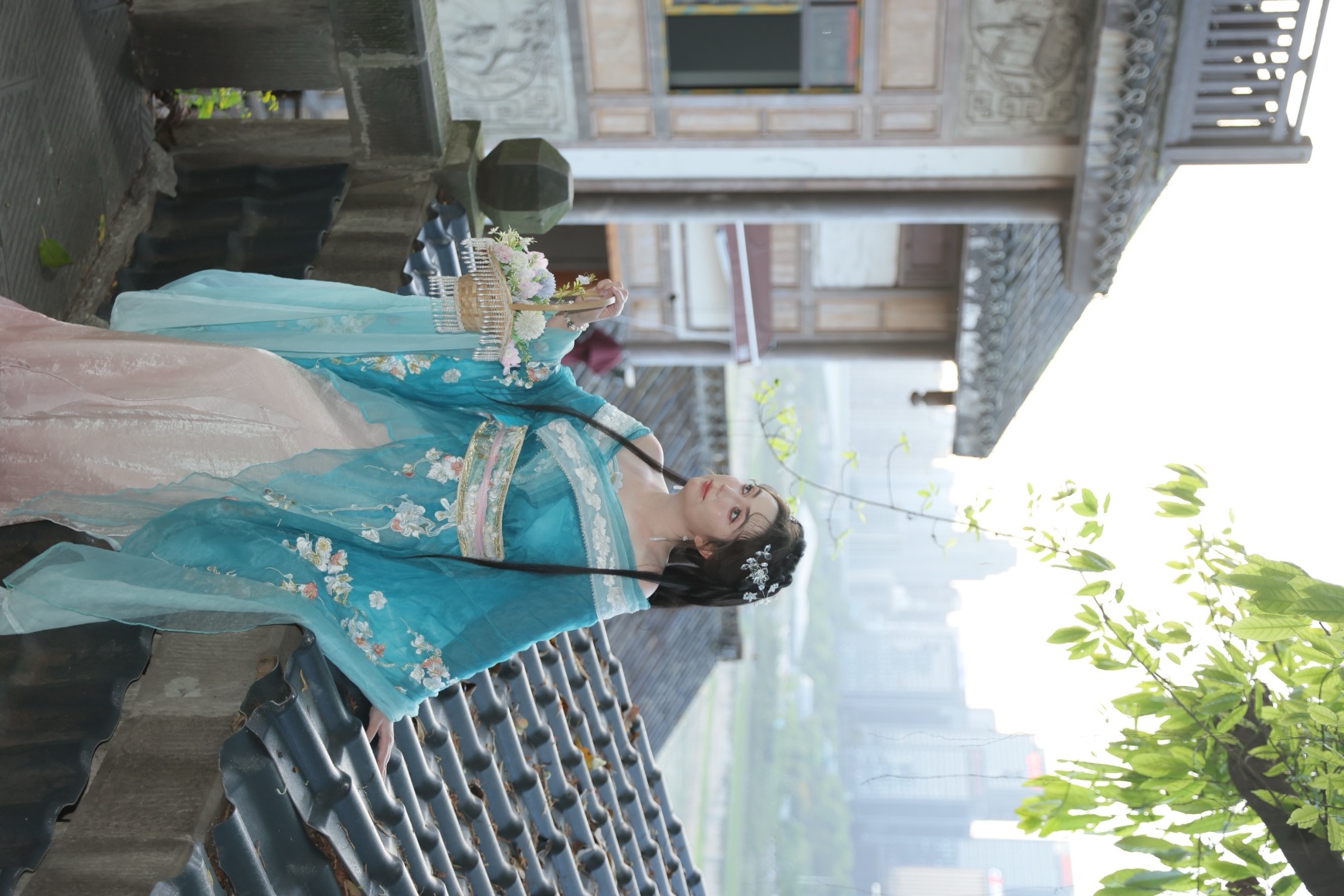
One of the most popular things you can do at Hongya Cave is rent a hanfu (traditional Chinese clothing) and have a professional photoshoot in front of the lit-up complex. Rental shops are located inside and nearby the Hongya Cave complex, and most offer a full package: outfit selection, hair styling, makeup, accessories, and a photographer for an hour or two around the complex.
This is enormously popular with Chinese tourists and visitors alike, and it's a genuinely fun experience. Prices vary depending on the package, but expect to pay roughly ¥400–700 CNY per person including the photographer. We booked through Hugh Chongqing Tours and just messaged him on WhatsApp. Alternatively just go to the complex and speak to one of the women who are dressed up with an iPad selling the experience.
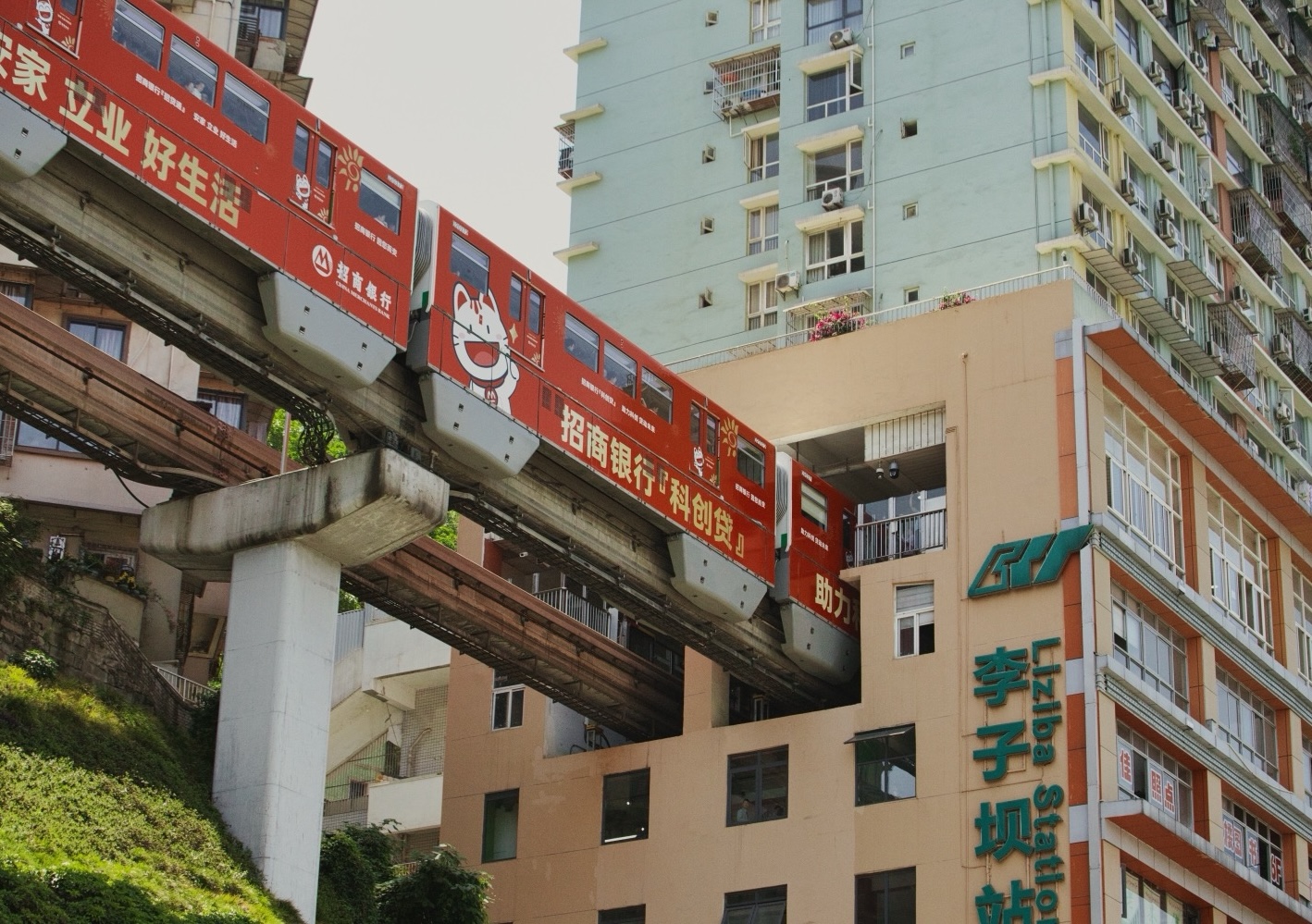
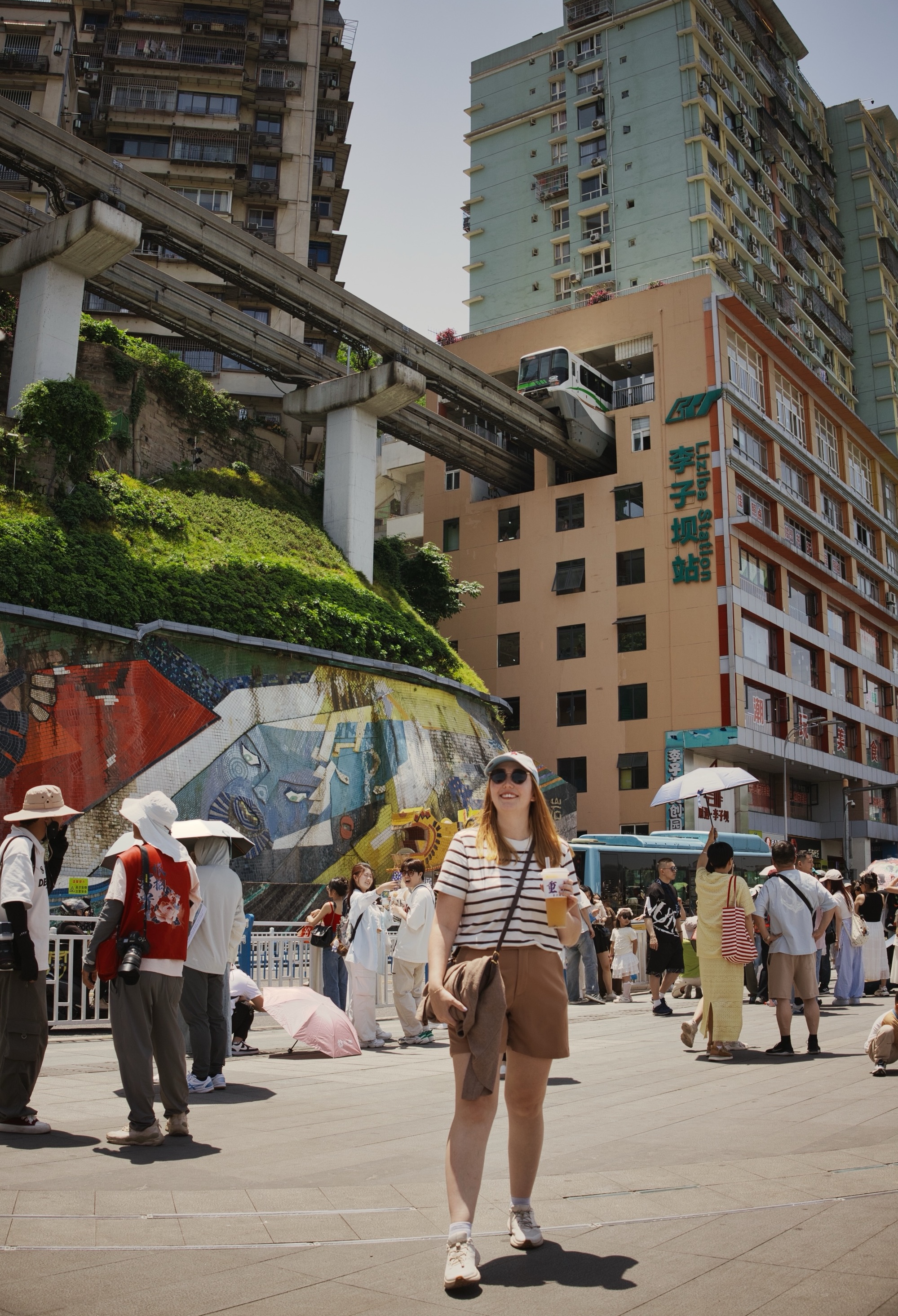
This is one of Chongqing's most famous quirks and it deserves a spot on your itinerary. Liziba Station on Line 2 is built directly into floors 6 through 8 of a residential apartment building. The train literally passes through the building every few minutes, so you're never waiting long for a photo opportunity.
This isn't a gimmick or a tourist attraction by design; it's the result of Chongqing's extreme topography. The city is so hilly that standard at-grade or underground metro lines are often impossible, so engineers built elevated track wherever the terrain allowed, including, in this case, straight through an existing building.
The best way to see it is from the street below, where you can watch the trains disappear into and emerge from the building. There's a viewing platform and a small crowd of onlookers at most times of day.
Getting there: Liziba Station (Line 2). You're already there. Get off, exit, and look up.
Chongqing's relationship with gravity is best understood not at a tourist attraction but at a working hospital. The Chongqing Hospital in Jiefangbei is famous locally for its "8D" layout: a multi-level complex built into the mountainside where floors connect to different street levels, staircases lead to unexpected outdoor terraces, and the spatial logic seems to reset every time you turn a corner. The emergency room and inpatient building entrance is on the 22nd floor. Not the ground floor of a 22-storey building; the 22nd floor, accessed directly from street level on the mountainside above.
It's a functioning hospital, so this isn't a place to wander freely. That said, you can take the stairs the top floor for views over the Jiefangbei district and the river. This area is open to tourists and has vendor stalls for shopping.
Chongqing has a cable car (长江索道) that crosses the Yangtze River, running between the Yuzhong Peninsula and the south bank of the river, suspended high above the water with views of the city skyline in both directions. It was originally built in 1987 to connect two parts of the city before metro lines existed. It's now something of a tourist institution.
The ride takes a few minutes each way and the views are excellent: you get a good perspective on the sheer scale of the riverbanks and the density of the city stacked up on both sides. It's a short experience but a memorable one.
Getting there: Xinhua Lu Station (Line 1 or Line 6), then walk to the cable car terminal. The south bank terminal is a short walk from Wangfujing Station.
Tickets: Around ¥10 CNY per person one-way, purchased at the terminal. Alipay accepted.
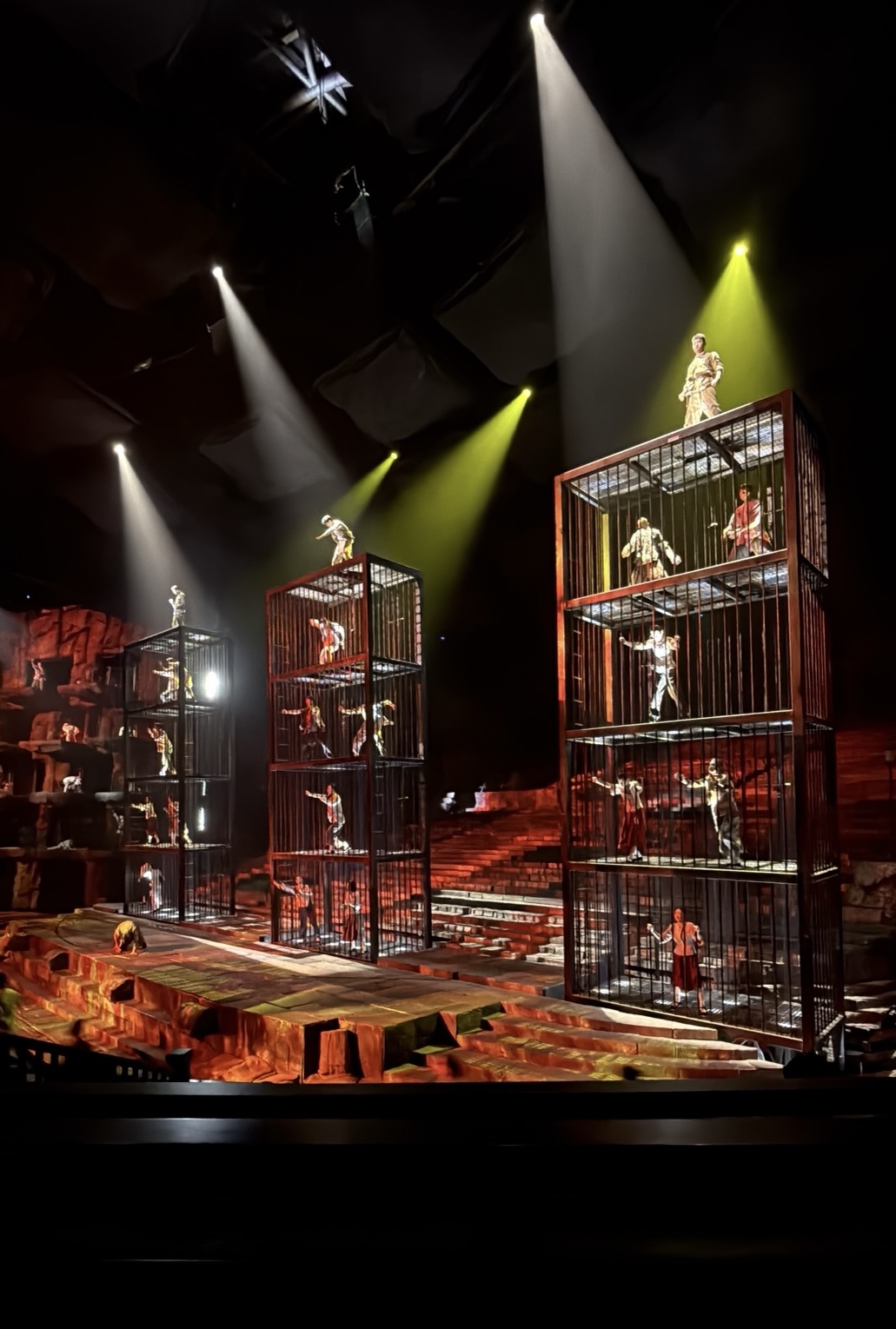
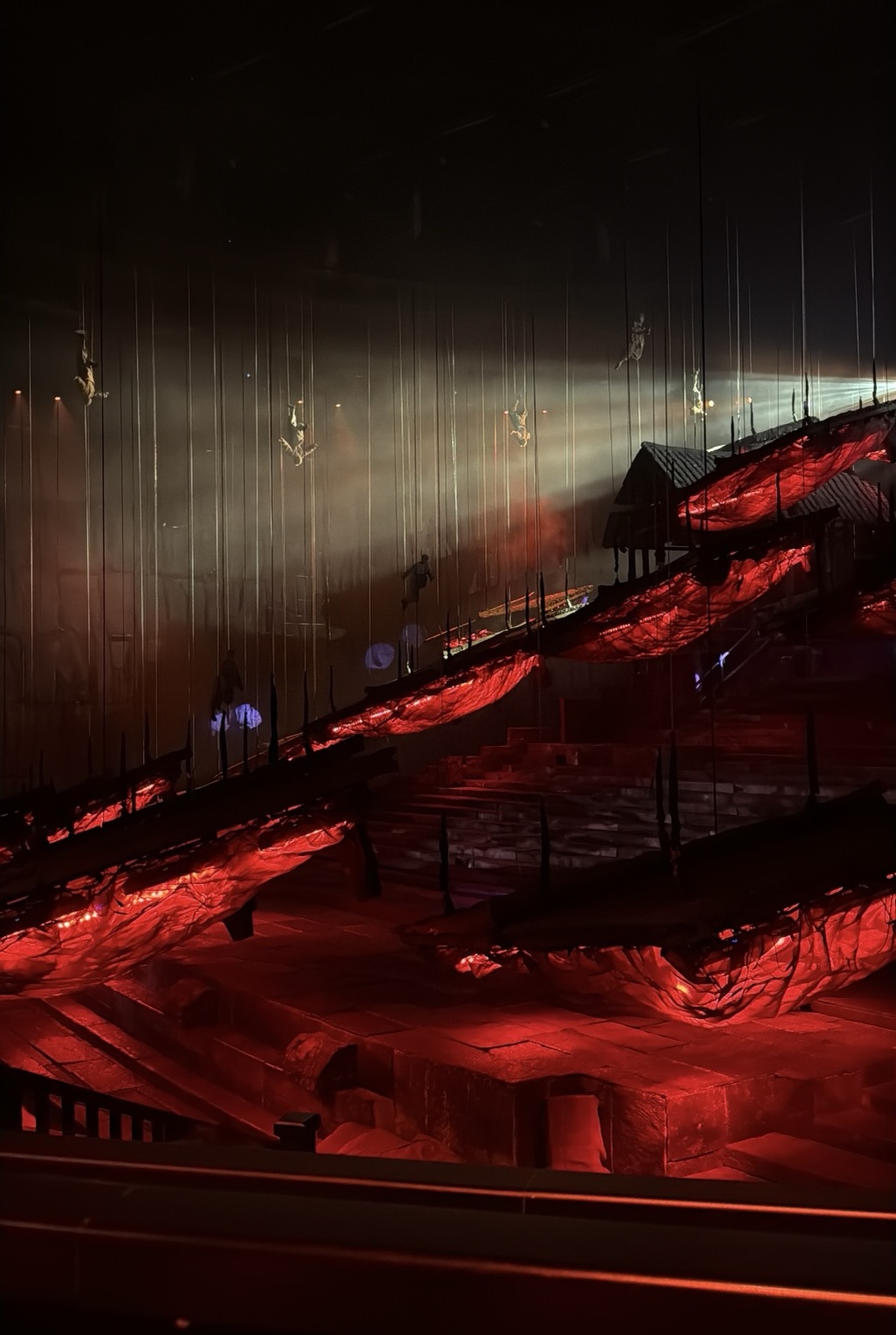
The 1949 show is an immersive theatrical experience set in Chongqing in the final days of the Chinese Civil War. In November 1949, the Nationalist (Kuomintang) government fled the city as Communist forces advanced, and Chongqing fell to the People's Liberation Army. The show dramatises this period through underground agents, espionage, and the chaos of a city changing hands, brought to life through live actors, elaborate sets, lighting, and special effects.
It's a unique experience and unlike anything you'll find at most tourist destinations. The theatre is built for the show and the set is outstanding. Certain sections of the audience move around the stage which was a completely unique experience. Free translator headsets are available for many foreign languages, but it's worth reading up on the history before going.
Booking: Book tickets in advance through trip.com. Sections A and B are the best to sit in because the seats rotate around the stage.
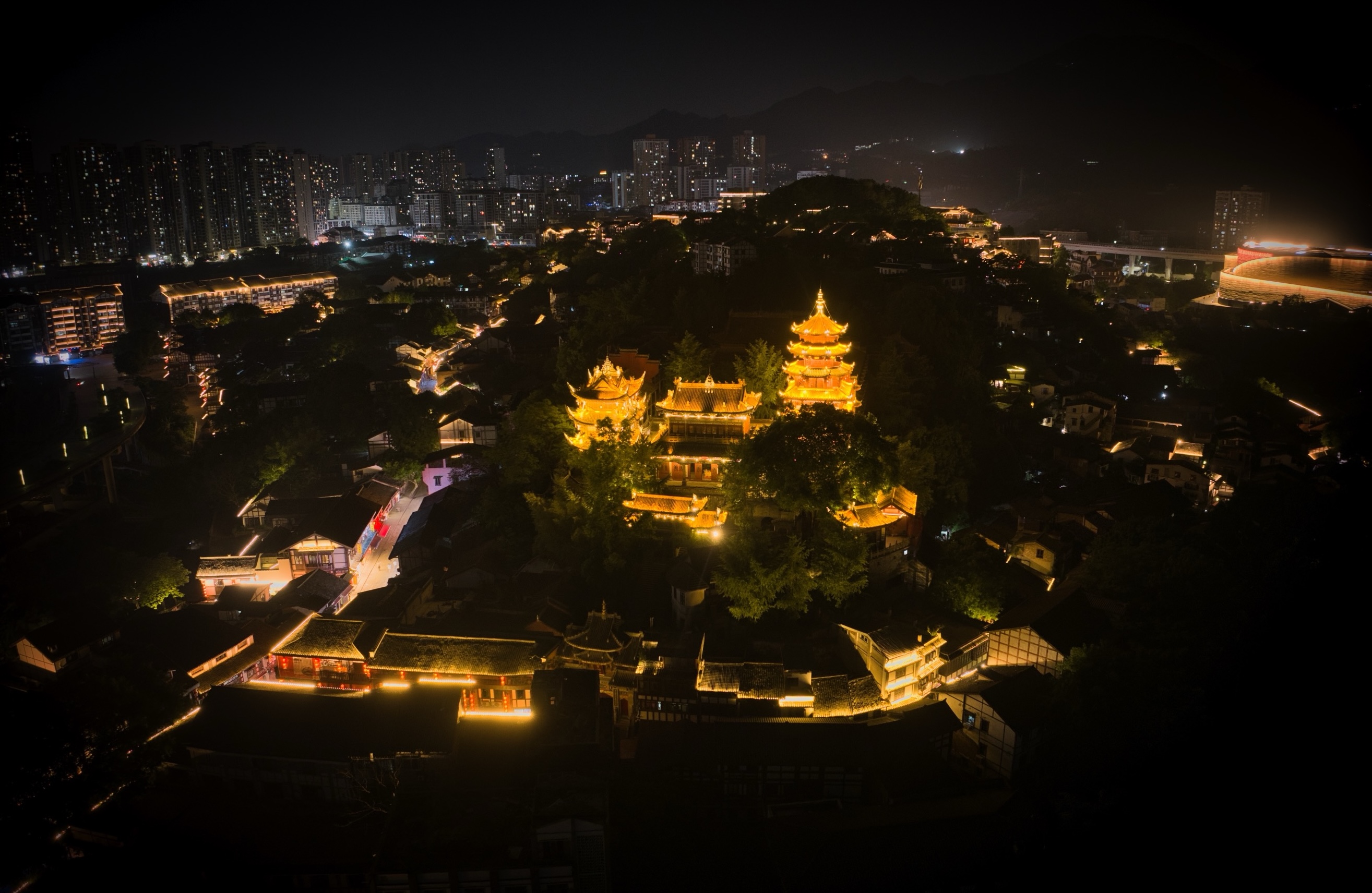
Right next to the theatre is Ciqikou, a preserved ancient town on the banks of the Jialing River in the Shapingba district, dating back over 1,700 years. It's a classic old-town experience: narrow cobblestone alleys, traditional wooden architecture, incense smoke, and an enormous density of food stalls selling everything from hotpot to crispy mochi and much more.
There's also a small river beach area you can access from the lower end of the town, which is a nice spot to slow down after the bustle of the main alley.
Getting there: Ciqikou Station (Line 1), 5-minute walk.
Best time to visit: Weekday mornings are significantly less crowded. Avoid Sunday afternoons.
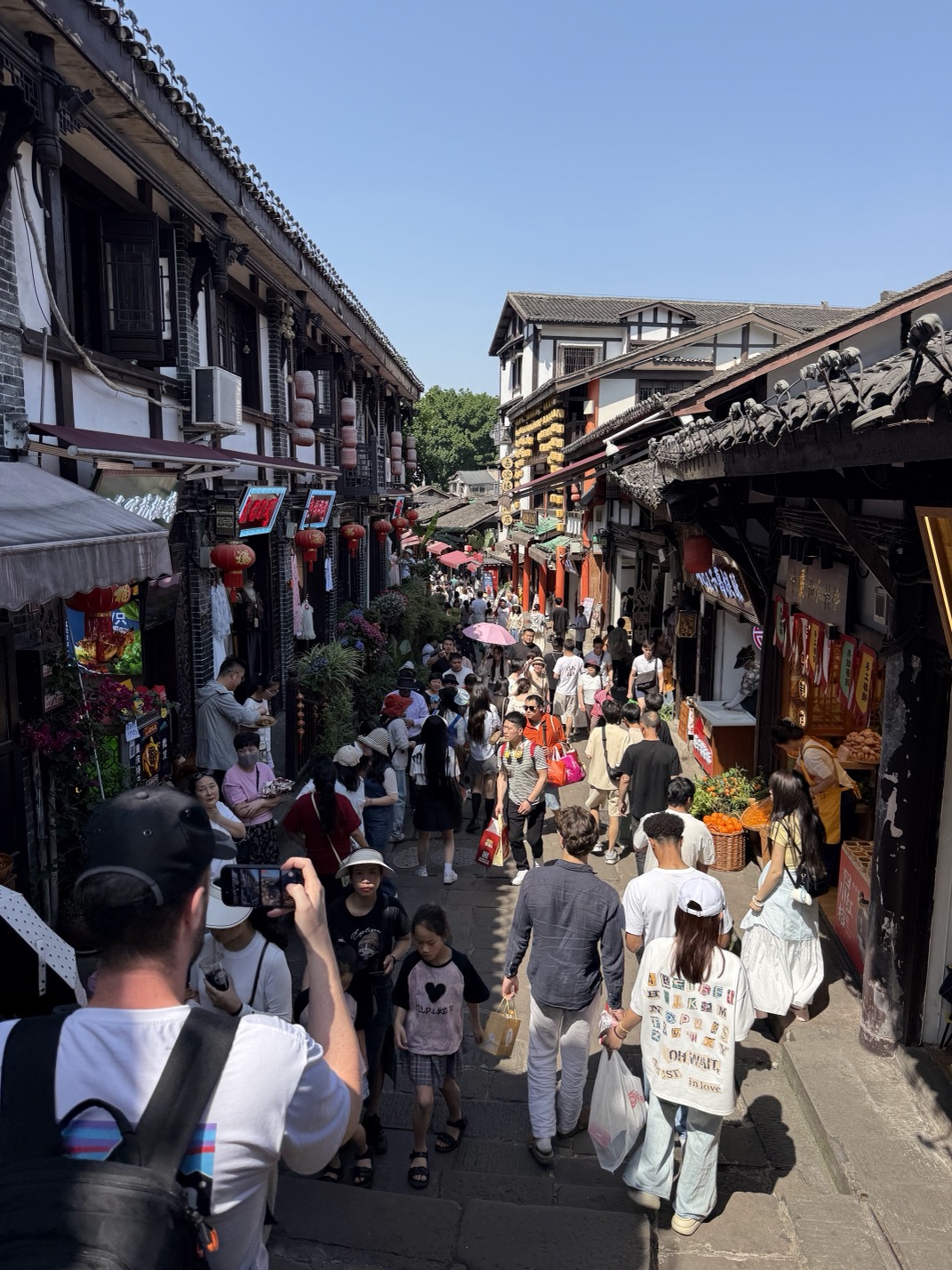
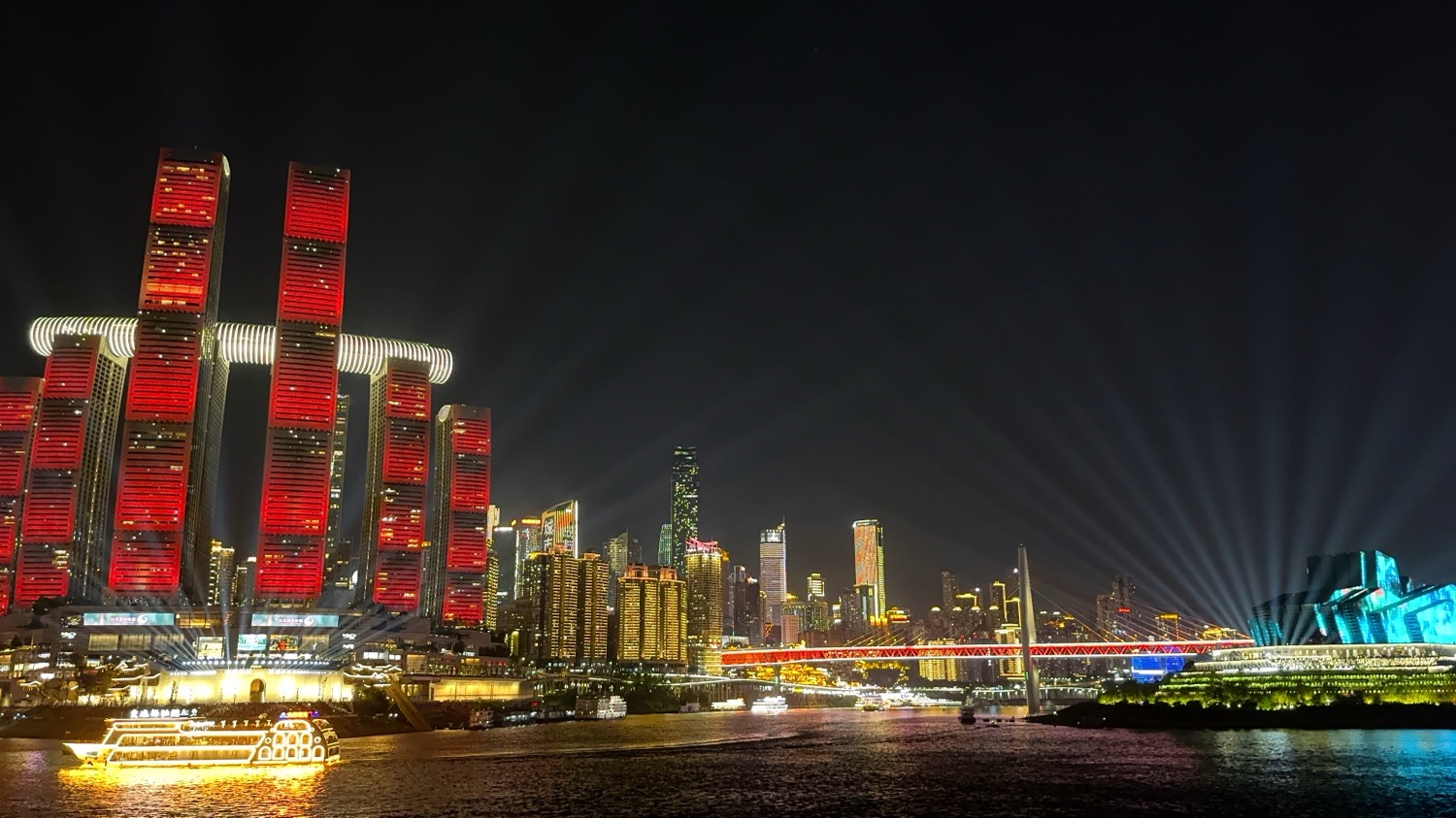
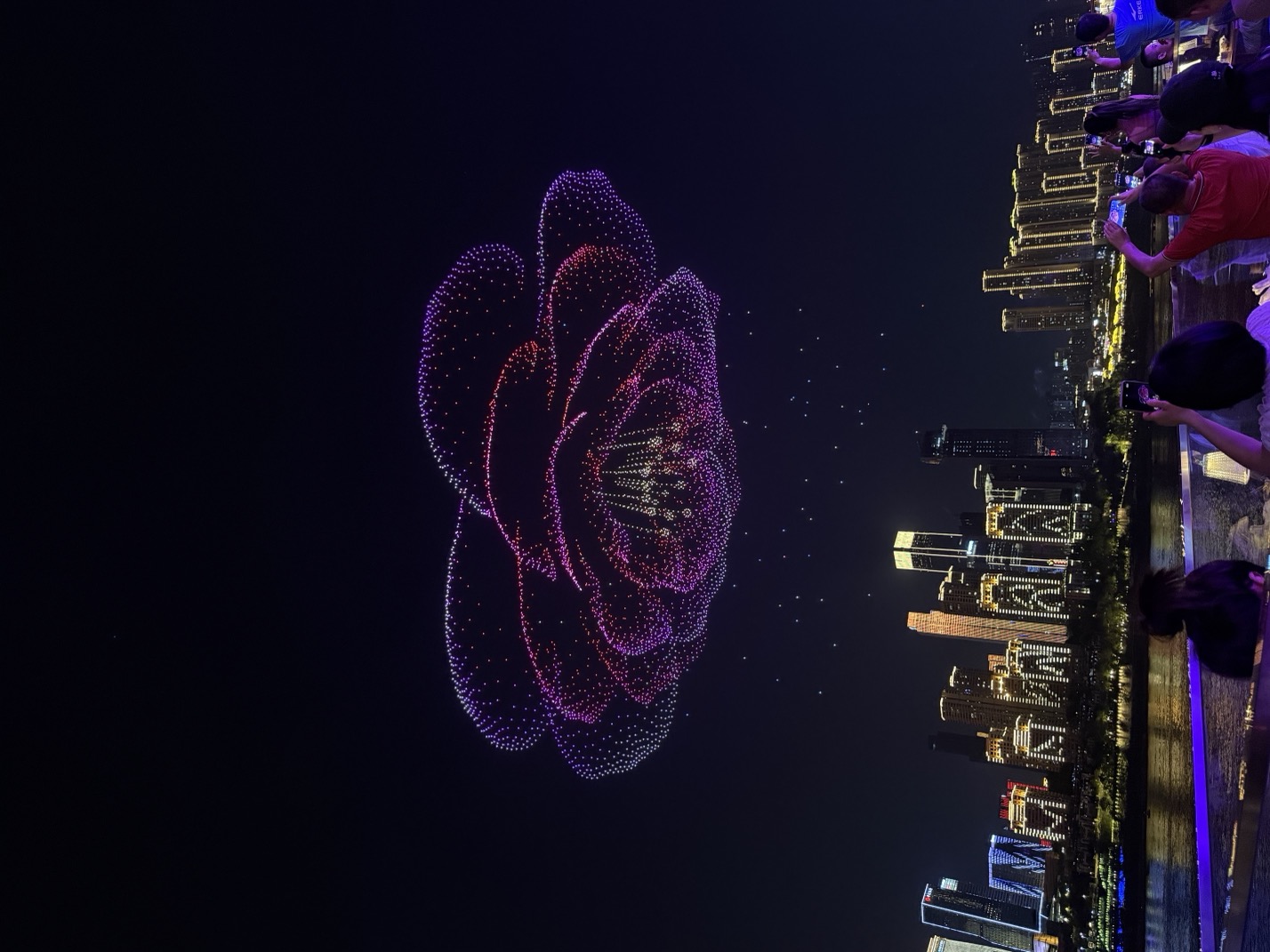
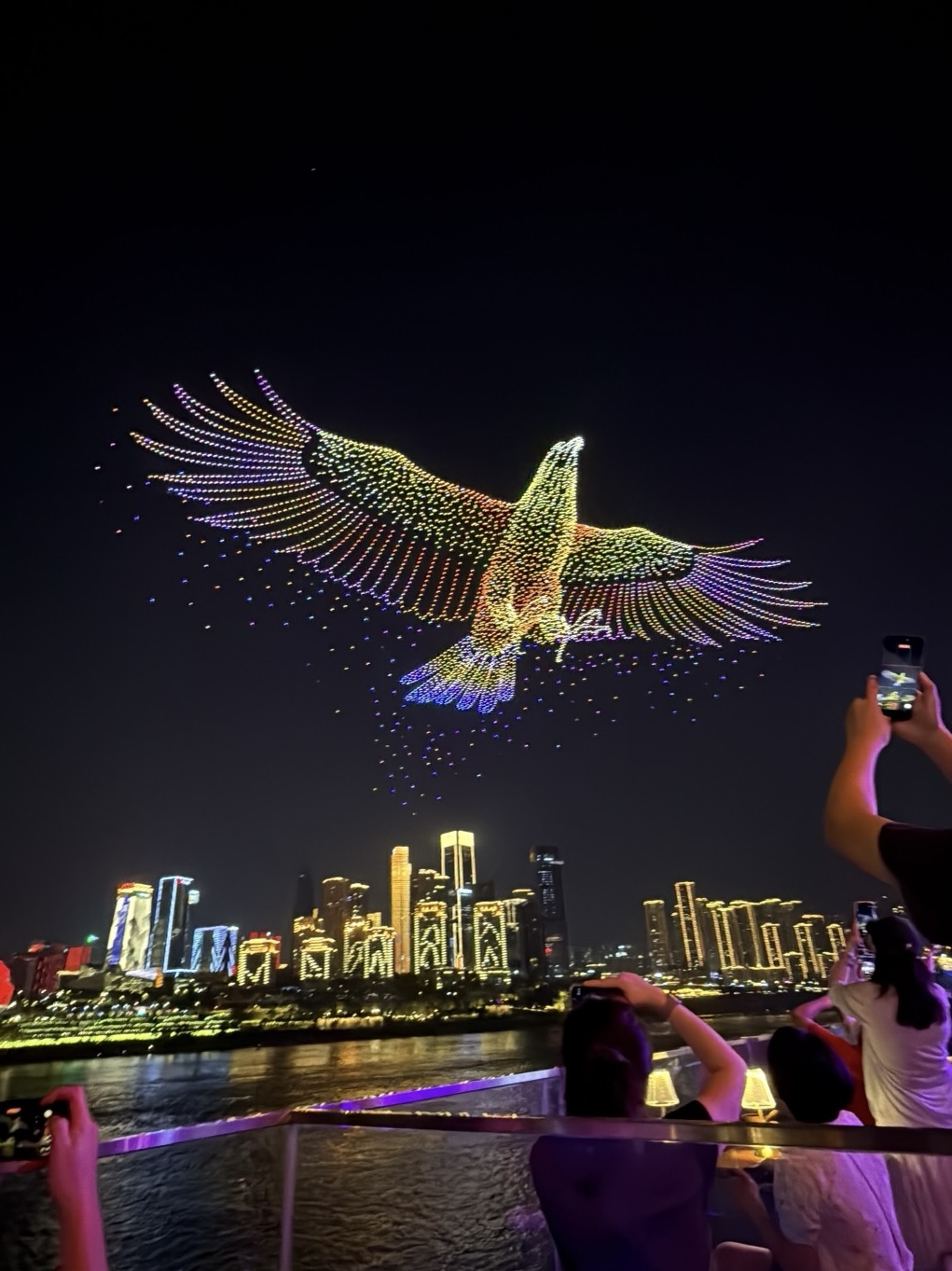
Every Saturday evening, Chongqing puts on a large-scale drone show over the river: over 1,000 drones illuminate the sky forming shapes, patterns, and scenes above the Yangtze. It's the kind of spectacle that photographs badly but looks incredible in person. The show typically runs for 10–15 minutes and is best viewed from the riverfront promenade near Changjiahui Shopping Park or from the viewing area near Chaotianmen (朝天门), where the Jialing and Yangtze rivers meet.
The start time varies depending on the season from 8:30pm to 9pm, so check with your hotel or search online before you go to avoid disappointment.
Getting there: Chaotianmen Square is a short walk from Xiaoshizi Station (Line 1 or Line 6). Changjiahui Shopping Park via Liangjiang Xiaodu ferry.
Tip: Arrive 20–30 minutes early to get a good spot on the promenade. We found a comfortable seat in one of the many bars on the lower promenade, ordered a beer and sat back to watch the show.
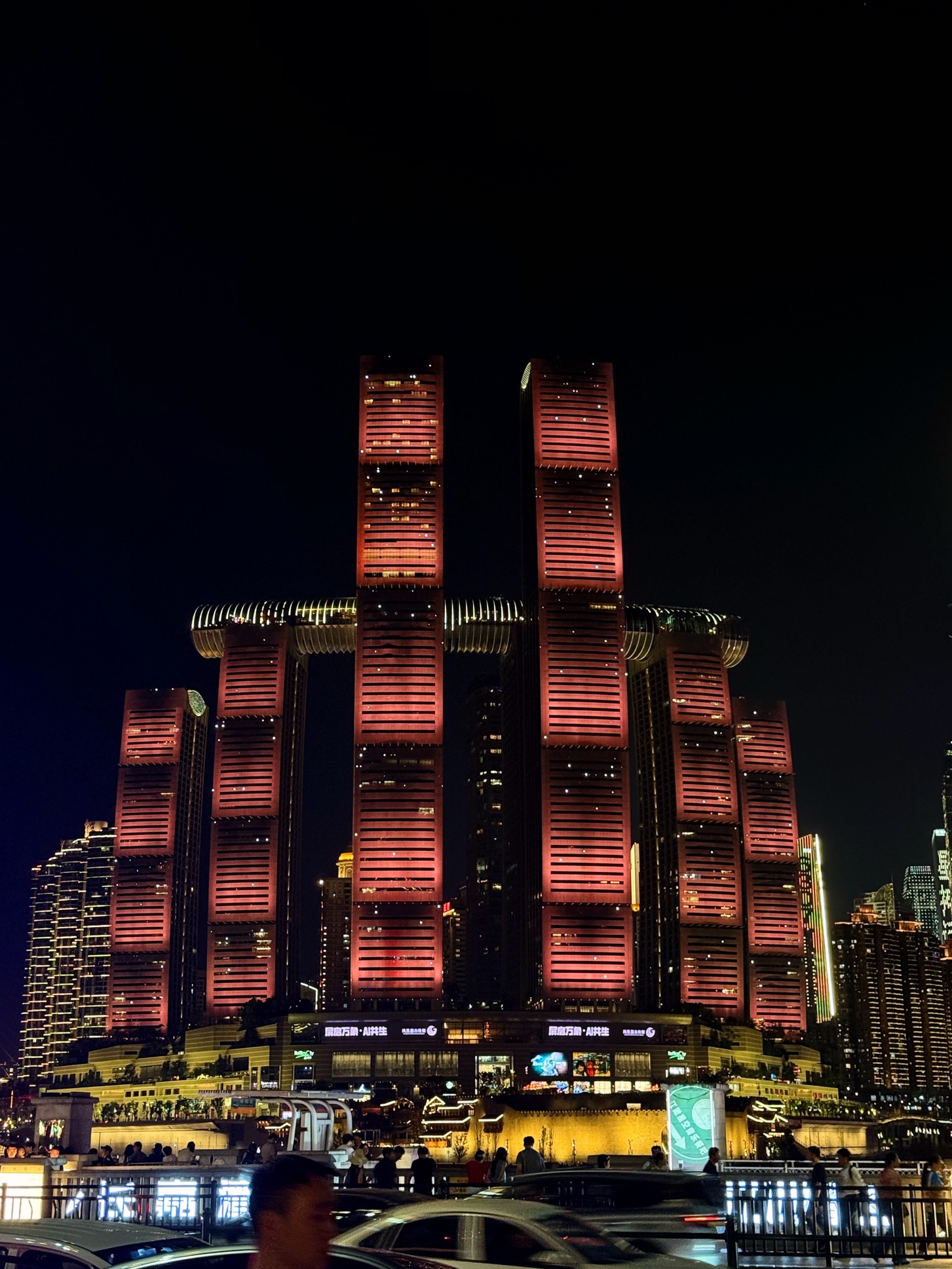
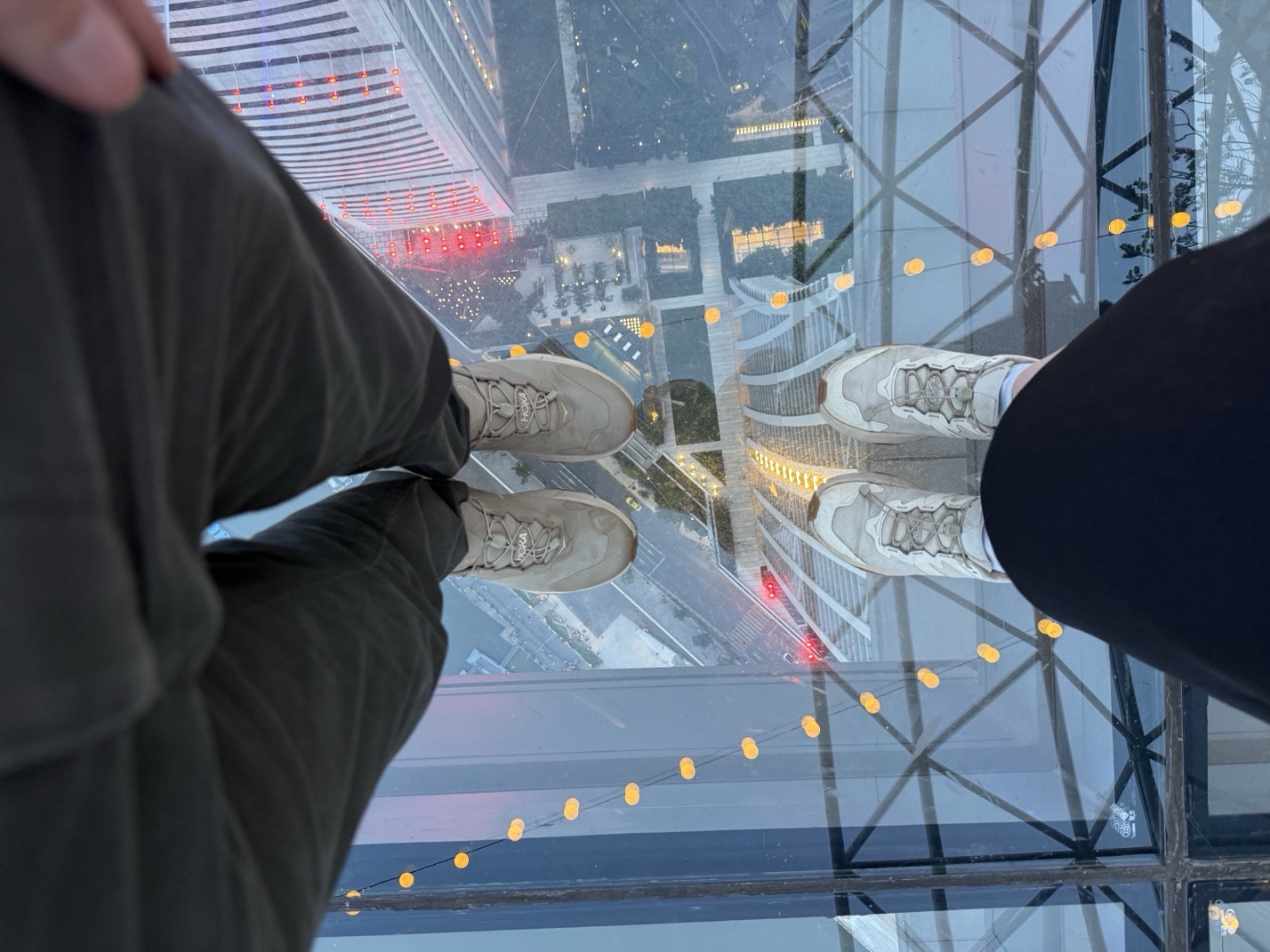
The Raffles City complex in Chongqing is a striking architectural project: eight towers connected at the top by a sky bridge called The Crystal, suspended 250 metres above the city. The observation deck at the top offers 360-degree views of Chongqing, the rivers, and the mountains beyond.
Beyond the observation deck, The Crystal has several restaurants and bars at height, making it a great option for a memorable dinner or sundowner with a view. There is a bar area that's walk-in, though restaurant reservations are recommended for peak times.
Getting there: Chaotianmen Station (Line 1).
Observation deck tickets: Around ¥150 CNY. Book in advance or at the tower.
Tip: The viewing platform is best for sunset views as it faces west. We dined at the Shua restaurant which, unbeknownst to us, faces east, so has no view of the sunset, but was still a novel experience with a glass floor. The food was pricey, but very good.
Longmenhao is a restored historical district on the south bank of the Yangtze, directly across the river from the Chaotianmen peninsula. It's smaller than Ciqikou, covers several levels of old stone streets, traditional courtyards, and heritage buildings. This is much closer than Ciqikou and only one stop on the metro, just across the river to the east.
Getting there: Take the metro to Haizibian Station (Line 3) or take a ferry across from Chaotianmen.
Tip: Combine this with a visit to the south bank riverfront promenade for excellent skyline views looking back towards the CBD.
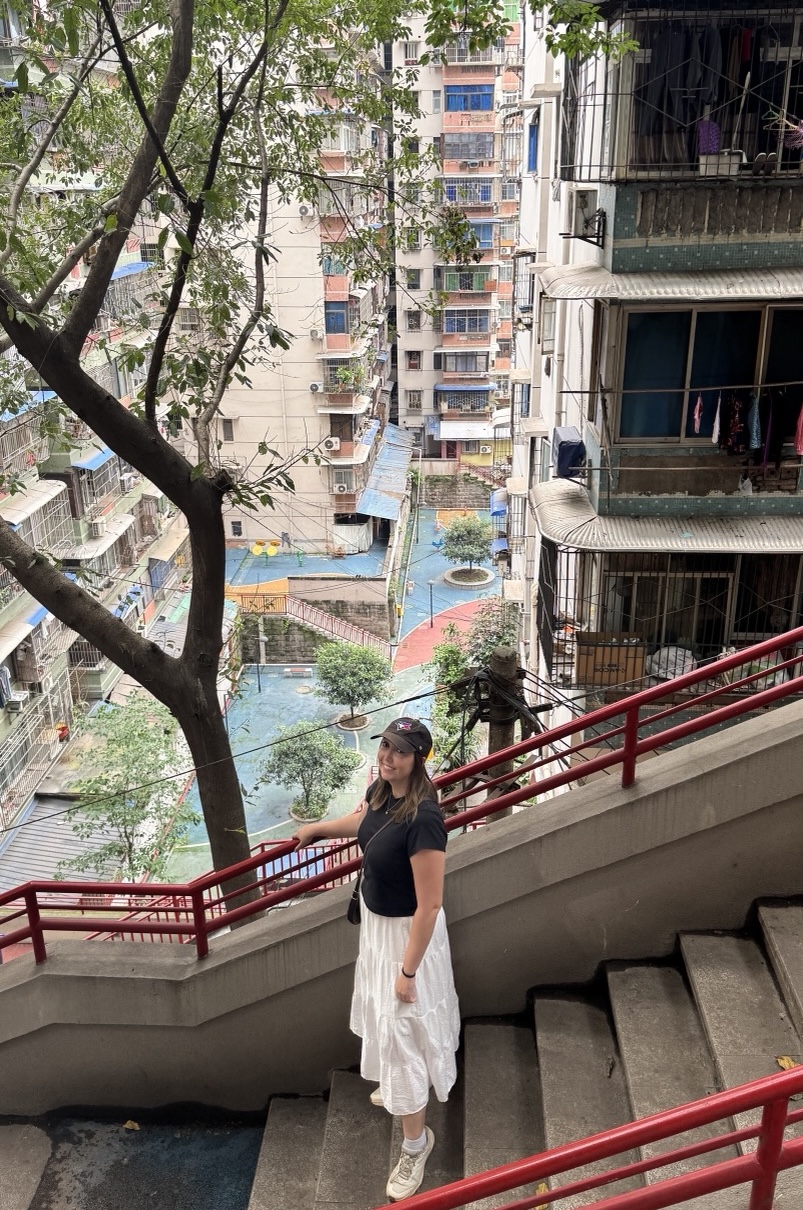
The best thing you can do in Chongqing outside the main attractions is get lost in one of its residential neighbourhoods. The city's dramatic topography means streets dead-end into staircases, stairways suddenly open into elevated plazas, and what looks like a basement level from one street is a rooftop from the next. Navigation is genuinely disorienting in the best way.
We would highly recommend Hugh Chongqing Tours. He is a Chongqing local and offers a variety of private tours at a very reasonable price. We did the local neighbourhoods walking tour and loved the experience. Our guide was a local from one of the nearby neighbourhoods and gave us really great insights and showed us hidden places we would have never found on our own.
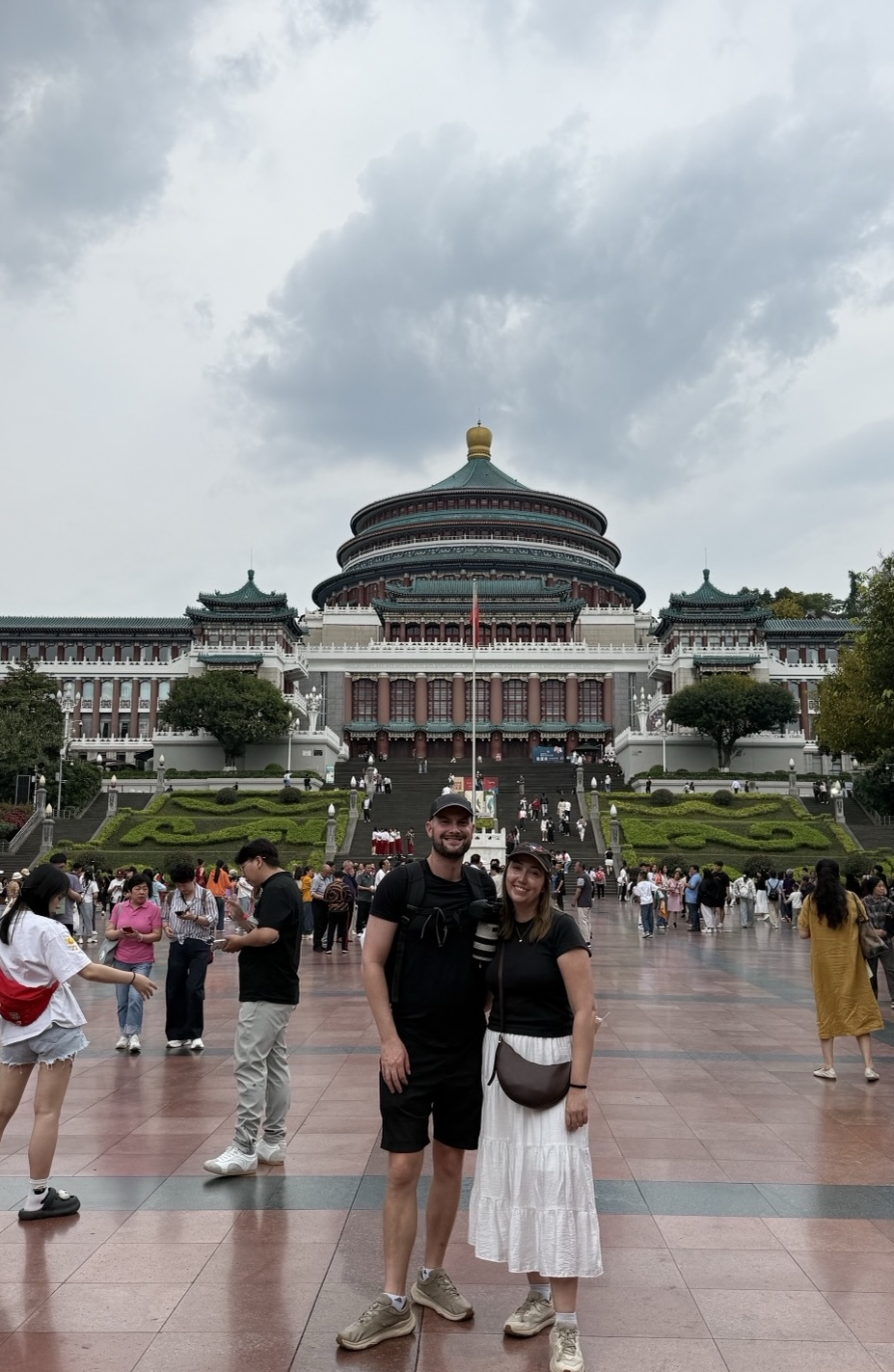
Chongqing is called the "Fog City" for a reason. The basin geography traps moisture and the city is overcast for much of the year, particularly in winter and spring. This isn't a deal-breaker (the mist adds atmosphere), but it's worth knowing before you go.
- Spring (March–May): Mild temperatures, moderate fog, occasional rain. Good balance.
- Summer (June–August): Hot, humid, and one of China's three "furnace cities." Not ideal for walking tours.
- Autumn (September–November): The best time to visit. Clear skies (relatively), comfortable temperatures, and the most visibility for skyline views.
- Winter (December–February): Cold and very foggy. The city still functions and is beautiful in its way, but expect limited visibility.
Chongqing Jiangbei International Airport (CKG) is well connected to the city centre. The easiest options:
- Trip.com transfer: If you'd rather not figure it out on arrival, you can pre-book a private transfer through Trip.com.
- Metro (Line 10): The cheapest and most reliable option. Line 10 connects the airport directly to the city centre in around 40–50 minutes. Buy your ticket with Alipay or at the station machines.
- Didi: Around ¥80–120 CNY depending on traffic and your destination. The more convenient option since driver details are in the app and you don't need to negotiate.
Chongqing has an excellent metro system and it is by far the easiest and cheapest way to navigate the city (2 CNY/$0.40 per ride). The lines cover all the major tourist areas and the trains are clean, air-conditioned, and frequent. All metro signage is in both Chinese and English, so finding your way around is very manageable even without being able to read or speak Chinese.
The easiest way to pay for a subway fare is to use the transit QR code in Alipay, which is what we did. Unlike Shanghai, you can't tap on and off with a credit card. You can buy tickets at each station but this is a lot less convenient.
For trips the metro doesn't cover, Didi is straightforward and reliable. Drivers rarely speak English, but the app handles the destination; you just show your phone. Chongqing's topography means some routes that look short on a map involve significant elevation changes, so journey times can be less predictable than in flatter cities.
Jiefangbei is the best base in Chongqing for first-time visitors. You're close to the metro, the riverside, and the main attractions, and the neighbourhood has excellent food options at every price point, from basement noodle stalls to rooftop restaurants. There are many Western brand hotels and more local ones in this district so there are lots to choose from.
The Westin is excellently located in the heart of the Jiefangbei (Liberation Square) CBD, within walking distance of Hongya Cave, the Raffles City complex, and the Chaotianmen waterfront. It's a solid luxury option with a large pool, comfortable rooms, and the usual Westin reliability.
Getting there: Jiefangbei Station (Line 1 or Line 6).
Language: English is not widely spoken outside hotel lobbies and major tourist attractions. Having a translation app on your phone (Google Translate works fine with an eSIM, or use the built-in translation in WeChat) will get you far. People are generally patient and helpful if you're clearly making an effort.
Safety: Chongqing is a very safe city for tourists. Violent crime targeting visitors is extremely rare. The main things to watch for are common tourist-area scams: overpriced tea ceremonies, taxi rides without a meter. Didi largely eliminates the taxi issue, and paying attention is enough for the rest.
Hotpot: Chongqing is the birthplace of mala hotpot, and you owe it to yourself to eat it while you're here. The local version is significantly spicier than anything you'll find elsewhere. Start mild if you're heat-sensitive and work up. Your lips will go numb. This is normal and correct.
Spice warning: Chongqing food is heavily spiced with both chilli and Sichuan peppercorn. If you have any spice sensitivity, communicate it clearly when ordering. The default heat level at most local restaurants is high.
Chongqing is the kind of city that's hard to describe and impossible to forget. Neon lights bleed through the fog at night, the skyline stacks up in every direction, and the whole place hums with an energy that feels genuinely futuristic. Then you sit down to a pot of bubbling mala broth and remember that this city also happens to be one of the great food destinations in the world. Give yourself three or four days and just wander. It delivers.