

Getting the right China travel apps set up before you land is the single most important thing you can do to prepare for the trip. Western platforms (Google Maps, WhatsApp, Facebook, Instagram, Gmail) are blocked. Cash is nearly obsolete. Payment runs through apps you've never heard of. None of this is hard to navigate, but it all has to be sorted before you arrive. This guide covers exactly what to download, how to get internet that bypasses the firewall, and how to pay for everything without a Chinese bank account.
WeChat and Alipay are non-negotiable. Without these two apps, daily life in China becomes significantly harder. Download and set them up before you land. The others we recommend will make your life a lot easier too.
iOS Download | Android Download
WeChat is China's all-purpose super-app: messaging, payments, maps, restaurant menus, and more. You will need it to communicate with locals and tour operators, scan QR codes at restaurants to view menus, and access websites that don't exist on Western internet. Set it up with your phone number before you arrive. You can also add a payment method to use Weixin Pay, the payment system built into WeChat. It also provides transaltions in chat which is really helpful.
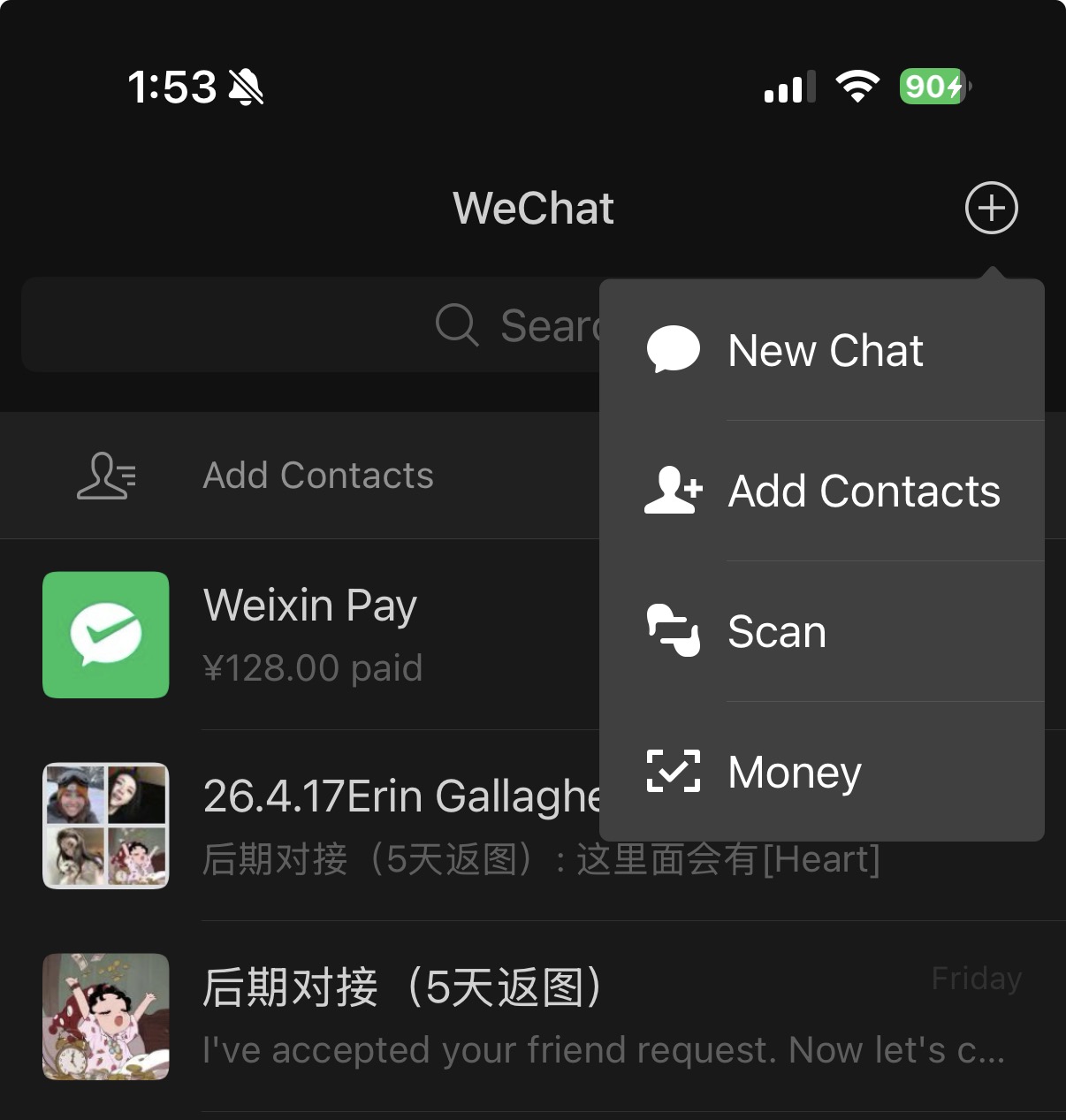
Scan QR codes for payments

Click a chat message to translate it
iOS Download | Android Download
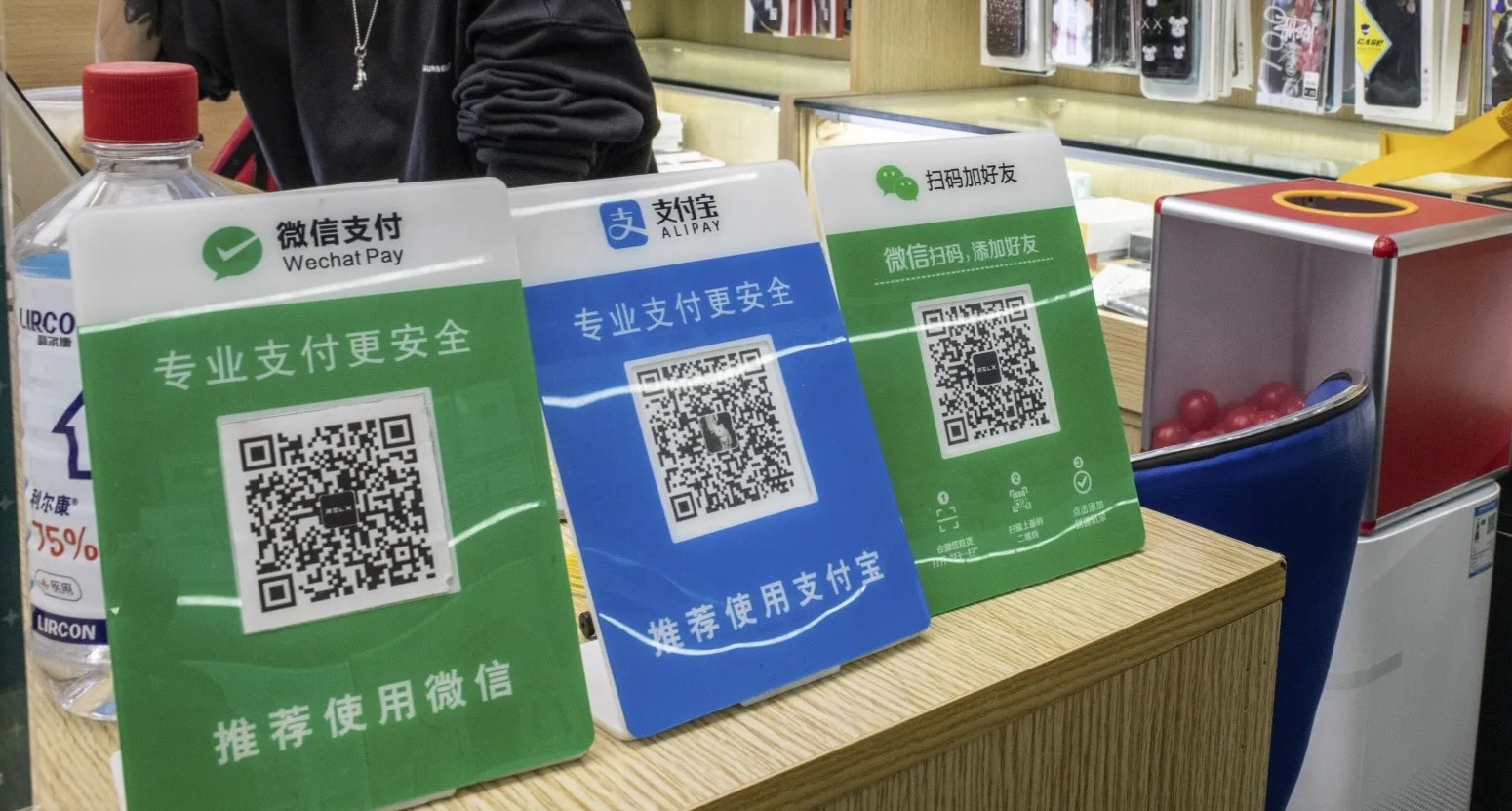
Alipay is the dominant payment app in China. Cash is rarely accepted, and many vendors, transit systems, and tourist attractions prefer or exclusively use mobile payment. Alipay now has a Tourist Edition specifically for foreign visitors that lets you add an international credit or debit card without needing a Chinese bank account. To pay, you scan the QR code at the register and confirm the amount on your phone. The payment is instant and the shopkeeper gets a notification on their end.
Tip: Both apps require a phone number for verification. Make sure yours is set up and functional before you land. Hotel wifi is fine for setup, but having data on arrival helps.
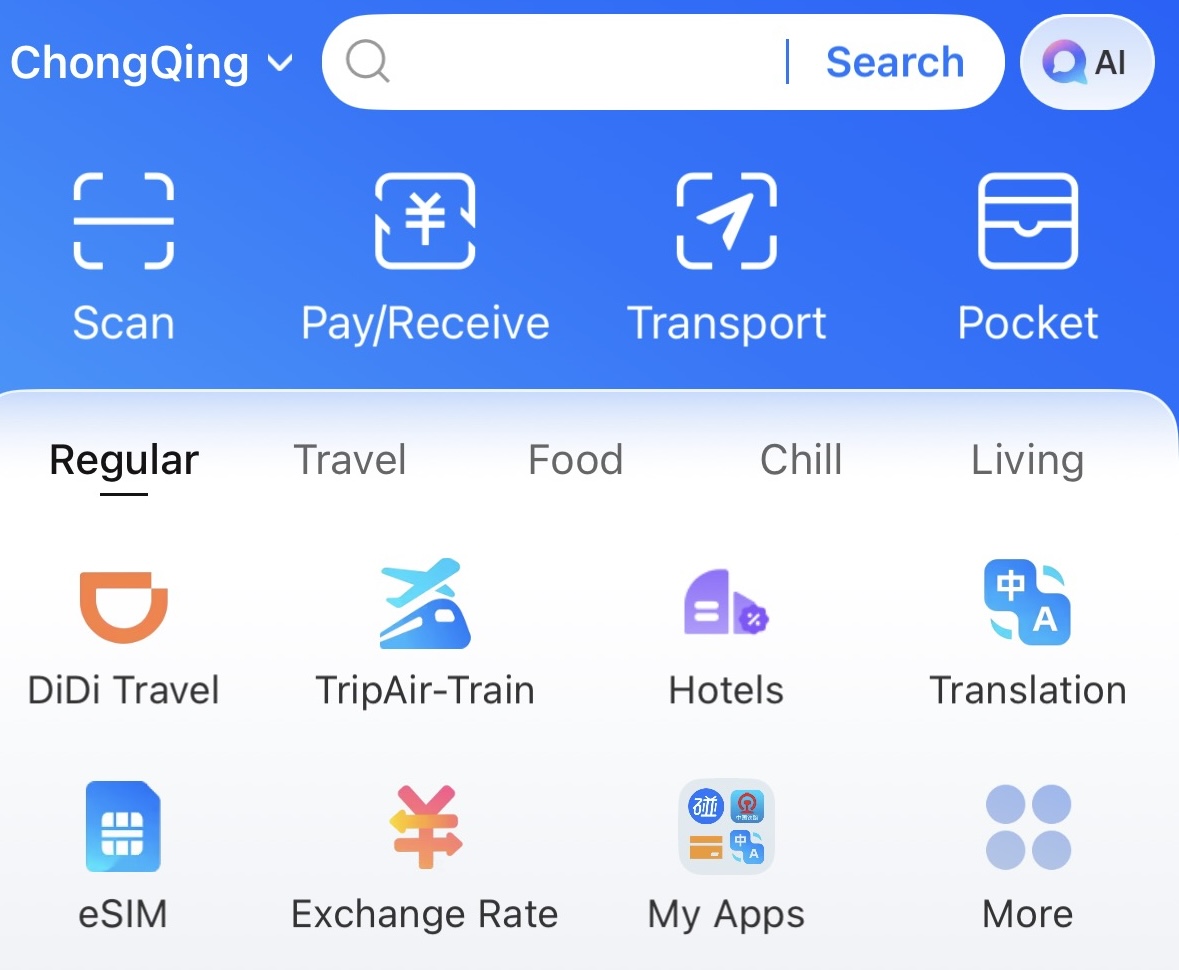
Tap 'Pay' to show your QR code, or 'Scan' to read the merchant's code.
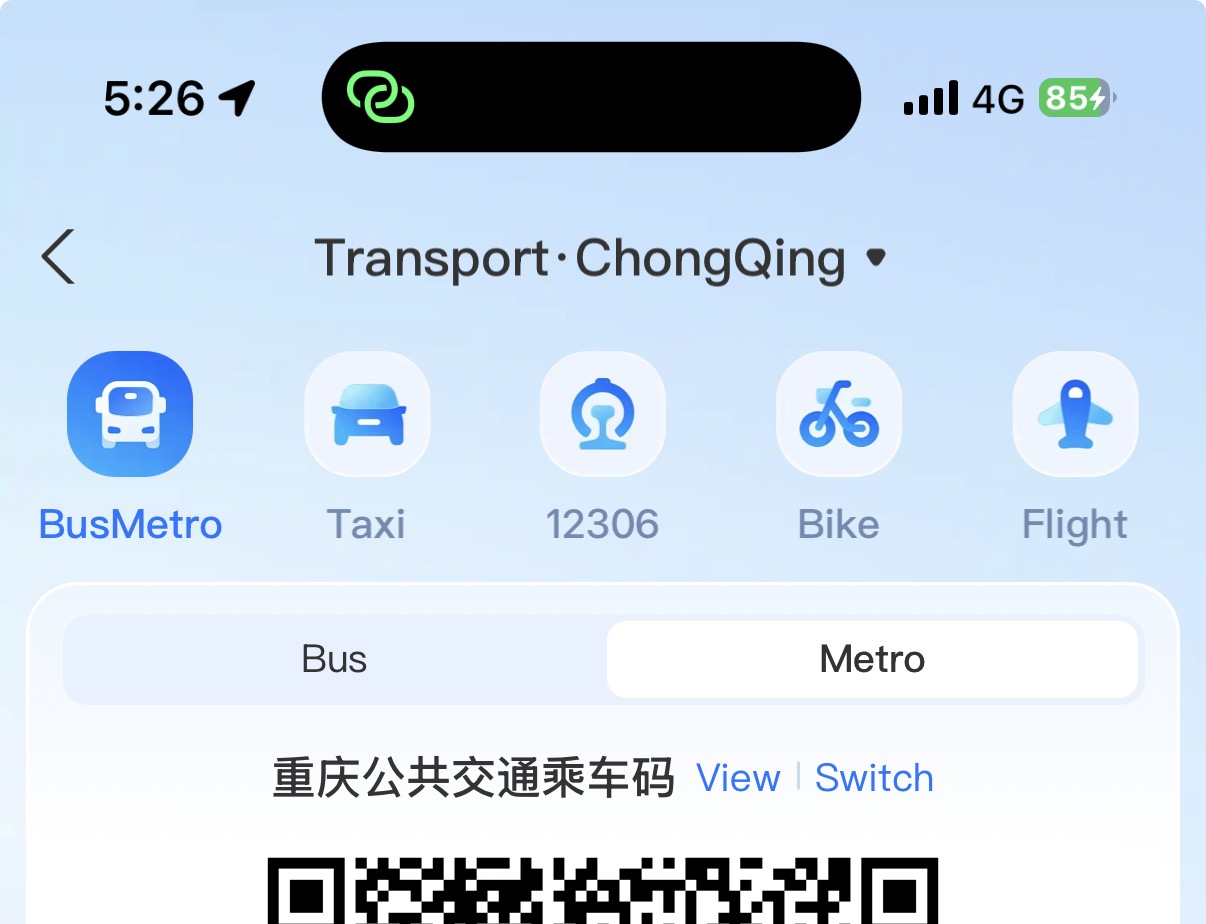
The transit QR code in Alipay, scan at metro gate
iOS Download | Android Download
Google Maps does not work in China. Amap is the best alternative for navigation, especially for public transit. It has an English mode and is fairly intuitive once you get used to it. You can also use it to find nearby restaurants, shops, and attractions. Apple Maps works reasonably well for basic navigation, but Amap is better for transit directions and local points of interest.
iOS Download | Android Download
Didi is the Chinese equivalent of Uber and is widely used for taxis and private car rides. It's a convenient option for getting around if you don't want to navigate the metro or if you're travelling late at night when public transit is less frequent. The app has an English interface and accepts international payment methods. Didi has a separate app for rides in China vs the rest of the world.
iOS Download | Android Download
Trip.com is an essential app for booking tours, hotels, transportation, and attractions. Trip is a Chinese company, so it has the best availability of activities but also great English support given it is used internationally. You can also use it to book your airport transfer or local transport if you prefer not to navigate Chinese apps. It's the best way to buy tickets for long-distance bullet or sleeper trains.
China's Great Firewall is a government-enforced censorship system that controls internet access within the country's borders, blocking foreign websites and monitoring traffic. In practice, that means Google, Facebook, Instagram, WhatsApp, Gmail, and most western services are inaccessible. An eSIM bypasses the firewall entirely because the traffic routes through a foreign network rather than China's domestic one. Purchase one before you arrive and you'll have seamless access to everything you normally use. We recommend Eskimo or Roamless for the best price per GB; Ubigi or Trip.com offer unlimited packages.
On wifi in your hotel, you'll lose access again unless you have a VPN. China blocks most popular VPN providers including ExpressVPN and NordVPN, and what works changes frequently. Search Reddit for current recommendations closer to your travel date.
Note that most public wifi networks outside of hotels require SMS verification to connect, so confirm your number can receive texts from abroad before you leave home if you are going to rely on wifi.
eSIM Referrals:
- Eskimo code: EG79943
- Roamless code: ERINDUFA
- Nomad code: ERINFCFKTP
- Airalo (More expensive) code: ERIN5500
Mobile payment via Alipay or WeChat Pay is the standard for almost everything: restaurants, shops, transit, tourist attractions. Both apps now support international credit and debit cards, so foreign visitors can use them directly without a Chinese bank account. Set this up before you arrive.
Visa, Mastercard, and Amex are not widely accepted at the point of sale, as China uses its own network, UnionPay. Cash is not always accepted and many vendors will struggle to make change. Over a three-week trip, we used cash on two occasions in remote markets. On our second visit, we didn't bother withdrawing any cash.
If you want a cash backup, ¥500-1000 is plenty for a two-week trip. ICBC is your best bet for an ATM that accepts foreign cards; most other Chinese bank ATMs will reject them.
Do I need to set up WeChat and Alipay before I arrive? Yes — both apps require SMS verification, which is much easier to sort at home than on hotel wifi.
Can I use WhatsApp in China? No, WhatsApp is blocked when using wifi, but will work on an eSIM. iMessage will work on any network for messaging friends and family back home. Use WeChat to message locals, tour operators, and other travellers.
Will my credit card work at all? Not at most point-of-sale terminals, which run on UnionPay rather than Visa or Mastercard. ICBC ATMs are the most reliable option for cash withdrawals with a foreign card. But the best option is to use AliPay or WeChat pay (Wexin Pay).
Is Apple Pay accepted in China? No — Apple Pay relies on Visa and Mastercard networks, which aren't widely used at the point of sale.
Do I need a VPN? Not if you're on eSIM data, which routes through a foreign network and bypasses the firewall automatically. You'll only need one if you're connecting to wifi.
What if I can't get Alipay working? WeChat Pay covers most of the same vendors and is a reliable backup.
Do I need to carry my passport? Yes — it's a legal requirement in China to carry your passport at all times. Although we've never been asked for it during our travels.
Can I stay in any hotel? No, not all hotels in China are licensed to host foreign nationals. Book through platforms like Trip.com or Marriott to ensure the property is registered to accept foreign guests.
Do I need to tip? No, tipping is not common practice in China and is often declined.
When should I avoid travel? Avoid travelling during Chinese public holidays, particularly Chinese New Year and Golden Week, when transport and attractions are at peak capacity.