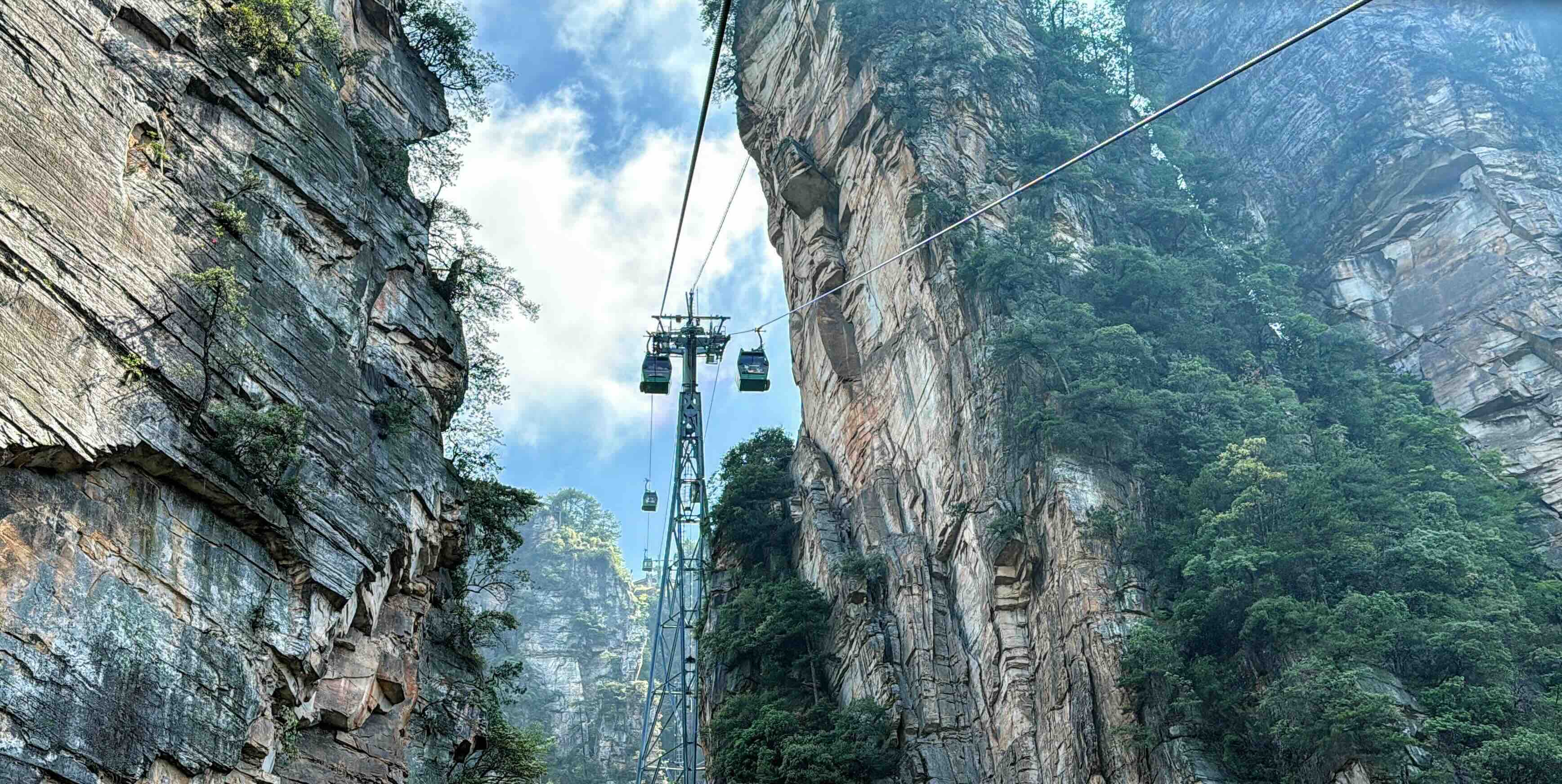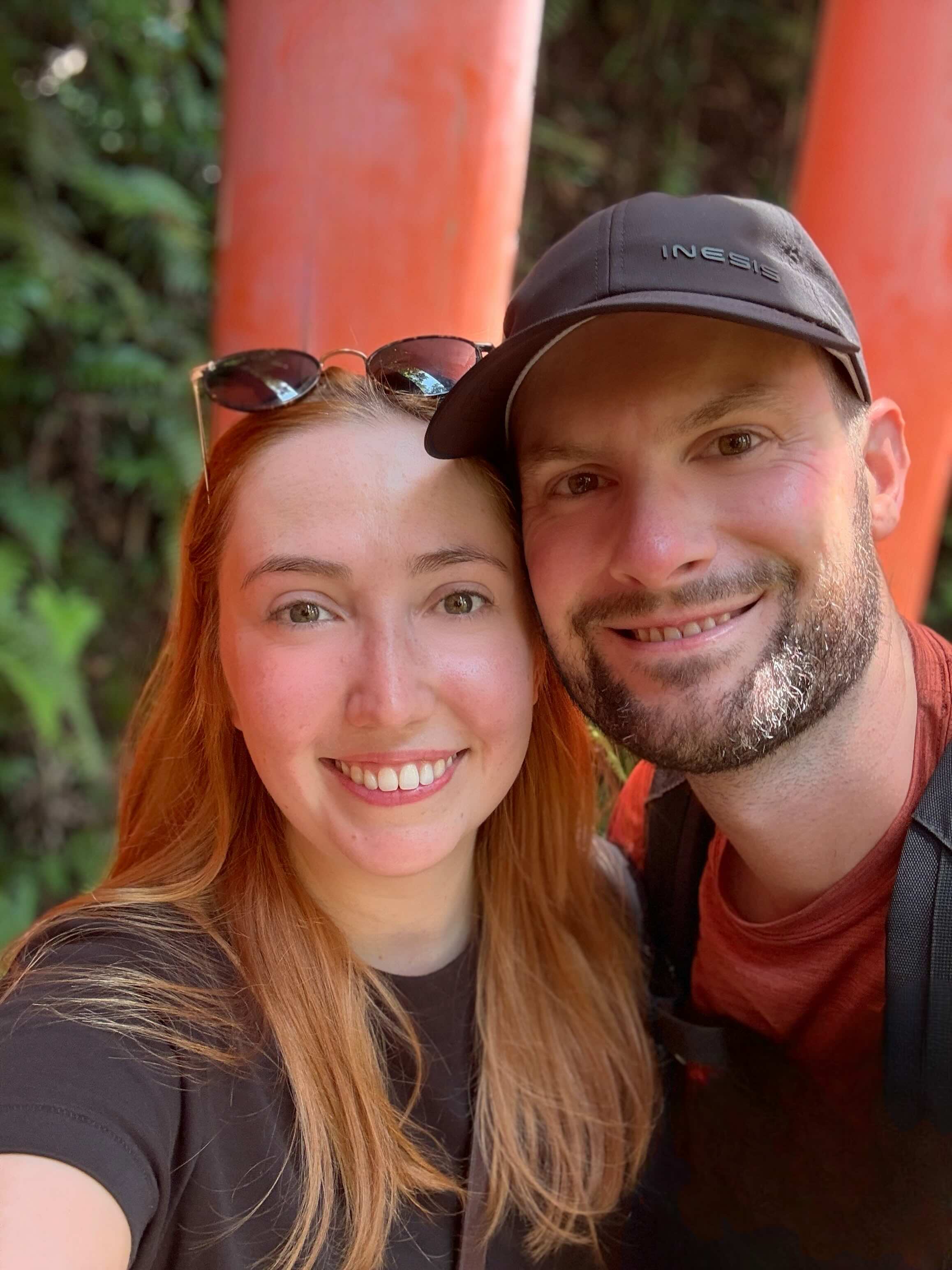
Towering sandstone pillars piercing through the morning mist—scaling the Zhangjiajie National Forest Park is like walking through a living ink painting. Known globally as the inspiration for the "Avatar Mountains," this UNESCO site is a bucket-list destination for hikers and photographers alike. After years of dreaming about this landscape, we spent three days navigating cable cars, steep ladders, and hidden viewpoints. In this comprehensive Zhangjiajie National Forest Park guide, I’ll break down the confusing logistics, how to beat the tour groups, and our exact 3-day itinerary through China’s floating mountains.
Planning a trip to Zhangjiajie can feel daunting. English-language information is scarce, the park is massive, and names are frustratingly ambiguous. But after our visit, we learned the insider tips that made all the difference. If you're planning your own adventure to this UNESCO World Heritage Site, this guide will help you make the most of your time among the “floating” mountains.
For apps, eSIMs, and payment setup, see our China Travel Essentials guide.
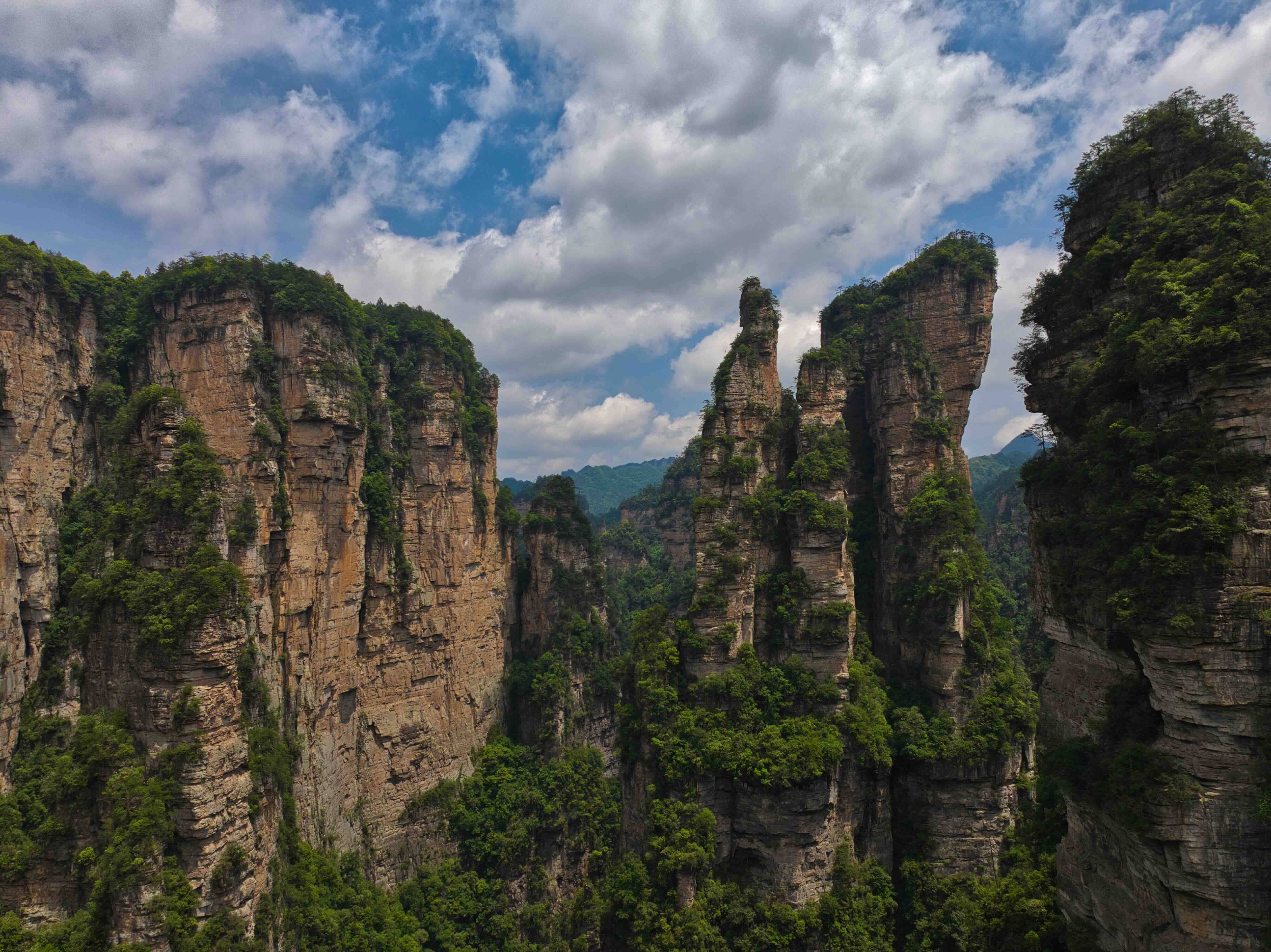
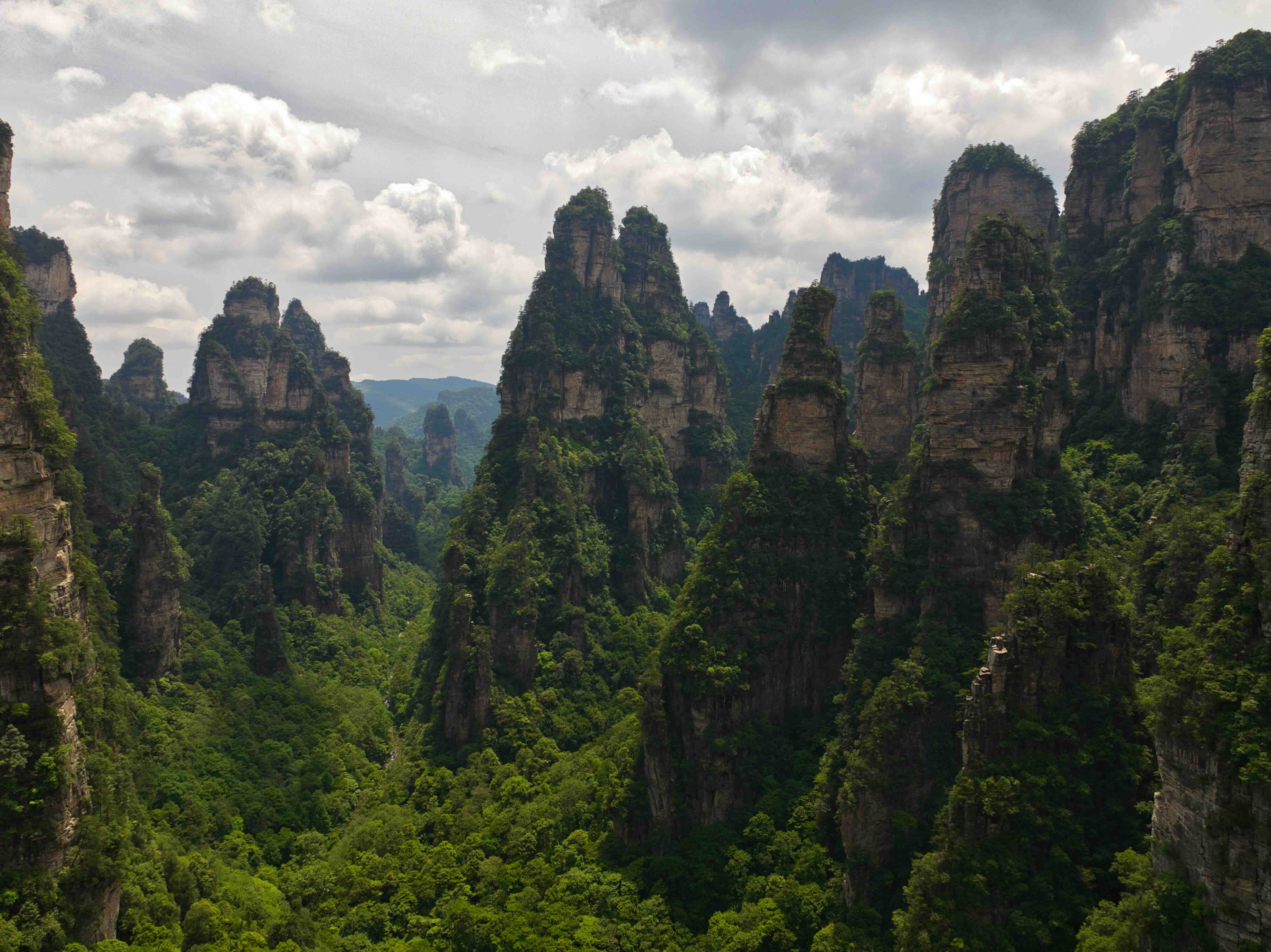
Zhangjiajie (also known as Wulingyuan National Forest Park) is filled with some of the world's most stunning limestone formations. These towering pillars, some reaching over 200 meters high, were formed more than 380 million years ago and served as inspiration for the floating Hallelujah Mountains in James Cameron's Avatar.
Located in Hunan Province in central China, the park protects a vast area of dramatic sandstone peaks, deep ravines, ancient forests, and mystical valleys. It's been a muse to countless artists throughout Chinese history and continues to leave visitors absolutely speechless. The park is roughly divided into five main sections: Yuanjiajie (home to the Avatar Mountains), Tianzishan, Huangshi Village, Yangjiajie, and Golden Whip Stream. Each offers its own unique perspective on this otherworldly landscape.
One of the first challenges you'll face is navigating the ambiguous naming conventions. The city you'll arrive in is called both Zhangjiajie and Dayong. The national park itself goes by Zhangjiajie or Wulingyuan National Forest Park. Even inside the park, English translations are inconsistent, so you'll need some mental flexibility when finding your way around. Don't worry though, it becomes second nature after a day or two.
A common point of confusion for visitors is the famous Glass Bridge. It is important to note that the Zhangjiajie Glass Bridge is NOT inside the National Forest Park. It is located in the Zhangjiajie Grand Canyon, which is a separate park about 40 minutes away by car. If you want to visit both, you will need separate tickets and should ideally dedicate a separate half-day to the Grand Canyon.
By Air: Zhangjiajie Dayong Airport is well-connected to major Chinese cities. You can easily fly in from Beijing, Shanghai, Hong Kong, or any major connecting hub.
By Bullet Train: The city has a high-speed rail station called West Railway Station with connections to Beijing, Shanghai, and Hong Kong, making it accessible as part of a broader China itinerary.
By Sleeper Train: This is the approach we took. Definitely a more adventurous approach, overnight sleeper trains connect from cities like Chongqing and other western destinations. This station is called Zhangjiajie Railway Station, also known as the East Station. If you're coming this way we recommend the soft sleeper cabin because it only has 4 beds (2 levels). They were sold out of this so we had to take the less comfortable hard sleeper cabin which has 6 beds, 3 levels high.
From Zhangjiajie city to the park entrances is about a 40-minute drive, which you can do via Didi (China's equivalent to Uber) or arranged transport through your accommodation.
Because Zhangjiajie city is 40 minutes from the park entrances, we don't recommend staying there if you want to maximize your time hiking. Instead, you have two main options:
If you prefer more comfort or budget-friendly options, there's a wide range of hotels directly outside the Wulingyuan East Gate. You'll lose the convenience of being inside the park overnight, but you'll gain access to more dining options and potentially more comfortable beds. This is the most common option and we would recommend it for the majority of guests.
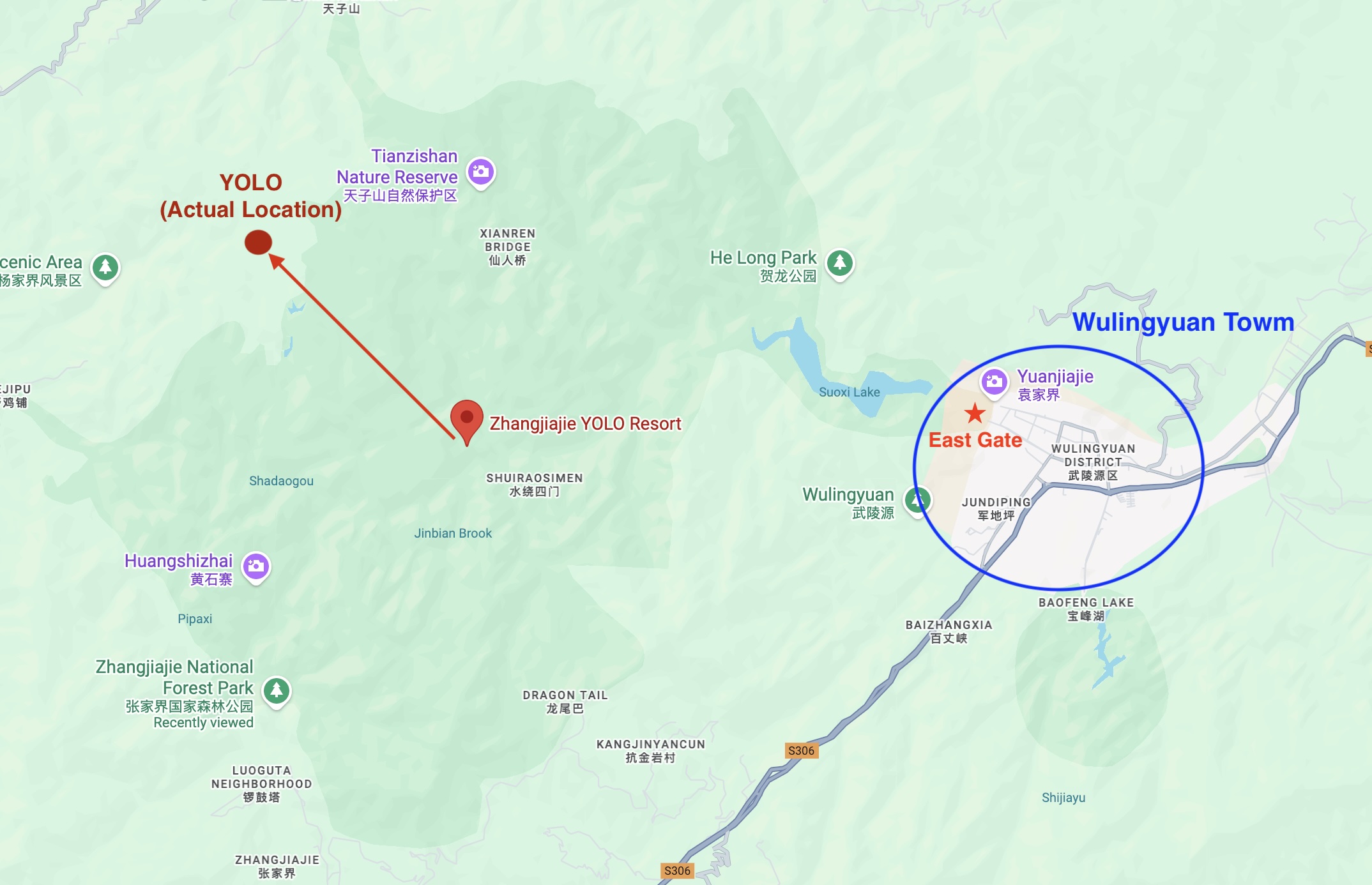
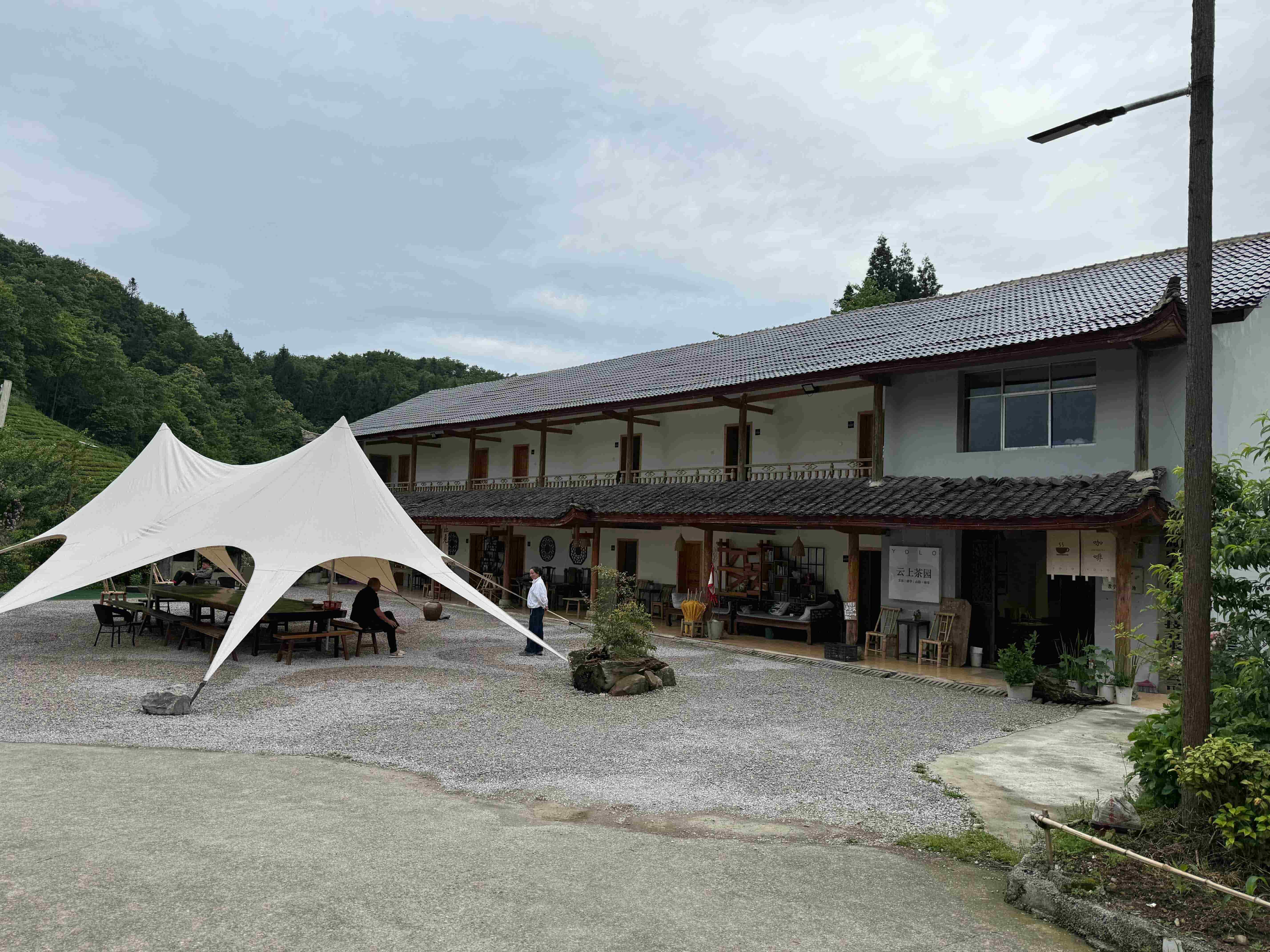
If you’re looking for a more unique experience, but also more rustic, we recommend staying at YOLO Hostel. This is the only accommodation inside the park, and they have many private rooms and shared dorms. This was hands down the best decision we made. Being inside the park meant we could remain after closing time and arrive before opening, beating the massive tour groups and experiencing magical sunset light that day-trippers miss entirely. The hostel sits on a working tea plantation (you'll see farmers picking tea as you walk up), and the staff provided us with detailed maps and insider route recommendations that helped us avoid crowds while still hitting all the highlights. The accommodation is definitely rustic with very firm beds, but the location and local knowledge more than made up for it.
Note: ⭐ The actual location of YOLO is not reflected correctly on Google maps because they don't have accurate maps of China. Google also doesn't have the correct outline of the park itself which is why it looks like YOLO is outside the park in the map below, but it is infact inside the park.
Entry to Zhangjiajie is granted via a 4-day pass that costs ¥227 (approximately $31 USD) in 2025. There are no shorter passes available, so even if you're only visiting for two days, you'll pay the full amount.
Here's where it gets interesting: our accommodation strongly recommended the unlimited cable car and elevator pass, which costs an additional ¥298. This brings your total to ¥525 (about $72 USD). Alternatively, you can pay for cable cars individually at ¥150 per round trip. If you plan to use more than three cable cars during your visit, the unlimited pass quickly pays for itself.
Everything is booked upon arrival at the main entrance. You can't purchase tickets in advance. You'll show your passport, and your face will be scanned. After that, your face becomes your ticket, which makes getting around seamless (and slightly futuristic). YOLO Hostel Benefit: When we booked with YOLO Hostel, they were able to book our entrance ticket and cable car and elevator pass in advance and we could pick them when we arrived at the front gate.
Important: Buses within the park are completely free and run extremely frequently, though the drivers navigate the twisting mountain roads at alarming speeds. Wear your seatbelt—we were nearly thrown from our seats on the first sharp turn.
Zhangjiajie has multiple entrance gates, and choosing the right one can make a big difference in your experience:
Wulingyuan East Gate (Our Choice): This was our entry point and, based on our research, is considered the main entrance and is most popular with visitors. This entrance provides easy access to the Tianzi Mountain and Helong Park and is convenient if you're staying at accommodations outside this gate or at YOLO Hostel inside the park.
Forest Park Entrance (Zhangjiajie Gate): This is the other main entrance and tends to be more popular with tour groups. It provides direct access to Golden Whip Stream and Bailong Elevator and is closer to Huangshi Village.
Tianzi Mountain Entrance: Located in the north, this entrance allows you to start from the top rather than the valley floor. It's less commonly used by first-time visitors because it is further away from the city, but can be strategic if your itinerary starts with the northern sections.
Yangjiajie Entrance: The least-used entrance, located in the northwest section of the park gives you easy access to Yangjiajie cableway station and Huangshi Village.
How Long to Spend: We recommend at least 2 full days in the park. This gives you enough time to see the major highlights without rushing. If you have 3-4 days, even better—you can explore at a more leisurely pace and revisit favorite spots and maximise the 4-day ticket.
Best Time to Visit: May, right after the Chinese May holidays, is ideal. It's shoulder season with far fewer crowds, and the weather is perfect, not too hot, not too cold. June and October are still good times to visit. Avoid July, August, and September, which are peak months with massive crowds and hot, humid conditions. Before you book anything, be sure to check whether there are any national holidays in China so you can avoid them!
Now that you have all the information about logistics, here’s the itinerary we recommend once you get into the park. The staff at YOLO Hostel carefully mapped out a route through the park that would help us avoid the massive tour groups while still seeing all the major attractions. These insider recommendations shaped our entire visit and we'll share all that information with you below. On day 2 specifically our hosts recommended we go the opposite directions of most tour groups so we avoided all the crowds.
The High Level Summary:
- Day 1: Yangjiajie and Hidden Gems
- Day 2: The Avatar Mountains & Golden Whip Stream
- Day 3: Tianzi Mountain & Departure
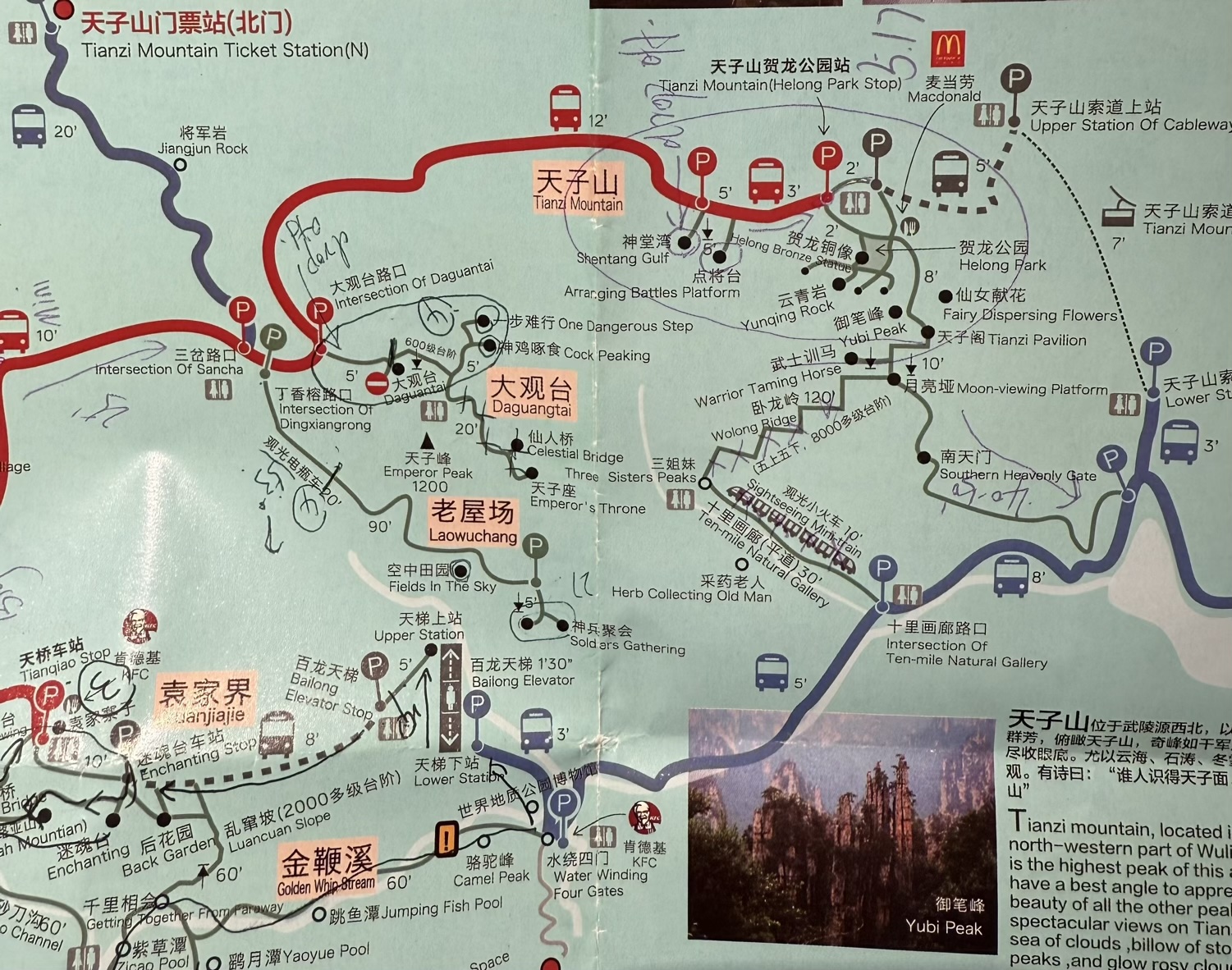
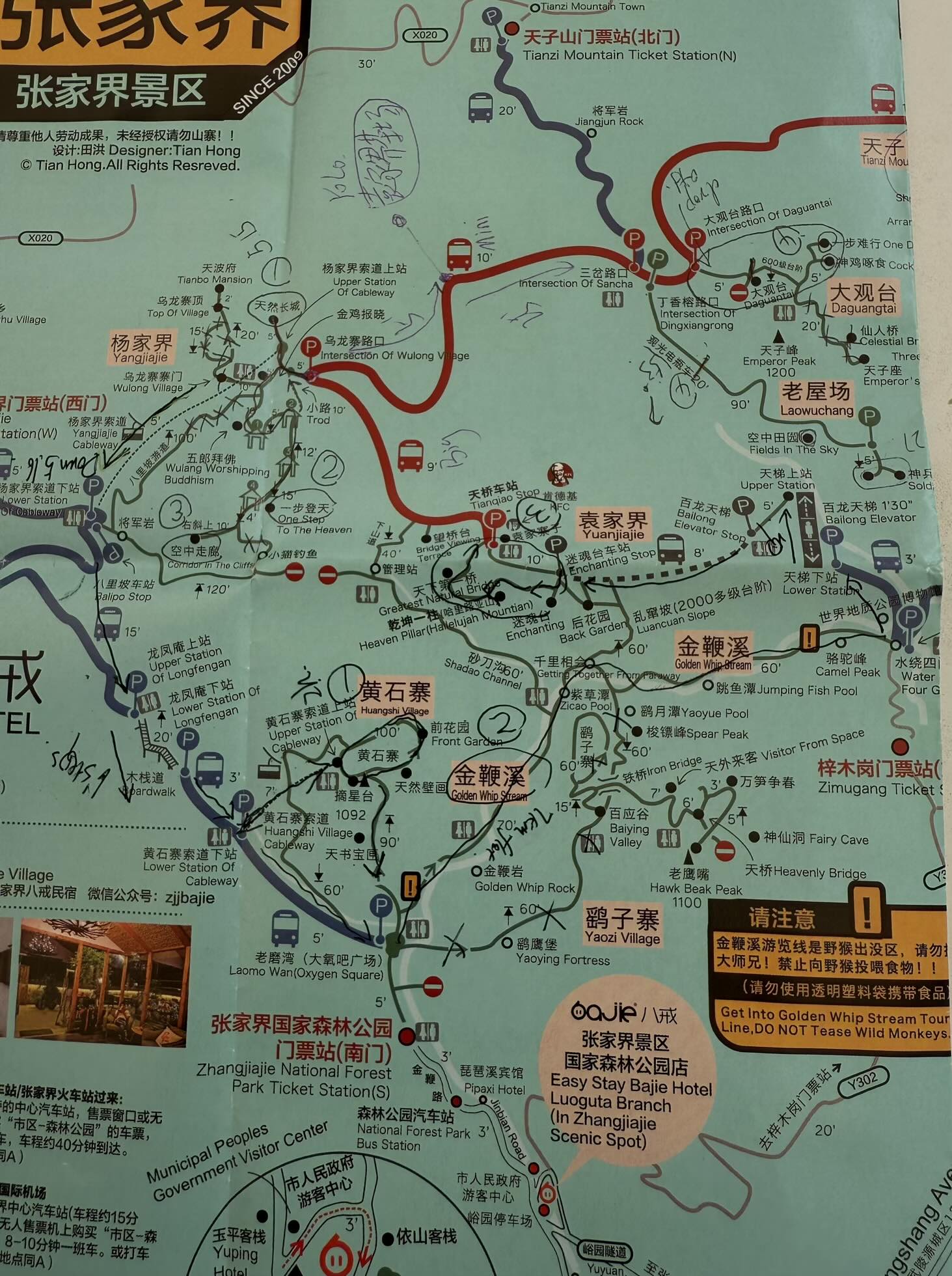
Day 1: Yangjiajie and Hidden Gems
We took a Didi from Zhangjiajie city to the East Gate, arriving at 10am with no line whatsoever. From our research, the East Gate is typically less busy than the Forest Park entrance, which is worth keeping in mind.
Our first priority was checking into our accommodation. The journey to the hostel was an adventure in itself and gave us our first taste of the park's scale. We boarded the free shuttle bus from the entrance gate to the Tianzi Mountain cable way. This was a 13-minute white-knuckle drive that had us holding on tightly as the driver whipped around corners at breakneck speed.
The cable car ride up was our first glimpse of the famous limestone pillars, and our excitement grew as the mist lifted and we climbed above the clouds. At the top, we transferred to another shuttle bus heading toward Yangjiajie. The YOLO Hostel stop isn't a default stop, so we made sure to tell the driver in advance. After a 16-minute ride, we disembarked and walked the final 8 minutes to the hostel, passing tea farmers at work in the surrounding plantation.
After check-in we only had half a day remaining, and the hostel staff recommended we explore the Yangjiajie area, saving the most famous spots (Golden Whip Stream, Bailong Elevator, and the Avatar Mountains) for the next full day when we'd have more time.
| Name | Great Rock Wall |
| Distance | 1.6km return |
| Duration | 20-30 minutes |
| Level | Easy |
We hopped back on the bus to our first viewpoint: the Great Rock Wall. The buses come so frequently that you're never waiting more than a few minutes. We rode for 10 minutes and got off at the Yangjiajie cable way station. A short walk from there will lead you to a formation that offers something different from the typical pillar-like structures found elsewhere in the park. Instead, you'll find long, flat-topped sandstone ridges that resemble a miniature Great Wall when viewed head-on. These 380-million-year-old formations are worth the quick detour, though they're just the warm-up for what's to come.
| Name | One Step to Heaven |
| Distance | 3.2km return |
| Duration | 1-1.5 hours |
| Elevation Gain | Moderate |
| Level | Moderate to Challenging (due to the ladder) |
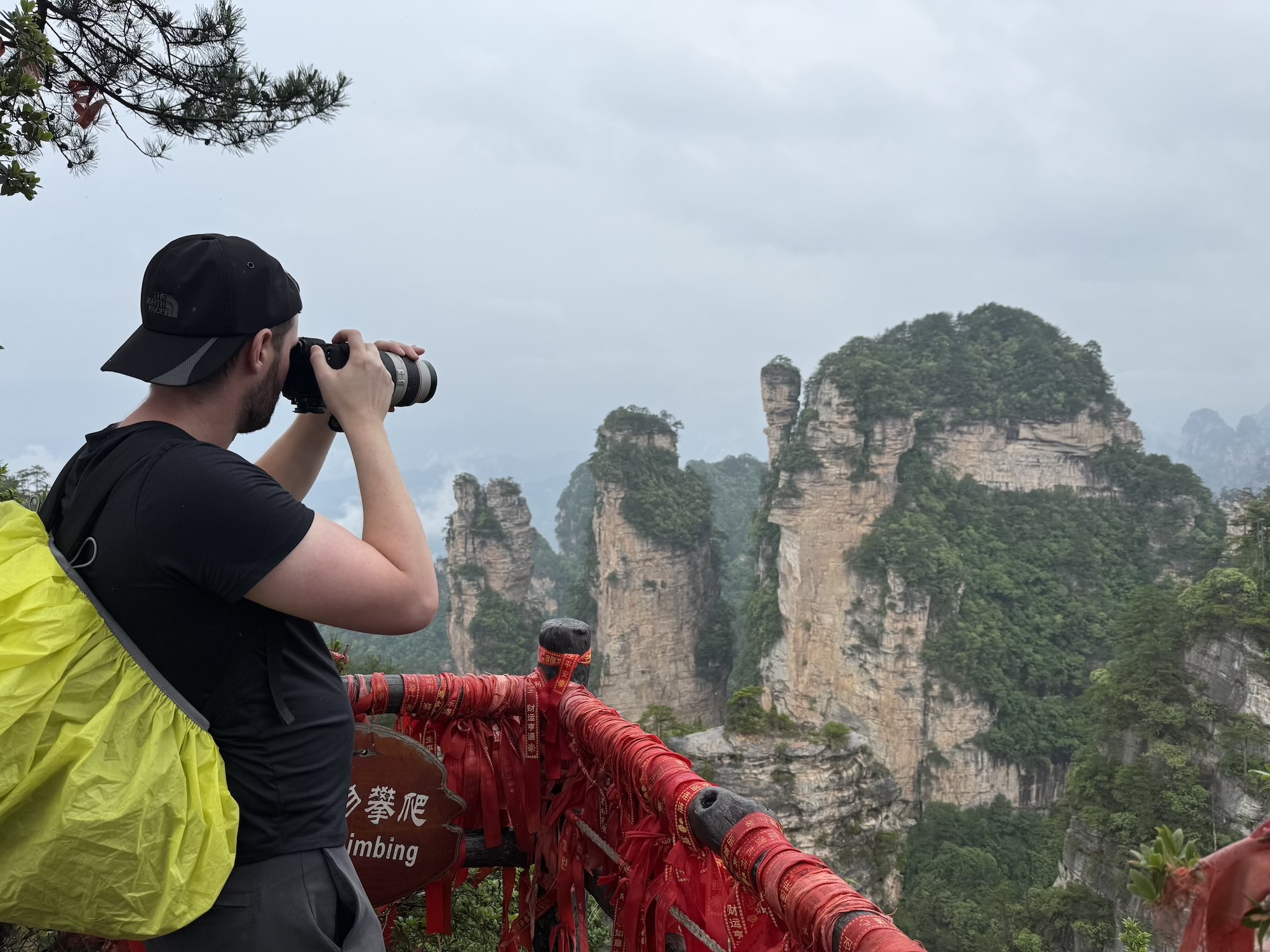
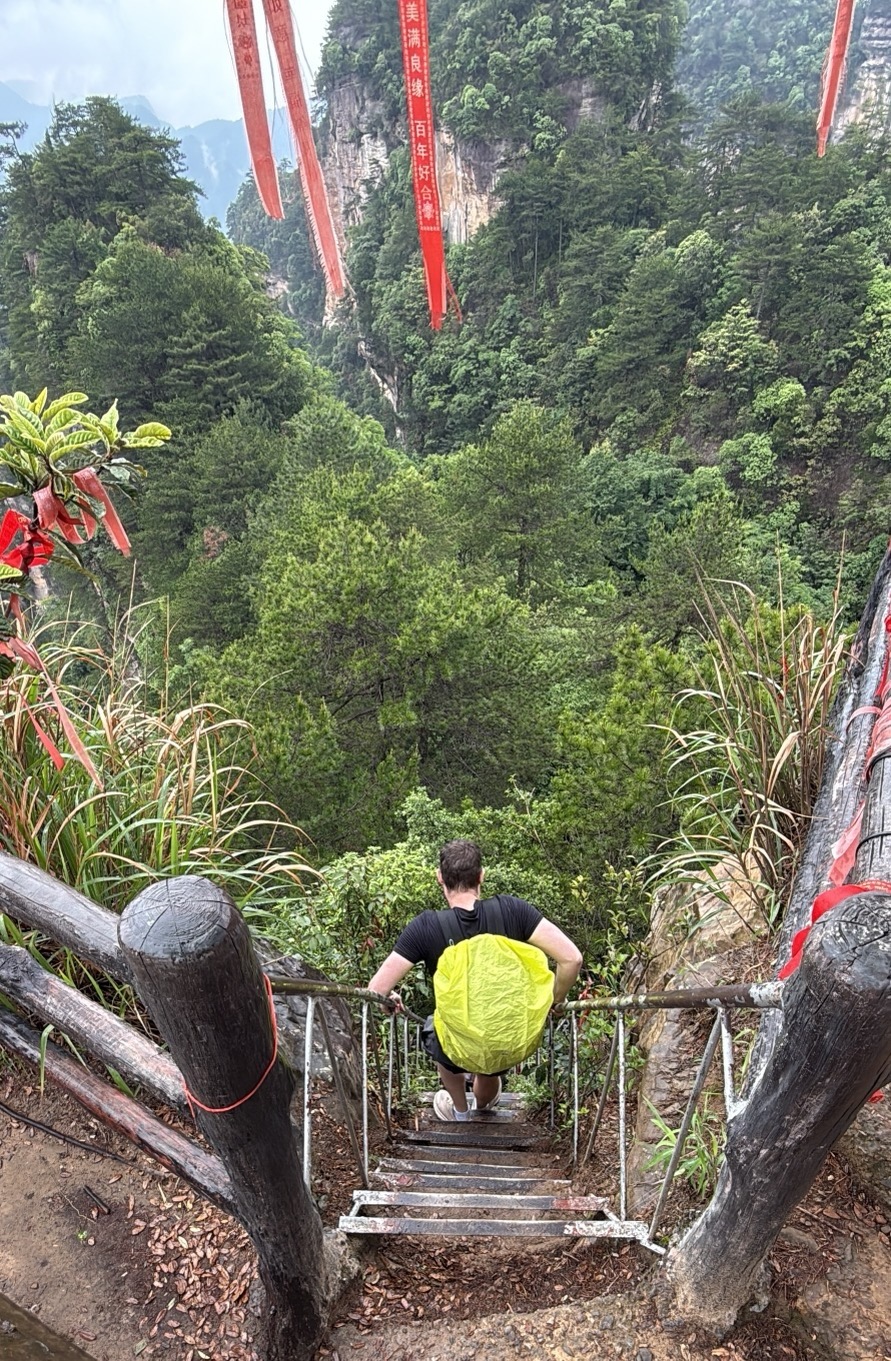
This was one of the park's true hidden gems and easily one of our favorite viewpoints. The trail starts near the Yangjiajie cable way upper station, opposite the cable way entrance, you'll find a set of stairs heading down into the forest. The hike itself is fairly easy, with only modest elevation gain as we walked through dense trees on a well-defined path. The forest provided welcome shade and a sense of anticipation built with each step.
Upon reaching the base of the viewpoint, we encountered the challenge: a steep ladder with 32 metal rungs bolted directly into the rock face. This is definitely not for anyone with a fear of heights. The ladder sways slightly as you climb, and looking down reveals a dizzying drop below.
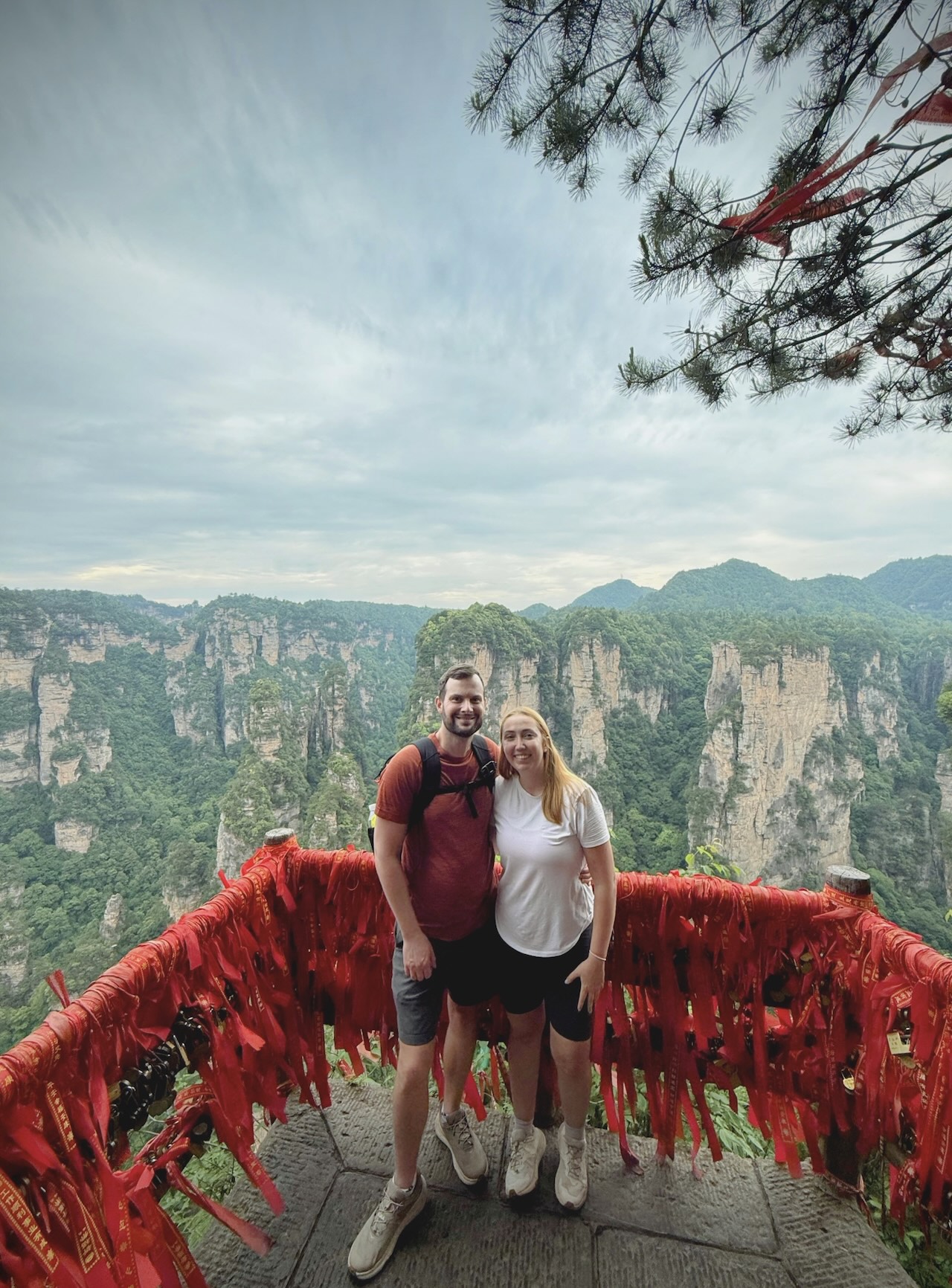
But I can assure you that the views at the top were worth it. We stood on the highest peak in the Yangjiajie area with breathtaking 360-degree panoramic views of the sandstone pillars stretching to the horizon. We spent a good twenty minutes up here, taking photos and simply absorbing the scale of the landscape. The descent down the ladder was, predictably, scarier than the climb up. Take your time and maintain three points of contact at all times.
| Name | Corridor in the Cliffs |
| Distance | 1km (from One Step to Heaven) |
| Duration | 20-30 minutes |
| Level | Easy to Moderate |
The second hidden gem was just a short 20-30 minute hike further along the same trail. The path mostly descends via stairs, making it fairly straightforward. After the stairs, we came across something remarkable: a path literally carved out of the cliff wall. Walking along this exposed section, with sheer drops to one side, a steep rock face to the other and thick clouds surrounding us, we felt like we were traversing the edge of the world. The final lookout delivered more spectacular panoramic views of the surrounding peaks and valleys. Again we spent 20 minutes here, enjoying the views despite the rain.
In total, we hiked 5.8km on Day 1, which took us about 2 hours (not including the time we spent soaking in views and taking photos). As the sun began to set behind the pillars, casting long shadows across the landscape, we made our way back to the hostel, tired but exhilarated. Tomorrow would be the big day: the Avatar Mountains.
We started early with breakfast at the hostel and caught one of the first buses of the day. By 9am, we were descending on the Yangjiajie cable car through the morning clouds that clung to the cliffs. At the base, we transferred to a bus that took us down the valley to the Longfengan boardwalk, a pleasant 15-minute downhill walk through the forest to the next bus stop. A short ride later, we were boarding the cable car up to Huangshi Village.
| Name | Huangshi Village |
| Distance | 5km loop |
| Duration | 1-2 hours |
| Level | Easy |
Don't let the name fool you, Huangshi Village is less of a village and more of a rocky plateau surrounded by stellar scenery. The loop around the top features 16 stunning viewpoints, each offering unique perspectives on the surrounding pillars and valleys. The plateau walk is relatively flat and easy, making it accessible for most fitness levels. We spent about 90 minutes here, moving between viewpoints and clouds burst and break between the distant peaks. The morning mist was just beginning to burn off, revealing layer upon layer of sandstone formations receding into the distance.
Pro Tip: This is where you should stop for lunch. There are several restaurants at the top, unlike some other areas of the park. We foolishly assumed we'd find food at the lower cable car station. We were wrong. Everything was closed because of the low season, forcing us to board another bus hungry. Don't make our mistake, eat here.
| Name | Golden Whip Stream |
| Distance | 7.5km one-way |
| Duration | 1.5-2 hours |
| Level | Easy |
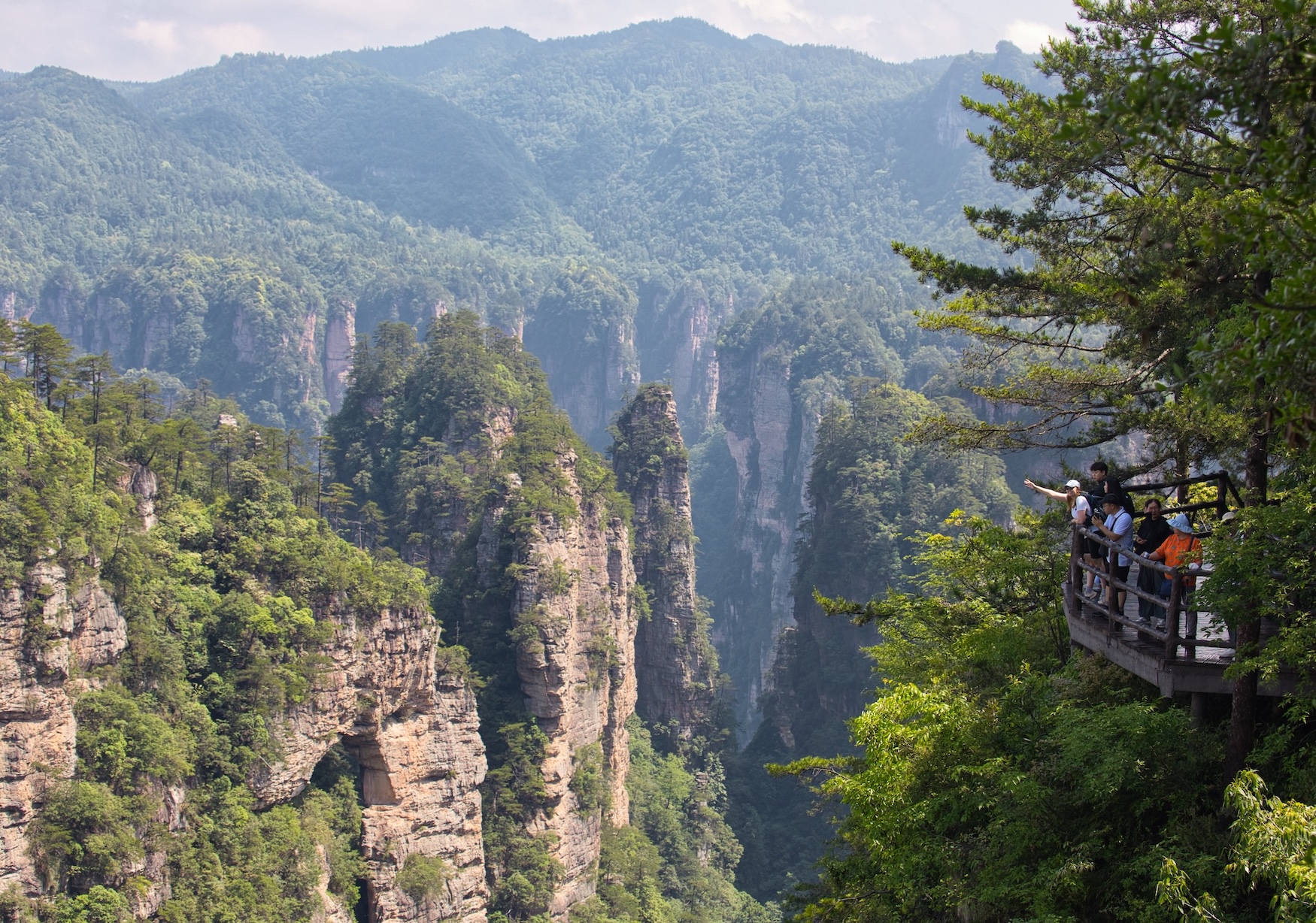
After our cable car descent and bus ride to the trailhead, we finally found some limited food options and grabbed a quick snack before starting one of the park's most beloved trails. Golden Whip Stream is a gentle, rewarding hike along the valley floor. The trail follows a crystal-clear stream through a narrow gorge, and whenever the canopy breaks, you're treated to views of the towering limestone pillars that made this park famous. There's a gentle gradient, but you barely notice it. Even as the day heated up, we remained in shade for most of the walk, making it comfortable despite the humidity.
The trail is well-maintained with occasional benches and lavatories along the way. The sound of rushing water accompanies you throughout, and the lush vegetation creates a completely different atmosphere from the exposed mountaintop viewpoints.
Critical Warning: Many monkeys prowl this area, and they're experts at extracting food from tourists, either by begging or biting. We witnessed both. The best practice is to avoid eye contact, keep your hands in your pockets, and ensure nothing in your bag can be easily snatched. Walk briskly around them and never, ever feed or touch them. There are first aid facilities at the end of the trail specifically for treating monkey bites, which should tell you everything you need to know about how frequently they occur.
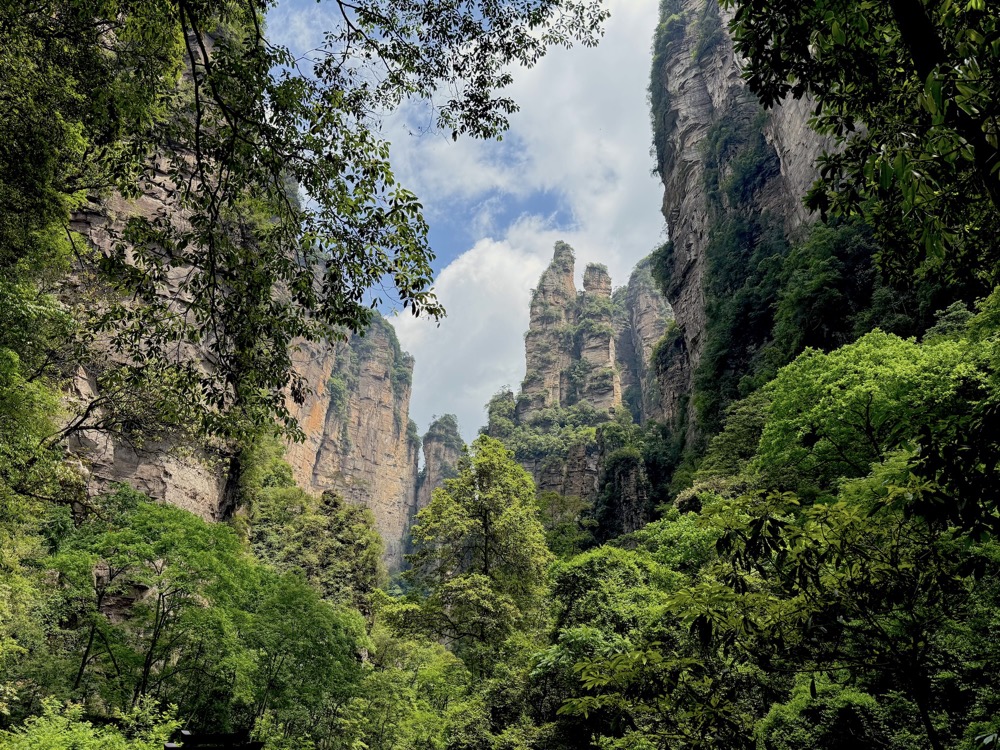
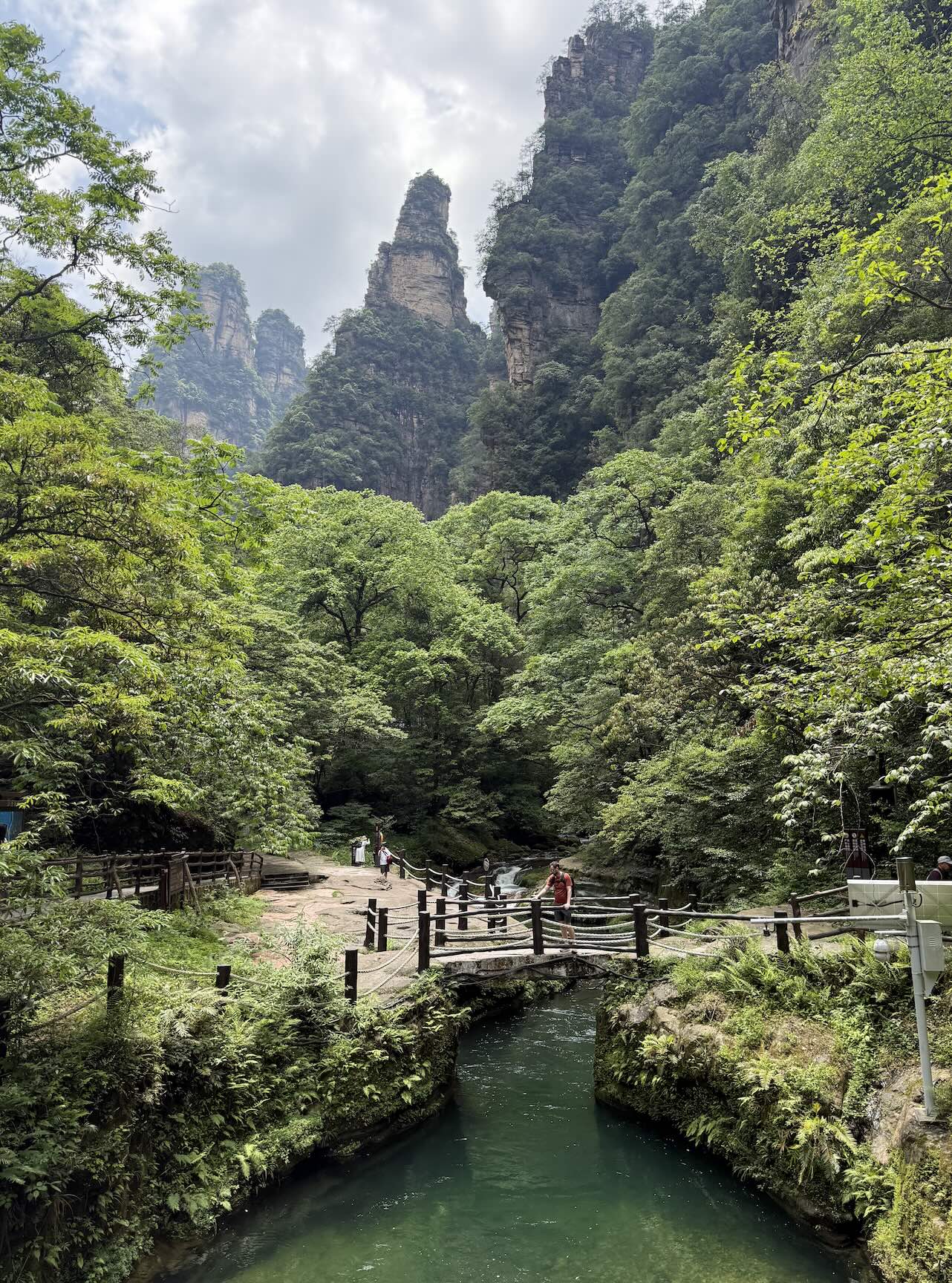
After spending all morning hiking, we stopped at a rest area for coffee and were tempted by the offer of a traditional Chinese foot soak and massage. For ¥100 (about $14 USD), we got a 30-minute foot soak followed by a 30-minute massage. It was absolutely worth it and rejuvenated us for the afternoon's main event. You'll also find a plethora of restaurants and cafes here.
Finding the bus from the rest stop to the Bailong Elevator isn't immediately obvious. Keep walking toward the road and keep the large building on your left, and you'll eventually spot a small wooden sign with "Bailong Lower Lift Station" written in small letters. It's only a 3-minute bus ride, but if you prefer you can walk, which takes about 20 minutes.
The Bailong Elevator can get extremely busy, we saw a massive queuing area marked out with barriers. But thanks to the insider tips from our hostel staff, we were heading against the flow of people (most tour groups do the route in reverse) and didn't wait long at all. Despite being an elevator, you still have to climb quite a lot of stairs to reach it, so it's not as accessible as you might expect. But once you're inside, the experience is worth it. The glass elevator rockets up the cliff face, and everyone gasped audibly as the view suddenly appeared. It's dramatic and thrilling and provides a unique perspective you can't get anywhere else.
| Name | Yuanjiajie: The Avatar Mountains |
| Distance | 5km loop |
| Duration | 1-2 hours |
| Level | Easy |
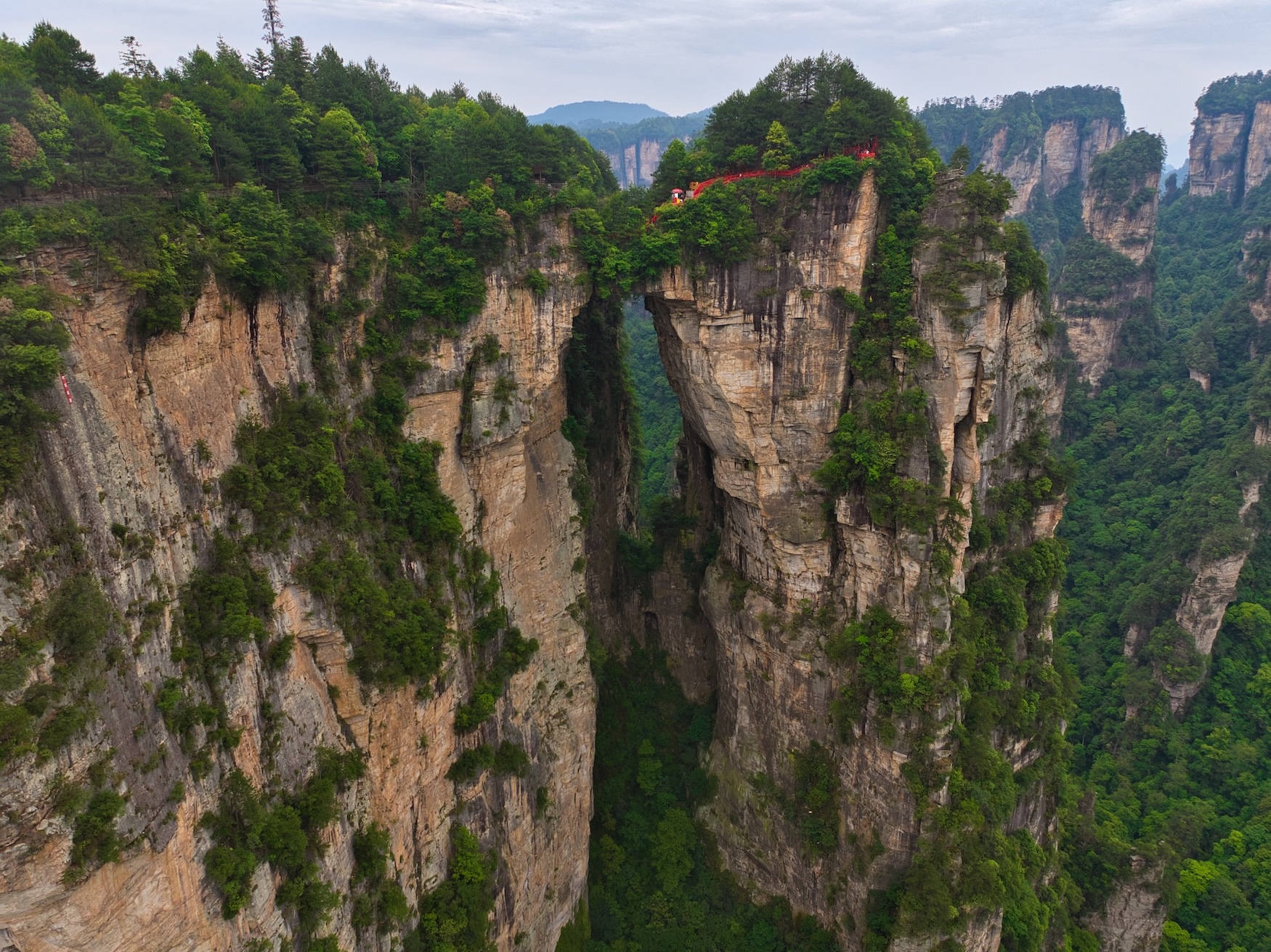
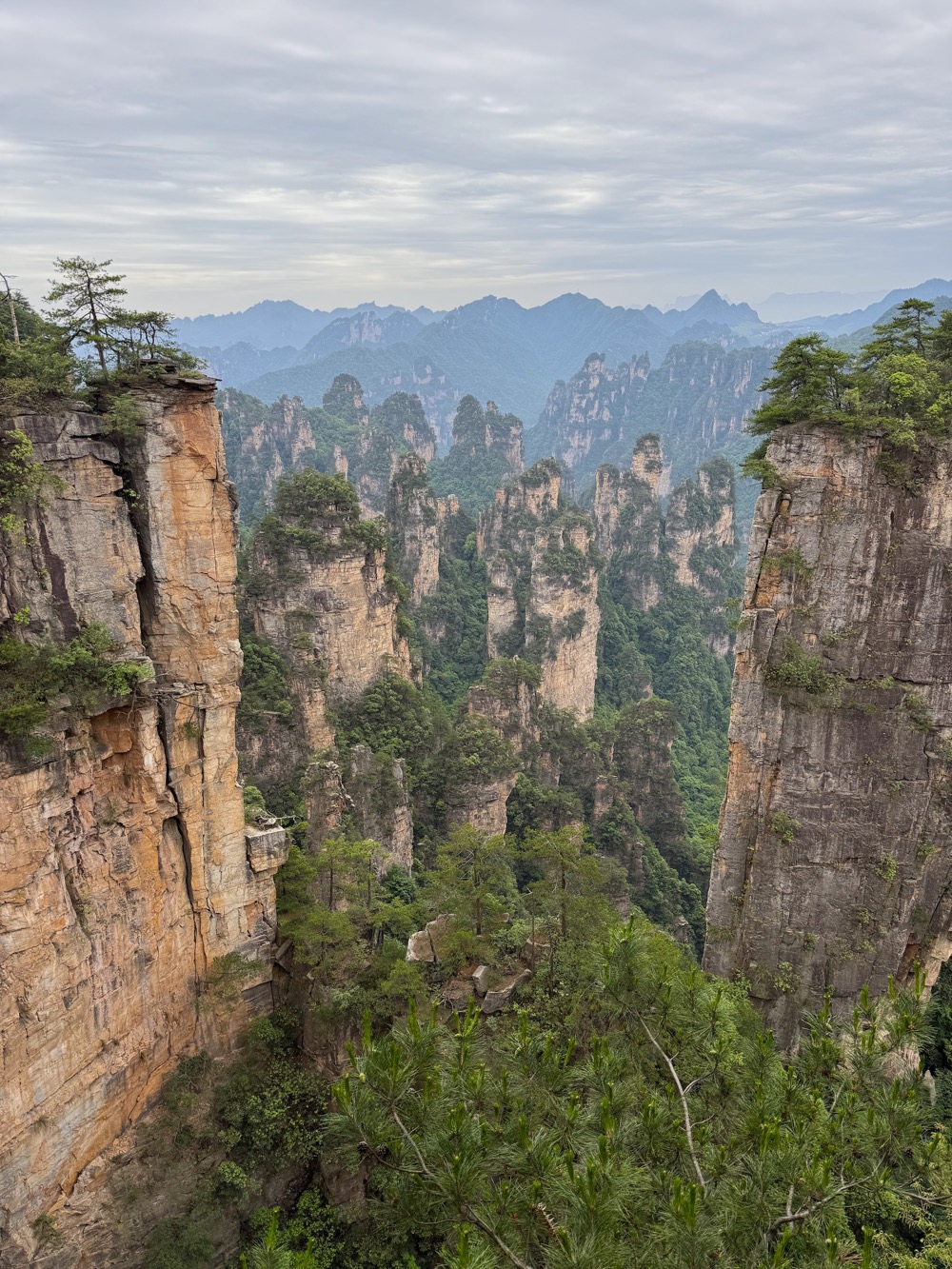
From the elevator, it's a short walk to the bus stop that takes you to Yuanjiajie, the area that inspired the floating mountains in Avatar. The queue of people waiting to descend in the elevator was extraordinarily long, and we were grateful to be walking the opposite direction. The 8-minute bus ride had only a handful of people on it, and the trail to the six viewpoints was blissfully quiet.
Yuanjiajie is one of the most iconic areas within Zhangjiajie National Forest Park, and it absolutely lived up to the hype. The area is home to six breathtaking viewpoints, each offering a unique perspective on this surreal landscape:
Back Garden: Filled with lush scenery and misty cliffs, this felt like stepping into a classical Chinese painting. The layered peaks and shifting clouds created a sense of endless depth.
Enchanted Terrace: This viewpoint delivers a dizzying panorama of vertical spires rising from the mist. It's here that you really grasp the scale of these formations.
Heaven Pillar (Avatar Hallelujah Mountain): Perhaps the most iconic of them all, this is the pillar that directly inspired the movie. Standing before it felt surreal—we'd seen this image so many times in photos, but nothing prepared us for seeing it in person, watching the mist swirl around its base while the top reached into the blue sky.
First Bridge Under Heaven: This natural stone arch is suspended high between two peaks and is one of the most photographed spots in the park. For good reason—it's an engineering marvel of nature.
Heaven-Linking Bridge: Another dramatic natural formation that impresses with its sheer scale and the seemingly impossible physics that keep it standing. Lost Soul Platform: This offers sweeping, less-crowded views that are especially atmospheric in early morning mist. By the time we arrived in the afternoon, the light was beginning to turn golden, painting the pillars in warm tones.
We spent about an hour walking through this wonderful landscape, though we could have stayed much longer. However, the light was beginning to fade, and we needed to catch the last bus back to the Yangjiajie Cable Car station before the park closed for the day.
To make our departure easier, we opted to have our luggage driven to the East Gate for a small fee (about $15). This meant we could spend one final morning in the park without hauling our bags around. The luggage arrived at a hotel near the gate by 1pm, giving us plenty of time to see two more stunning viewpoints. You can also have your bags delivered back to Zhangjiahie city if you prefer.
| Name | One Dangerous Step |
| Distance | 4km return |
| Duration | 1-1.5 hours |
| Level | Moderate |
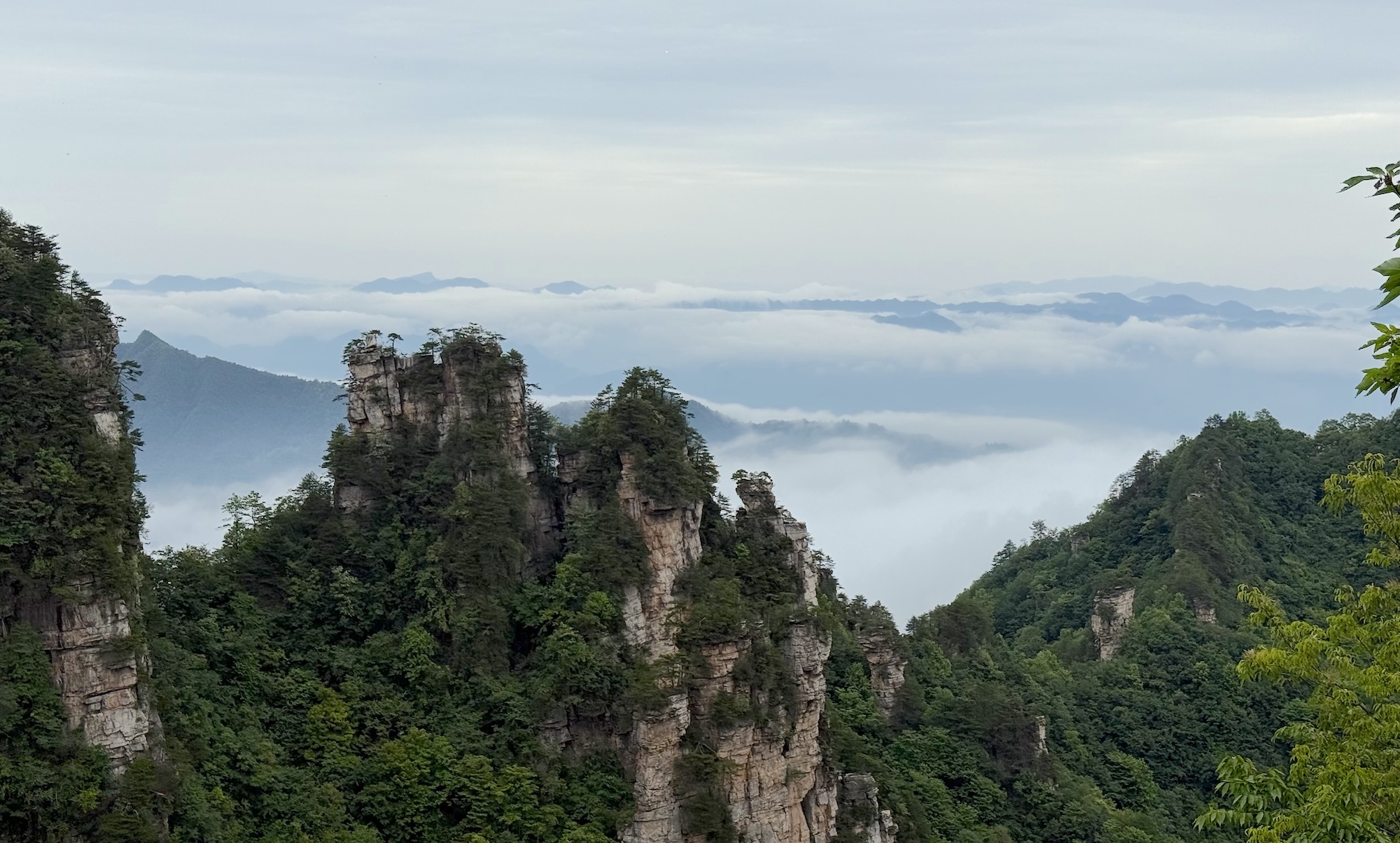
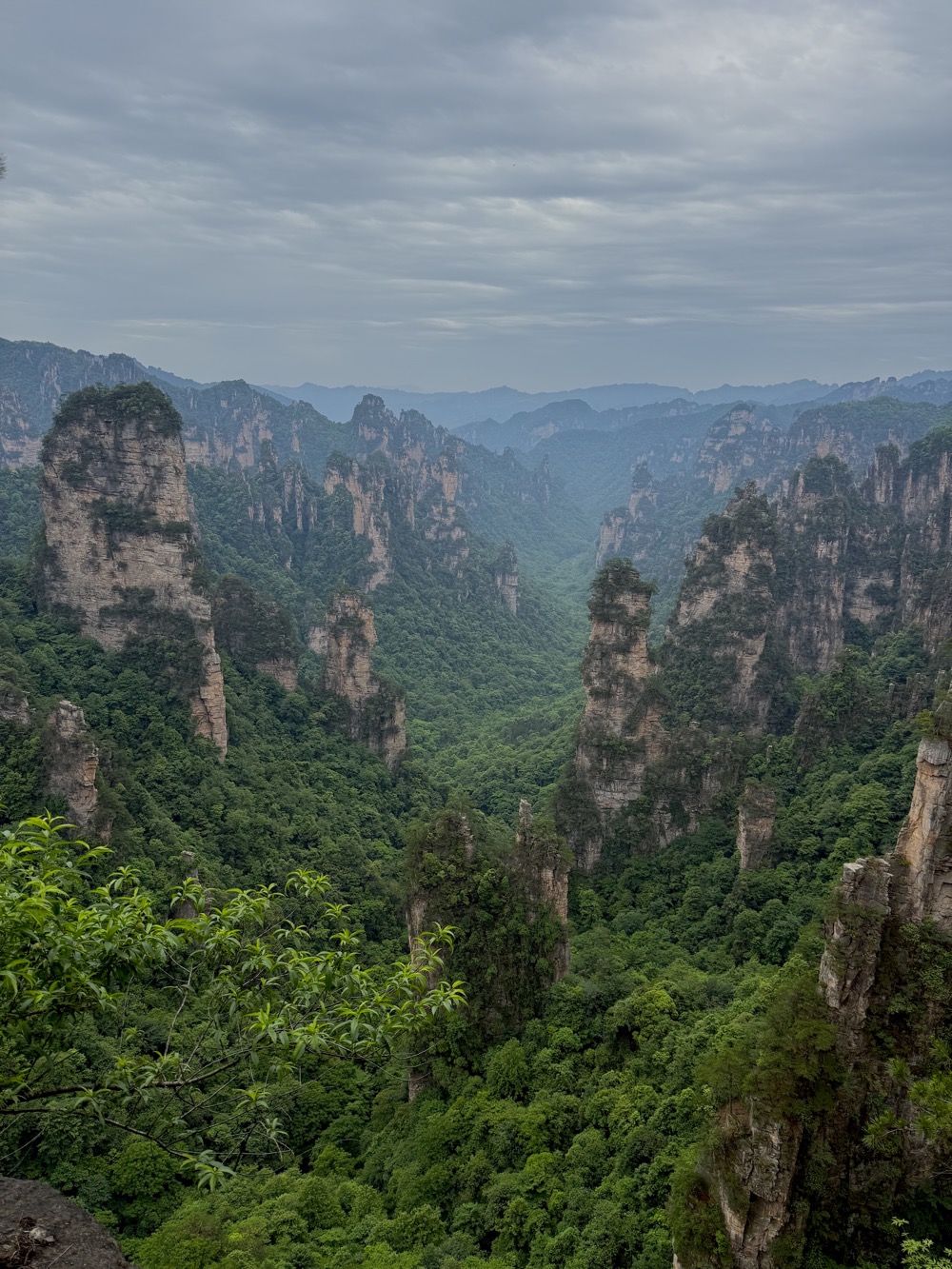
This viewpoint is a stop on the bus route to Tianzi Mountain Helong Park station. It's not a popular stop, so you'll need to tell the bus driver you want to exit at Daguantai. From the bus stop, it's an easy hike to a huge rock outcropping that overlooks the park. Despite its dramatic name, "One Dangerous Step" is less treacherous than it sounds (though still not for anyone uncomfortable with heights). The viewpoint sits atop a rock formation, and standing there, you're surrounded by the park's signature pillars in every direction. It's a magnificent final perspective on this incredible landscape.
| Name | Pecking Rooster |
| Distance | 3km return |
| Duration | 1-1.5 hours |
| Level | Moderate (steep descent on stairs) |
We hopped back on the bus and got off at Pecking Rooster stop, another optional stop along the Tianzi Mountain-Helong Park shuttle bus route. This hike involves a steep descent down many, many stairs, but it was genuinely worth the effort and was one of our favorite viewpoints in the entire park. The name comes from a sandstone pillar whose shape supposedly resembles a pecking rooster, perched atop a steep ridge. We never quite found the perfect angle to see the rooster clearly, but honestly, it didn't matter. This viewpoint offers stunning 360-degree views of cascading ridges, terraced valleys, and distant mountain waves that seem to roll on forever.
As we made our way back up the stairs (significantly more challenging than the descent), we took frequent breaks to catch our breath and soak in the last views. By late morning, we caught the bus to the East Gate, collected our luggage, and began our journey onward, already missing the surreal landscape we'd just left behind.
Important Note: This viewpoint goes by a couple different names that all sound similar to Pecking Rooster. So this is another instance of close enough.
Yes! The towering quartz-sandstone pillars of Zhangjiajie National Forest Park were the primary inspiration for the floating Hallelujah Mountains in James Cameron’s Avatar. Specifically, the "Southern Sky Column" was officially renamed "Avatar Hallelujah Mountain" in 2010.
It can be physically demanding. While there are buses, cable cars, and elevators to help you gain elevation, you will still likely walk 10,000 to 20,000 steps a day, much of which involves steep concrete stairs.
No, you don't need one if you are comfortable using translation apps and offline maps. However, the park is complex, so following a structured itinerary like this one is essential to avoid getting lost or stuck in massive tour group queues.
To buy food and souvenires in the park, you can download the WeChat or Alipay app and link your international Visa or Mastercard. This is essential, as many vendors in the park do not accept western credit cards or cash easily.
Language: Download a translation app before you go. Very few people speak English in the park, and having a translation tool is invaluable for asking directions or ordering food. ... Payments: Like the rest of China, everywhere in the park accepts WeChat Pay or Alipay. For the three weeks we were in China, we didn't use cash at all. You should set up one or both of these Chinese payment apps before arrival, you can link them to a foreign credit card and make mobile payments throughout the country. Apple pay and Google Pay are seldom used. Visa, Mastercard, and Amex are also not widely accepted outside of paying for hotels. Cash is accepted, although reluctantly. Obtaining cash from an ATM can be tricky as most banks don't accept foreign cards. I've had luck with ICBC in the past, but you really won't need cash while you're in China.
Tipping: Tips and gratuities are not common in China, and almost never expected. You're welcome to tip if you think the service was outstanding, and it is appreciated.
Water and Snacks: Bring your own water and snacks for hiking days. While there are vendors in the park, prices are higher (although never exorbitant) and availability can be inconsistent, especially in low season.
Required Fitness Level: Most trails are moderate, but the constant stairs and elevation changes will challenge even fit hikers. Take your time and know your limits. In the summer the humidity and heat are oppressive and will challenge even the fittest person.
Photography: The park is extraordinary for photography. Bring extra batteries and memory cards. The light is best in the early morning and late afternoon. There are many photographers and drone operators around the park who are willing to take photos and videos for you for a fee. They are pretty reasonably priced and many guests were taking advantage. Unlike most of the rest of the world, drones are permitted within the park if you have a government issued permit like us (cost about $50USD).
Avoiding Crowds: Following the insider route our hostel provided (especially doing the Avatar Mountains in reverse from most tour groups) made a massive difference. If staying at YOLO, take their advice seriously: they know the crowd patterns intimately.
Signs and Names: Don't stress if sign names don't match exactly what you're looking for. "Close enough" is usually fine, and when in doubt, ask a park worker using your translation app.
Zhangjiajie National Forest Park is unlike anywhere else on Earth. Those sandstone pillars rising through morning mist, the hidden viewpoints reached by metal ladders bolted to cliff faces, the surreal experience of walking through a landscape that inspired a sci-fi movie—it all creates memories that photographs can't quite capture.
Yes, the park gets crowded. Yes, navigating without Chinese language skills is challenging. Yes, the humidity in summer is intense. But it is a real adventure! Standing atop One Step to Heaven with panoramic views of ancient stone pillars stretching to the horizon, or watching mist swirl around the Avatar Hallelujah Mountain as golden afternoon light paints it orange, you'll understand why this place has captured imaginations for centuries.
If you only have two days, you can definitely see the major highlights. But if you can manage three, you'll get to explore some of the park's quieter corners and experience it at a more relaxed pace. Either way, Zhangjiajie will leave you absolutely awestruck and probably planning your return visit before you've even left.