Southern Africa: Our Road Trip Itinerary

Southern Africa: Our Road Trip Itinerary

Erin Gallagher & Kristian Allin

Written by Erin Gallagher & Kristian Allin

Published on February 1, 2026

ItinerarySafariHiking

The Adventure of a Lifetime

In 2025, my partner and I quit our jobs and took a year off to travel the world. We knew a road trip through Southern Africa was going to be the highlight of our trip and it didn't disappoint. We spent 46 days, just over 6 weeks, exploring South Africa, Eswatini, and Lesotho, driving over 7,000 kilometers through some of the must diverse and stunning landscapes on the continent. From the wildlife-rich savannas of Kruger to the dramatic peaks of the Drakensberg, the rugged mountain passes of Lesotho to the pristine beaches of the Garden Route, this trip had it all.

When planning this trip there weren't a lot of resources about a road trip of this length through Southern Africa, so we wanted to share our itinerary and experiences to help others plan their own adventures.

This post will cover our itinerary from a high level. We squeezed a lot in over six and a half weeks, but every moment was worth it!
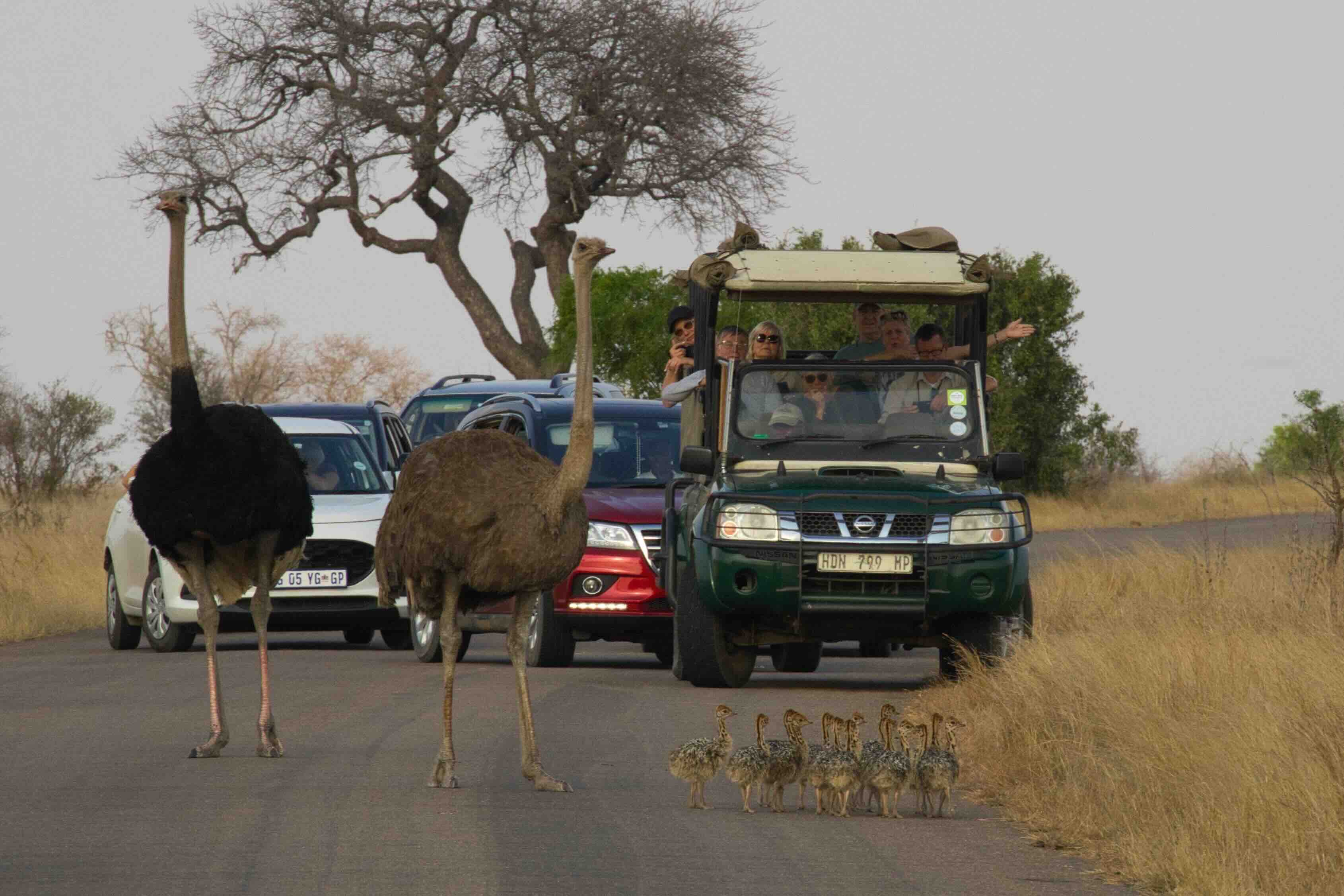
Ostrich in Kruger National Park
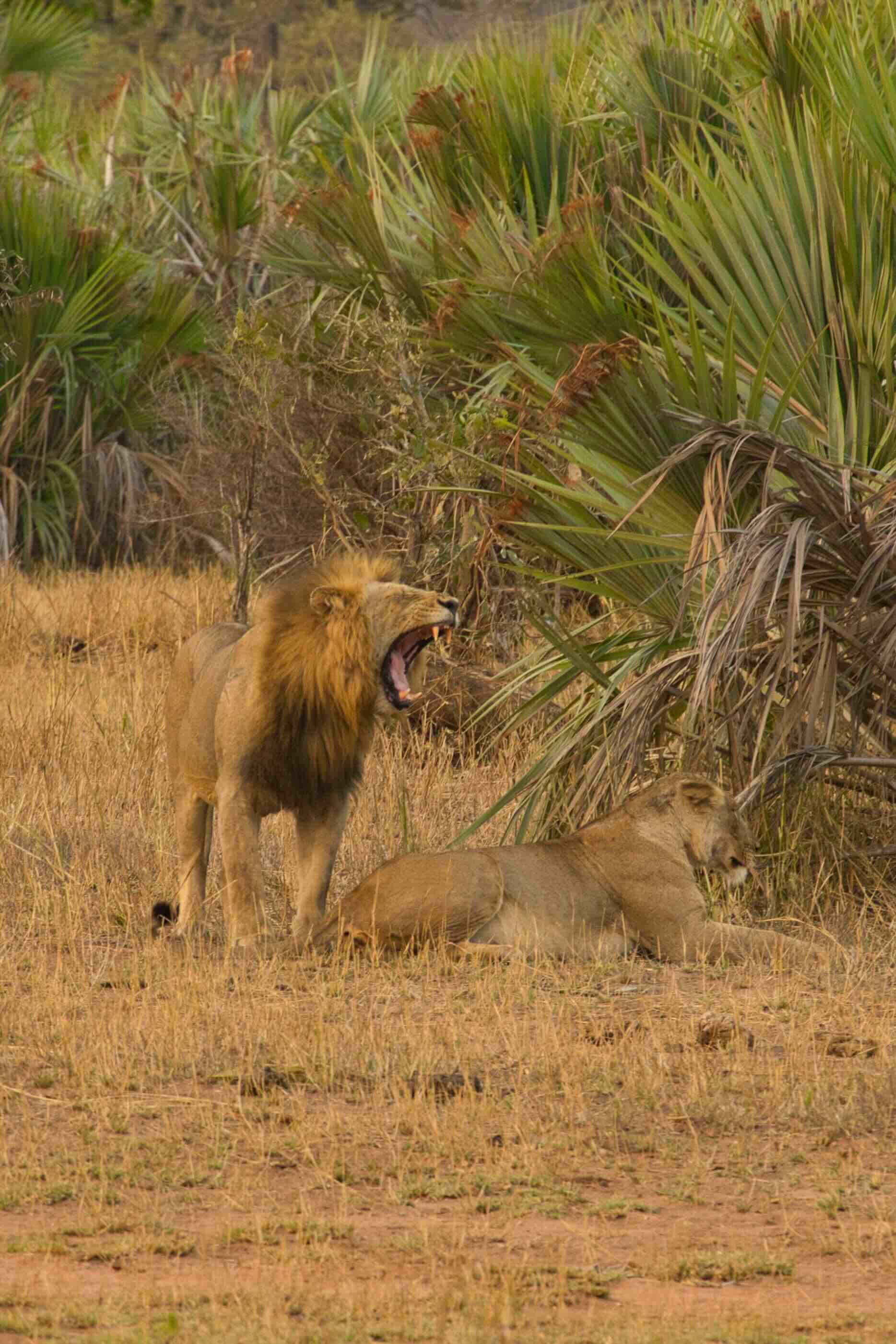
Lions in Kruger National Park

Safety

Before we jump into the itinerary breakdown we wanted to cover some safety tips for traveling in Southern Africa. When we started planning this trip we were extremely nervous about safety because we had read a lot of scary things. In all honesty, we felt safe for the majority of our trip but that was because we did research, acted on local advice, and applied these safety trips.

Avoid Driving at Night

The most important safety tip: avoid driving at night. Many roads are poorly lit, and giant potholes (the most common hazard we encountered) can destroy your car. There's also risk of wildlife and crime on remote roads. Plan your drives to arrive before dark. Short drives within town for dinner are fine, just avoid long distances on quiet roads at night. This single precaution will have the biggest impact on your safety.

Keep Valuables Out of Sight

The second safety tip is to keep valuables out of sight, especially in cities like Johannesburg and Cape Town. Hide cameras, phones, and bags when walking. In your rental car, lock everything in the trunk or glove compartment, nothing should be visible from outside. Car break-ins are common in South Africa, so this is crucial.

Take Ubers not Taxis in Cape Town

Locals advised us to avoid taxis in Cape Town due to safety concerns and robbery risks. Use Uber instead, which is safe and reliable. Also take Ubers home at night rather than walking alone.

Don't Stop Your Car for Hitchhikers

You will see many hitchhikers on the roads across South Africa. Although uncommon, tourists have been robbed after picking up hitchhikers. If someone appears to need help, drive to the nearest town to find assistance rather than stopping on the road.

Don't Stop in Townships

Be mindful when traveling through townships. These areas are a legacy of apartheid, where the government forcibly segregated communities and restricted access to resources. Many still face economic challenges from this history. As unfamiliar tourists, we were told we could be vulnerable to opportunistic crime, not because of the communities themselves, but because being visibly foreign can make you a target in any economically disadvantaged area. We drove through townships several times without issues but stayed in the car and kept moving.

Trust Your Instincts

Finally, trust your instincts. If something doesn't feel right, it probably isn't. We made sure to listen to our gut feelings and avoid situations that made us uncomfortable.

Our Route

Day 1

Johannesburg

Our trip started with a flight into O.R. Tambo International Airport in Johannesburg. We arrived after dark so we decided to stay at an airport hotel to avoid having to drive at night. We stayed at the Premier Hotel O.R. Tambo, right near the airport, and would recommend it. The next morning we picked up our rental car from Hertz and started our adventure!

A word of caution for rental cars at O.R. Tambo: despite booking a compact SUV, Hertz tried to give us a small sedan. They don't guarantee vehicle inventory and couldn't tell us how long we'd wait for the right car. We waited 45 minutes, and other customers faced similar issues. This seems common across rental companies at this airport, so be prepared.

Days 2-4

Graskop & the Panorama Route

The drive from Johannesburg to Graskop took about 4.5 hours. Graskop is the perfect base for exploring the Panorama Route, and also the largest town in the area. We stayed at Laguna Lodge for 3 nights and we can highly recommend the accommodation. The Staff were incredibly friendly and helpful, the rooms were spacious and comfortable. They also had great restaurant recommendations and primitively made recommendations for us.

Panorama Route: The Panorama Route is one of the most scenic drives in South Africa, featuring dramatic viewpoints, towering waterfalls, and the famous Blyde River Canyon. We took our time over two full days we had exploring the route, stopping at God's Window, Bourke's Luck Potholes, the Three Rondavels, and several waterfalls along the way. The views were breathtaking at every turn.

Tip: We probably only needed two nights in Graskop, but we enjoyed having the flexibility of three to explore at a relaxed pace without rushing.

Three Rondavels in the Panorama Route
Panorama Route Viewpoint

Days 5-7

Kruger National Park

❤️ Our favourite National Park for Safaris! ❤️

Next we were on our way to Kruger National Park for our first Safari. To get there we drove the rest of the Panorama Route, 2.5 hours, and went straight to our first camp in Kruger National Park. We stayed at two different rest camps inside the park during our time in Kruger, which gave us a chance to explore different areas throughout the massive park.

Kruger government run park accomodations are very reasonably priced, at only around $140 CAD per night for two people in a private air conditioned hut with a bathroom. They do book up months in advance so make sure to reserve your spots as early as possible on the SANParks website.

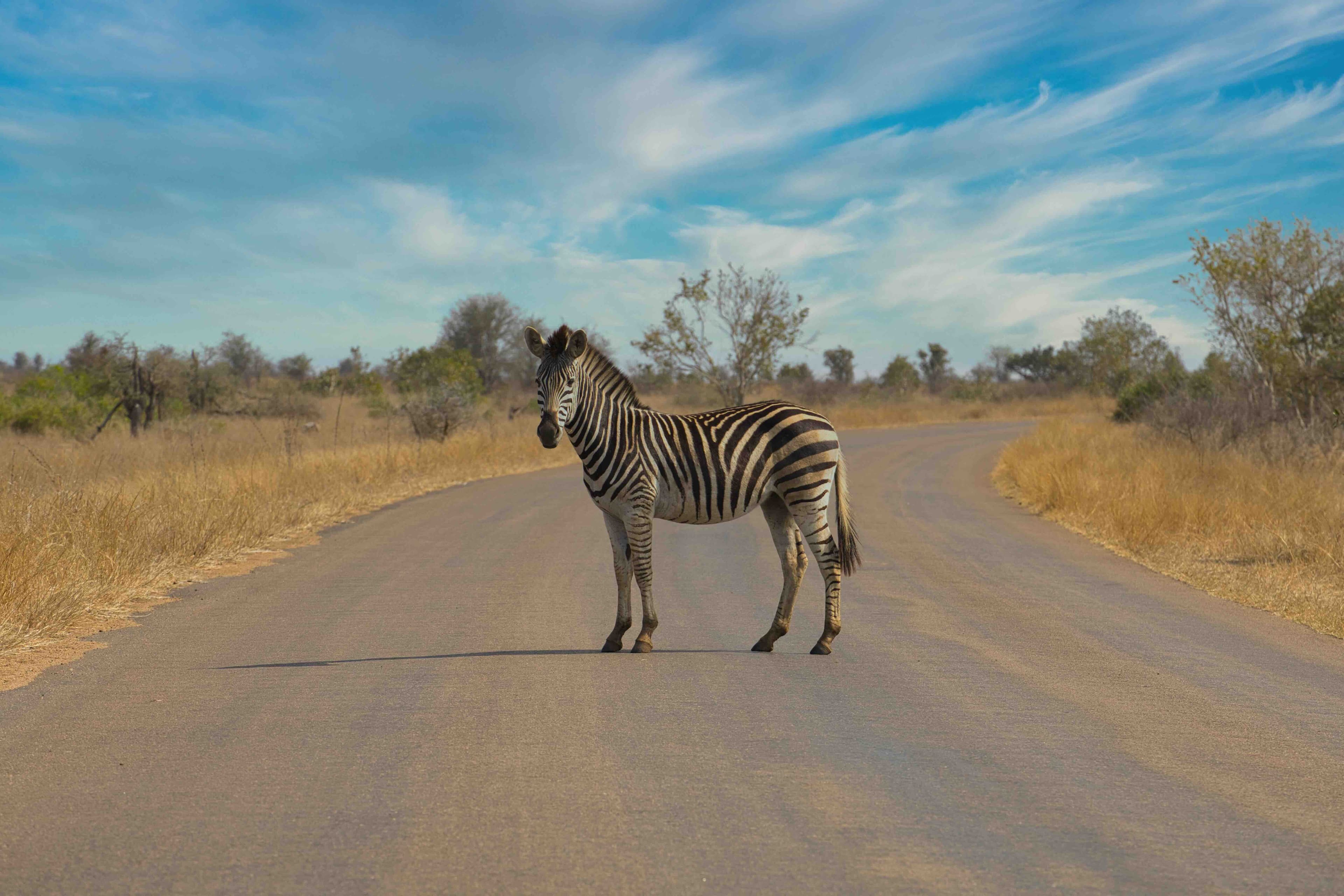
Satara Rest Camp (2 nights): Everything here was relatively new compared to other camps, and the restaurant was excellent. We did a sunset game drive on our first evening, and on the second day, we spent around three hours on a self-drive safari. We saw elephants, giraffes, zebras, wildebeest, and dozens of other species. The freedom of a self-drive meant we could stop and watch animals for as long as we wanted.

Lower Sabie Rest Camp (1 night): This is an older camp with no cell service and a not-so-great restaurant, but the location is unbeatable for lion spotting. We saw three different prides during our game drives around Lower Sabie. Despite the dated facilities, the wildlife viewing made it worthwhile.

SANParks Wild Card: If you're planning to visit multiple national parks in South Africa, consider purchasing a SANParks Wild Card in advance online before your trip. It offers unlimited access to all SANParks for a year and can save you money. We purchased the International All Parks Cluster Wild Card for a Couple and it was well worth it.

We plan to write a more in depth blog post on our Safari experience in Kruger soon, so stay tuned for that!

Elephant crossing road in Kruger National Park
Close-up of a lion in Kruger National Park
Giraffe in Kruger National Park
Dog in Kruger National Park
Leopard in Kruger National Park
Baby Ostrich in Kruger National Park

Days 8-11

Hlane Royal National Park, Eswatini

We drove 4 hours from Kruger into Eswatini (formerly Swaziland), crossing the border and heading to the capital, Mbabane. We stayed at the Hilton Garden Inn Mbabane for two nights, which was the most expensive place to stay in Eswatini but was a really nice hotel. We explored the national parks nearby as well as heading to our main destination, Hlane Royal National Park.

Malolotja National Park: A beautiful park with well-maintained hiking trails. This park has accomodations onsite which are highly rated, but we just did a self drive.

Hlane Royal National Park: One of the best wildlife reserves in Eswatini. We stayed in the twin huts inside the fenced camp, which were really comfortable. The huts don't have electricity but gas lamps are provided and it really adds to the ambiance and star gazing. They offer game drives and self drives allong with a great camp restaurant.

Walking with Rhinos: Hlane offers a unique opportunity to walk with white rhinos under the supervision of experienced guides. This was an unforgettable experience, getting up close to these magnificent creatures in their natural habitat. Book this tour in advance via email as it fills up quickly.

Recommendation: If we were doing this trip again, I'd skip Mbabane entirely and drive straight to Hlane. The capital didn't have much to offer in terms of hiking and wildlife, and we would have been better off spending more time in the national parks. If you do want to stay near the city, check out lodges near Sibebe Rock instead.

White Rhino in Hlane Royal National Park
Hlane Royal National Park accommodation, twin hut

Day 12

Newcastle

After leaving Eswatini, we had a brutal five-hour driving day to Newcastle. The roads were in terrible condition, and we had to stop for the night somewhere. We stayed at Leighton Court, and I would not recommend it.

Tip: If you're doing this route, I'd suggest pushing through and driving the full seven hours to Cathkin Drakensberg if possible. Newcastle didn't have much to offer, and it would have been better to skip it entirely.

Days 13-15

Cathkin & the Drakensberg Mountains

We drove two hours from Newcastle to the Cathkin Drakensberg area, and the scenery immediately made up for the previous day's drive. We stayed at Cathkin Cottage B&B for three nights, and it was AMAZING. The accommodation was beautiful, great value for money, and the host was wonderful.

Monk's Cowl: One of the most popular hikes in the Drakensberg. The trail took us through stunning mountain scenery with views of towering peaks and crystal-clear streams.

Over the next couple of days, we explored the surrounding area, took easier walks, and soaked in the mountain atmosphere. Don't miss stopping at The Pig and Plough for lunch on your way into the area, it's excellent.

Days 16-17

Clarens & Golden Gate Highlands National Park

❤️ Our favourite National Park for views! ❤️

We drove 2.5 hours to Clarens, stopping at the Royal Natal National Park for a short hike along the way. Clarens is a charming little town with lots of restaurants known as the gateway to Golden Gate Highlands National Park. We stayed at By The Way Guest House + B&B, which was great value for money, centrally located, and very comfortable.

Tiger Falls, Lookout Rock, Cascades loop trail: Must-do hike in Royal Natal National Park. The trail is moderately challenging and takes around 2.5 hours to complete. The views of the Amphitheatre and the cascading waterfalls are absolutely stunning. There are more challenging hikes in the area as well.

Golden Gate Highlands National Park: This park is named for the golden-hued cliffs that dominate the dessert landscape. We spent a full day exploring the park, hiking to viewpoints, and watching the light change on the sandstone formations. The park is less crowded than some of the other major parks in South Africa, which we really appreciated. Make sure to hike Echo Caves & Brandwag Buttress, the most famous formations in the park.

Echo Caves in Golden Gate Highlands National Park
Brandwag Buttress in Golden Gate Highlands National Park

Days 18-20

Semonkong, Lesotho

❤️ Our favourite accommodation! ❤️

We crossed the border into Lesotho and drove two hours to the capital, Maseru. We stayed at Mpilo Boutique Hotel for one night. If we were to do this again we would have driven straight to Semonkong. The drive from Maseru to Semonkong took only two hours, but it was one of the most beautiful drives of our entire trip. The mountain passes through Lesotho were absolutely spectacular, with dramatic landscapes and traditional villages dotting the hillsides.

** Semonkong Lodge:** Our favourite accommodation of the entire trip, we can;t recommend it enough. The lodge has a great restaurant, lots of fun activities, and is perfectly situated for exploring the area.

Maletsunyane Falls: Africa's tallest single-drop waterfall at 192 meters. We hired a local guide to take us on the hike, optional, and really enjoyed our time learning about the culture and experiences the breathtaking views.

Semonkong Village
Semonkong Waterfall

Day 21-22

Coffee Bay

We drove five hours to Coffee Bay on South Africa's Wild Coast. We stayed at Coram Deo Lodge, which was beautiful and great value for money. We even spotted whales from our accommodation! Our recommendation is to drive straight here but if you need to break up the drive you can stop in Maclear. We can recommend the Alpine Bed & Breakfast.

The Wild Coast is stunning but remote. There isn't a lot to do in Coffee Bay beyond enjoying the beaches and dramatic coastal scenery. Our host also mentioned that the area isn't super safe, which is something to keep in mind. It's a "maybe" recommendation, beautiful, but you could skip it if you're short on time.

Days 23-25

Kenton-on-Sea & Addo Elephant National Park

We drove six hours to Kenton-on-Sea and stayed at an Airbnb called Rivers Rest Kenton for two nights. Our host had tons of recommendations for activities in the area, which was incredibly helpful. If you needed to break up the drive you could stay in East London, but there isn't a lot to do there.

Addo Elephant National Park: Located about an hour from Kenton-on-Sea, Addo is a SANPark, and home to over 600 elephants. We spent a full day doing self-drive safaris through the park and saw huge herds of elephants, including adorable babies. We also spotted lions, buffaloes, zebras, warthogs, and dozens of other species. The density of wildlife in Addo is incredible.

Addo Elephant National Park
Addo Elephant National Park Beast

Days 26-27

Tsitsikamma National Park

We drove 3.5 hours along the coast to SANPark Tsitsikamma National Park. Along the way there is a highly rated wolf sanctuary along the way. We stayed at Storms River Mouth Restcamp in an Oceanette for two nights. The setting is absolutely beautiful, with the restcamp nestled between ancient forests and a dramatic rocky coastline.

Suspension Bridges & Hiking: The park's signature hike is to the to a dramatic suspension bridge spanning the Storms River mouth. We also added on the waterfall hike which took us across the rugged coastline scrambling across orange rocks.

Tsitsikamma Suspension Bridges
Tsitsikamma Coastal Scenery

Days 28-34

Knysna & the Garden Route

We drove 1.5 hours to Knysna, where we settled in for a full week on the Garden Route. We stayed at an Airbnb called Thesen - La Belle Vie on Thesen Island, which was perfect for a longer stay.

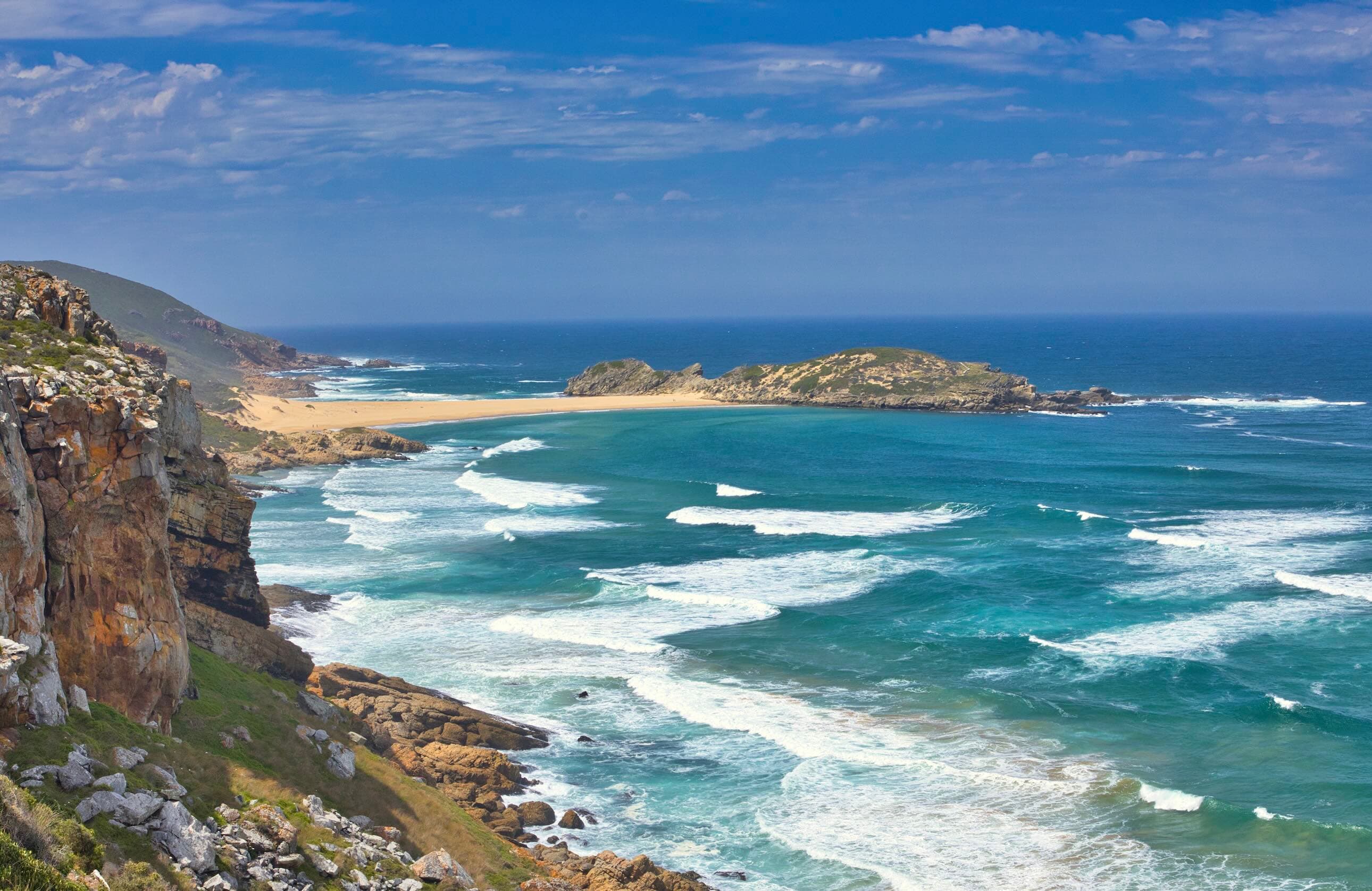
Knysna is ideally located for exploring the Garden Route, and we used it as our base for day trips and activities. We hiked in Robberg Nature Reserve to see the sea lions and dolphins, visited the Knysna Heads for stunning views of the lagoon meeting the ocean, explored local restaurants and cafes, and simply enjoyed the relaxed coastal atmosphere.

We also made day trips to nearby towns like Plettenberg Bay and enjoyed the beaches along this stretch of coastline. After several weeks of constantly moving, it was nice to slow down and spend a full week in one place and enjoy all the beaches.

Robberg Nature Reserve coastline
Mossel Bay coastal scenery

Days 35-36

Oudtshoorn

We left Knysna and drove two hours inland to Oudtshoorn, stopping in Wilderness along the way to see the beach. Oudtshoorn is known for ostrich farming and the nearby Cango Caves.

Cango Caves: These limestone caves are spectacular, with massive chambers filled with stalactites and stalagmites. We did the adventure tour, which involved crawling through narrow passages and climbing through sections of the cave. It was challenging but really fun.

Ostrich Farms: We also visited one of the famous ostrich farms and learned about ostrich farming, saw the massive birds up close, and even got to feed them.

Meerkat Adventures: A highlight of our time in Oudtshoorn was a morning meerkat experience. We woke up before dawn to visit meerkats where we observed these curious creatures in their natural habitat. It was incredible to see them up close and learn about their behavior from the knowledgeable guides.

Meerkat Adventure
Oudtshoorn Farm ostrich eating out of a bucket

Day 37

L'Agulhas

We drove four hours to L'Agulhas, the southernmost point of Africa where the Atlantic and Indian Oceans officially meet. We stayed at L'Agulhas Apartment right near the landmark.

Standing at the southern tip of the continent was a special moment. The lighthouse and marker at the point are popular photo spots, and we spent time walking along the rocky shoreline. The landscape here is wild and windswept, very different from the Garden Route.

Day 38

Stellenbosch (Wine Region)

We drove through the beautiful Cape Winelands to reach Stellenbosch, the heart of South Africa's wine country. We stayed at Alluvia Boutique Winery, where we could walk directly into the vineyards. We spent the day wine tasting at several estates, enjoying the incredible food and wine pairings, and soaking in the mountain views. The architecture and oak-lined streets in Stellenbosch are beautiful, and the town has a charming, sophisticated atmosphere.

Franschhoek Wine Tram: This is a popular tourist activity in Franschhoek. The tram takes you to several different wine estates around the area, allowing you to hop on and off for tastings. We highly recommend it if you want to experience a variety of wineries without worrying about driving.

Franschhoek Wine Tram
Alluvia Boutique Winery

Days 39-46

Cape Town

We drove 30 minutes into the city center and checked into our final Airbnb called Midcentury CBD Penthouse for eight nights. This place is very centrally located and absolutely beautiful with views on table mountain. Cape Town was the perfect place to end our epic road trip.

Table Mountain: We took the cable car to the summit for panoramic views of the city, coast, and mountains. On a clear day, you can see for miles in every direction.

Hermanus Whale Tour: We took a day trip to Hermanus (1.5 hours away) for a whale watching tour. We saw southern right whales breaching and playing in the water, an incredible experience. This experience is season dependent so make sure to know when Whale season is. We also stopped at Creation Wines for a tasting on the way.

Cheetah Sanctuary: We visited a cheetah outreach sanctuary where we got to see these magnificent cats up close and learn about conservation efforts. This sanctuary is focused on breeding and expanding the genetic diversity of cheetahs in the wild.

Bloubergstrand: A beachfront suburb of Cape Town famous for its postcard views of Table Mountain across the bay.

Cape Point and Penguins: We drove to the Cape of Good Hope (SANPark), explored Cape Point and saw wild ostriches, and stopped at Boulders Beach (SANPark) to see the famous penguin colony.

We also spent time exploring Cape Town itself, wandering through the Waterfront, visiting local markets, trying incredible restaurants, and soaking in the energy of this beautiful, diverse city. We plan to make a more in depth blog post about Cape Town soon, so stay tuned for that!

Table Mountain from the Waterfront
Cheetah at the sanctuary
Penguins at Boulders Beach
Ostrich in Cape Point National park

After 46 days, thousands of kilometers, and countless unforgettable experiences, we reluctantly returned our rental car and caught our flight home. This trip exceeded every expectation. Southern Africa's diversity is hard to comprehend, from the iconic safaris to the dramatic mountains, from the wild coastlines to the sophisticated wine regions, every day brought something completely different.