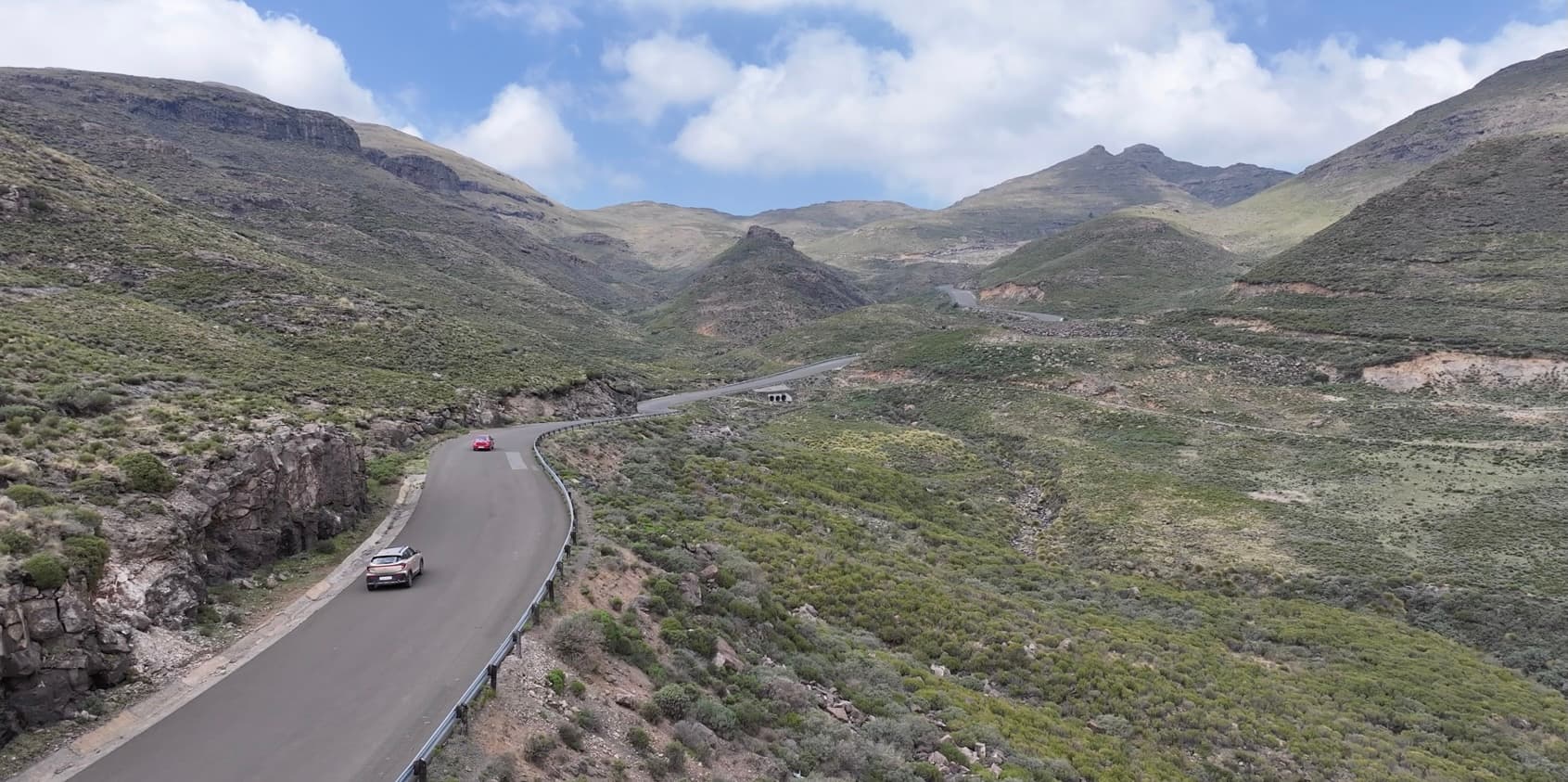

Lesotho wasn't on our radar until we started planning our South Africa road trip. A landlocked mountain kingdom entirely surrounded by South Africa, it looked on the map like a detour, but turned out to be a highlight. We spent two nights at Semonkong Lodge in Lesotho, a remote retreat nestled in the Maluti Mountains, and were blown away by the location and experience.
The town of Semonkong sits in the heart of the Maluti Mountains, and Semonkong Lodge offers breathtaking views of the surrounding mountains and valleys. We participated in various activities, like hiking to the famous Maletsunyane Falls, and it was an unforgettable experience.
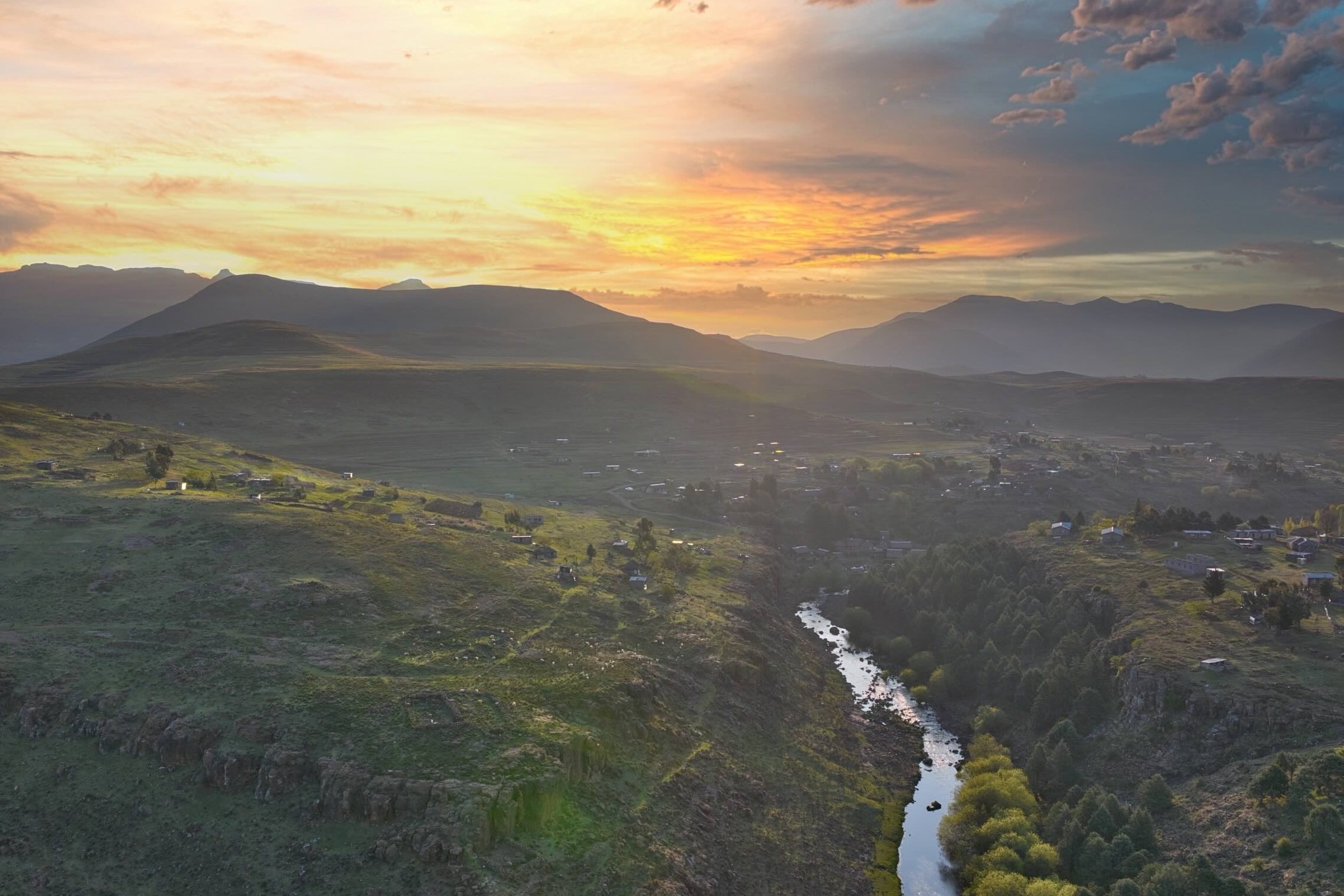
Lesotho is a small landlocked country of around 2.4 million people, entirely surrounded by South Africa. The country is known for its mountainous terrain, with its borders largely defined by the Drakensberg and Maloti mountain ranges. This natural fortification has helped Lesotho maintain its independence and unique culture throughout history.
There are two main border crossings between South Africa and Lesotho: the Maseru Bridge Border Post and the Caledonspoort Border Post. The Maseru Bridge Border Post is the most commonly used crossing, as it is located near the capital city of Maseru and is well-connected to major South African cities. We wouldn't recommend the Caledonspoort Border Post because the roads are significantly slower and there is less infrastructure available. There is also access from the Sani Pass border post, located in the Drakensberg mountains and popular among adventure travelers. The Sani Pass is a challenging route that requires a 4x4 vehicle, but it offers stunning views of the surrounding mountains and valleys.
Most Western passport holders, including Canadians and Americans, can enter Lesotho visa-free for up to 30 days. You will need your passport at the border; a South African ID alone won't do it. If you're a South African permanent resident or hold a less common passport, confirm your entry requirements before you go as rules vary.
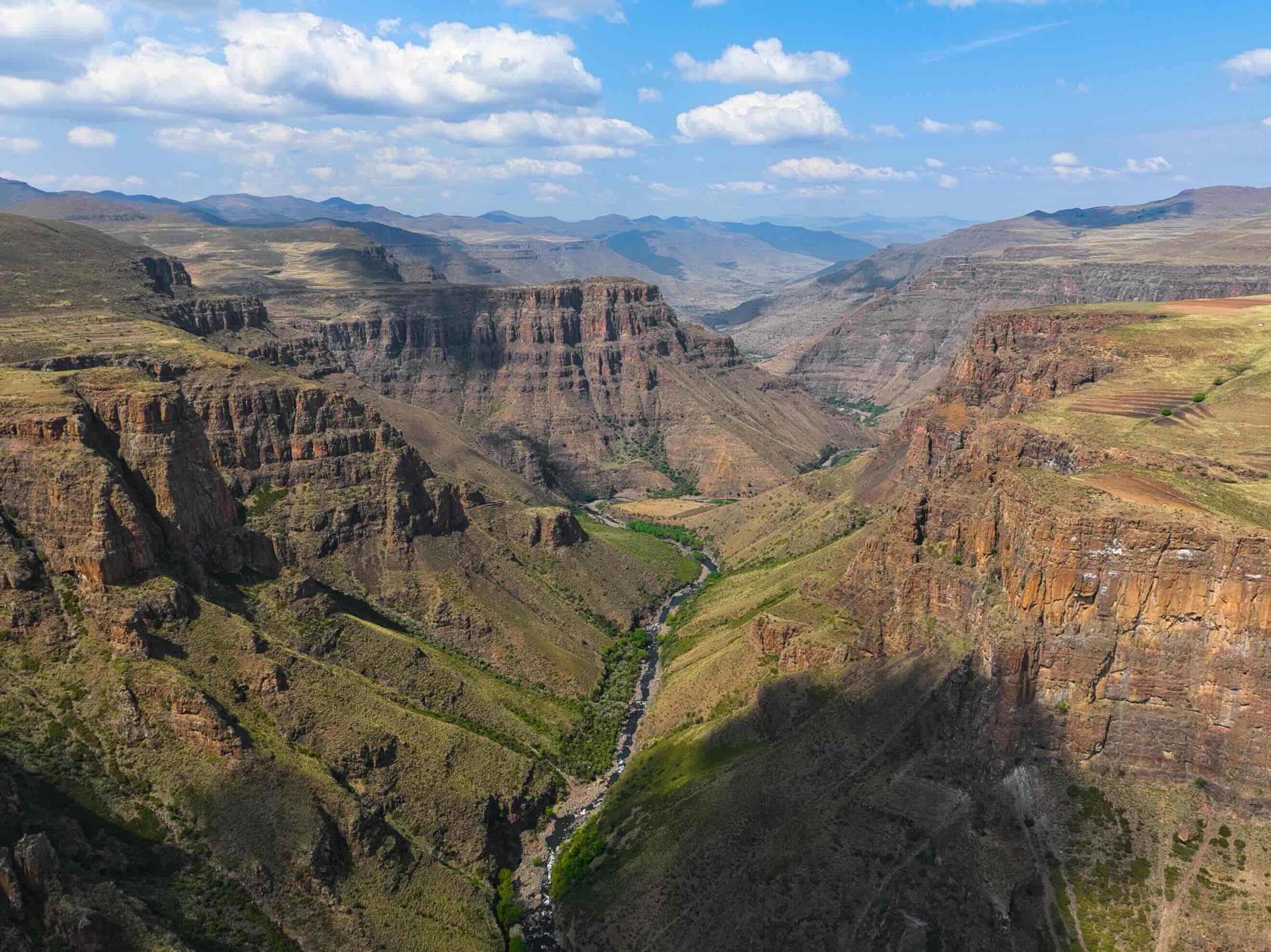
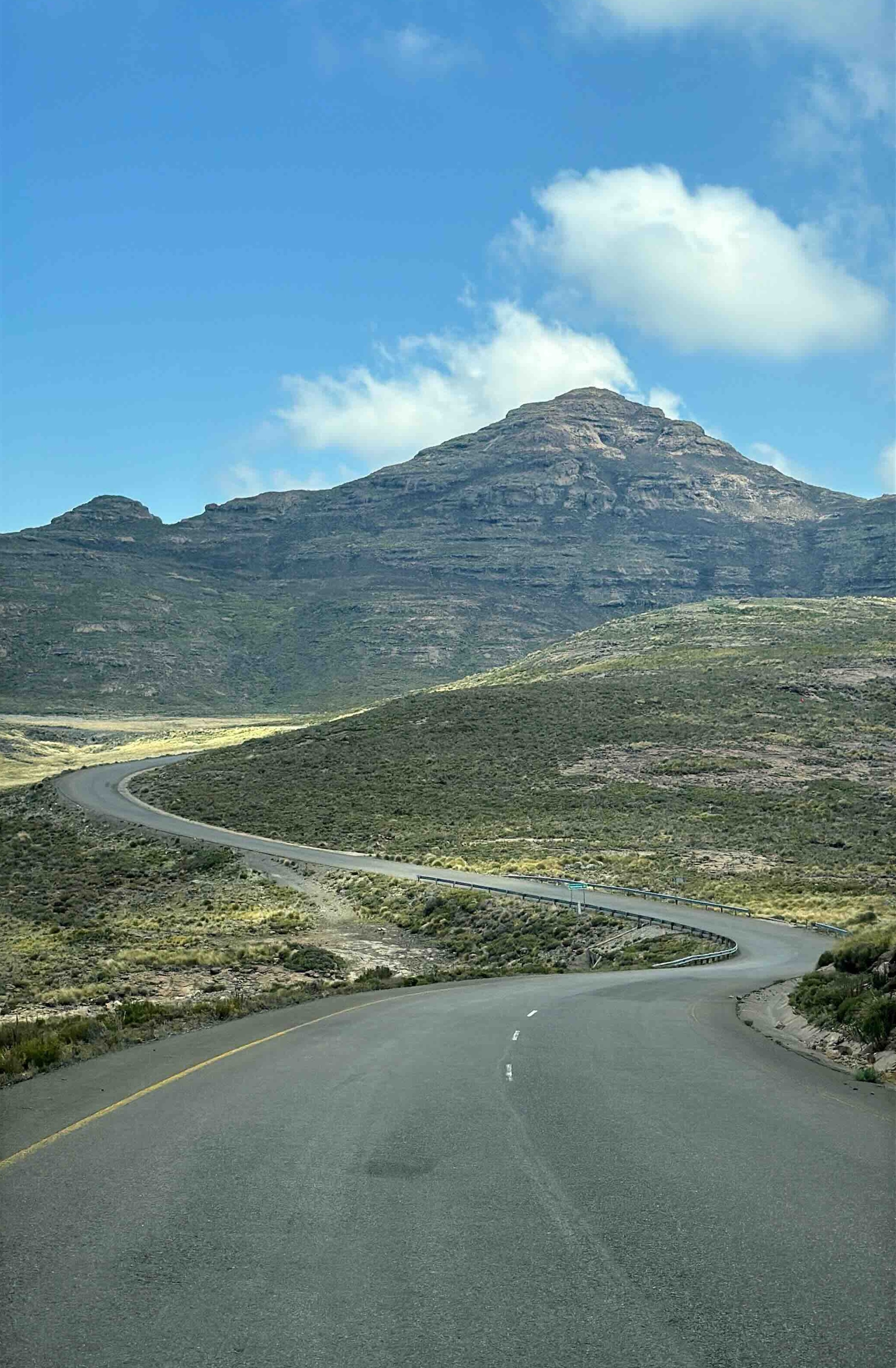
Lesotho is considered a very safe destination, especially in the rural highlands around Semonkong. The people are genuinely warm and welcoming to visitors, and we felt entirely at ease throughout our trip, including on the mountain roads.
As with any travel destination, common-sense precautions apply: keep valuables out of sight in your car, don't leave bags unattended at the border crossing, and let someone know your route if you're hiking independently. In Semonkong specifically, the biggest hazard is the terrain itself: wear proper footwear, don't underestimate the altitude, and hire a local guide if you're heading to the falls for the first time.
We spent a total of $637 CAD for two people for a 2-night trip to Semonkong Lodge. Here's a breakdown of the costs:
| Budget Category | Cost for 2 people |
|---|---|
| Accommodation (2 nights + breakfast) | $330 CAD |
| Transportation (rental car) | $117 CAD |
| Food & Drink | $140 CAD |
| Activities (guide & park fee) | $50 CAD |
| Total | $637 CAD |
Day 1: Arrival and Relaxation
- Drive to Lesotho and cross the border at the Maseru Bridge Border Post.
- Enjoy the scenic drive through the mountains to Semonkong Lodge (~3 hours)
- Arrive at Semonkong Lodge and check in.
- Enjoy a hearty meal.
Day 2: Maletsunyane Falls and Local Culture
- Breakfast at the lodge.
- Hike to Maletsunyane Falls (1-hour hike each way).
- Optional: Abseil down the falls for an adrenaline rush.
- Lunch at the Duck and Donkey Tavern.
- Afternoon: Explore the local village and participate in a traditional blanket ceremony.
- Dinner at the lodge.
Day 3: Horseback Riding and Departure
- Breakfast at the lodge.
- Morning: Go horseback riding or take a short hike through the mountains.
- Lunch at the lodge.
- Drive back to the border and return to South Africa.
Semonkong Lodge Accommodation Details
Semonkong Lodge is located in the town of Semonkong, about a 3-hour drive from the Maseru Bridge Border Post, or an 8-hour drive from Johannesburg. Once you cross into Lesotho and leave the capital of Maseru, the drive through the mountains is peaceful and beautiful. The exceptionally well-maintained road winds through the mountains up to 2,800 metres, giving you breathtaking scenery along the way. We rented a car for the trip, which gave us the flexibility to explore the area at our own pace. Tour groups also offer transportation to and from the lodge if you prefer not to drive.
The town of Semonkong has its power turned off at around 8pm until 8am each day, so the lodge has gas lamps in the rooms to provide light in the evenings.
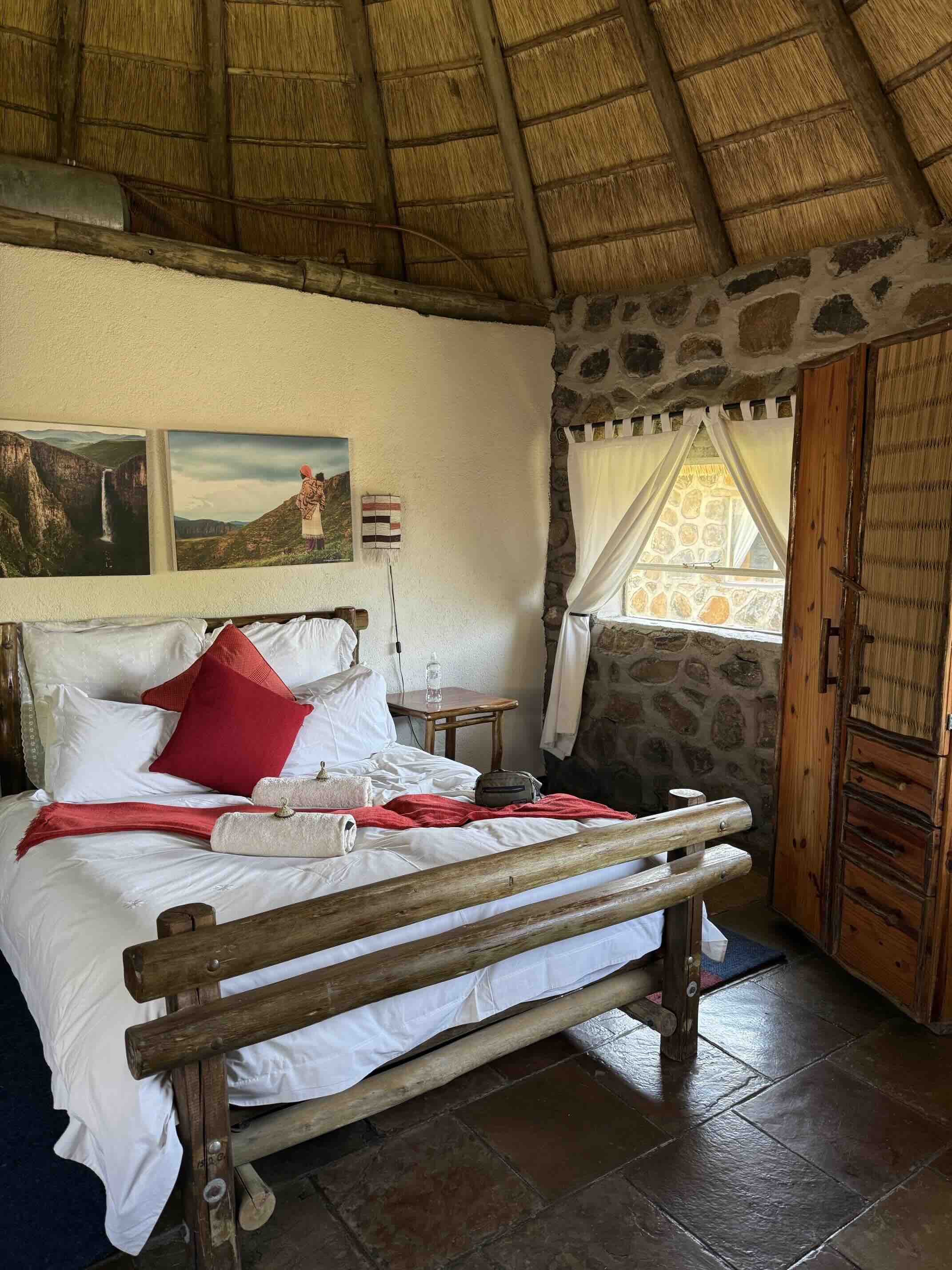
They offer three types of accommodation: en-suite rooms, a campsite, and self-catering huts.
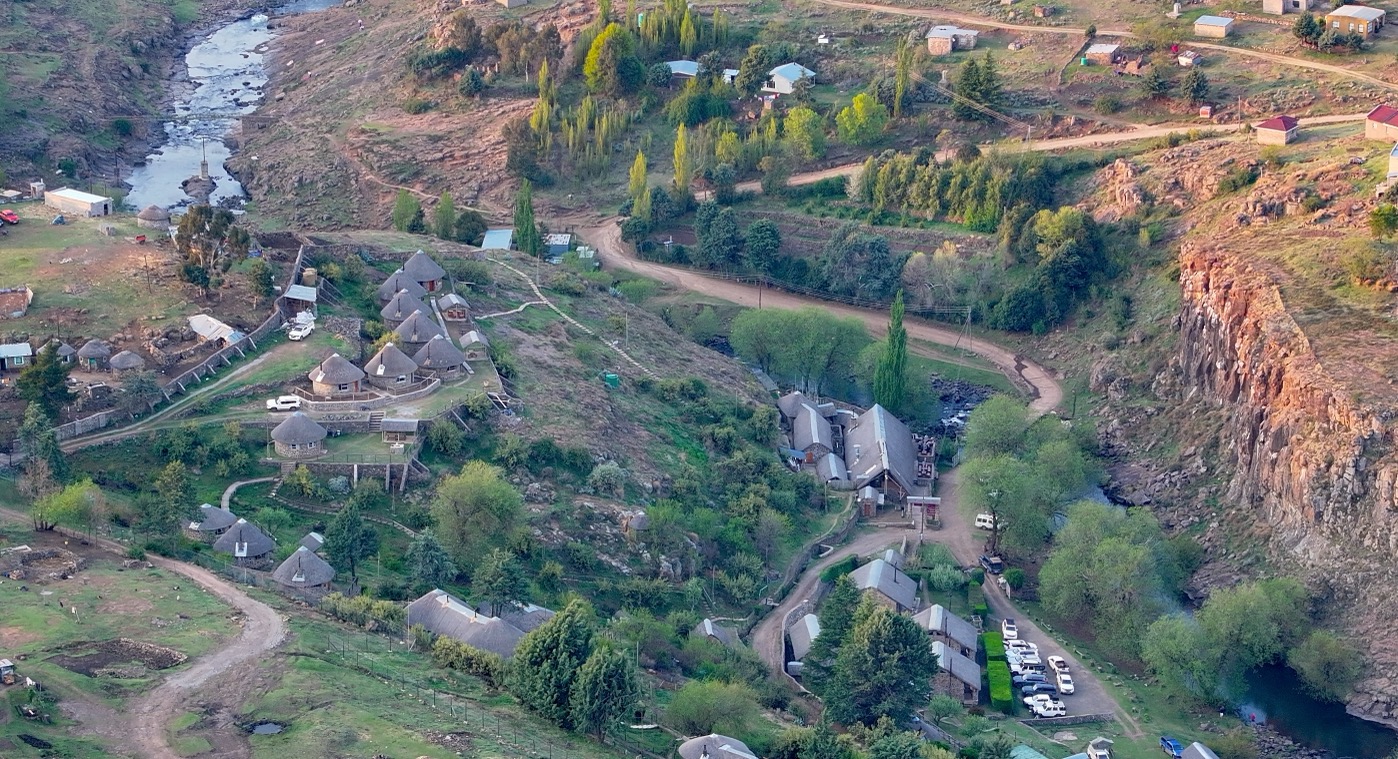
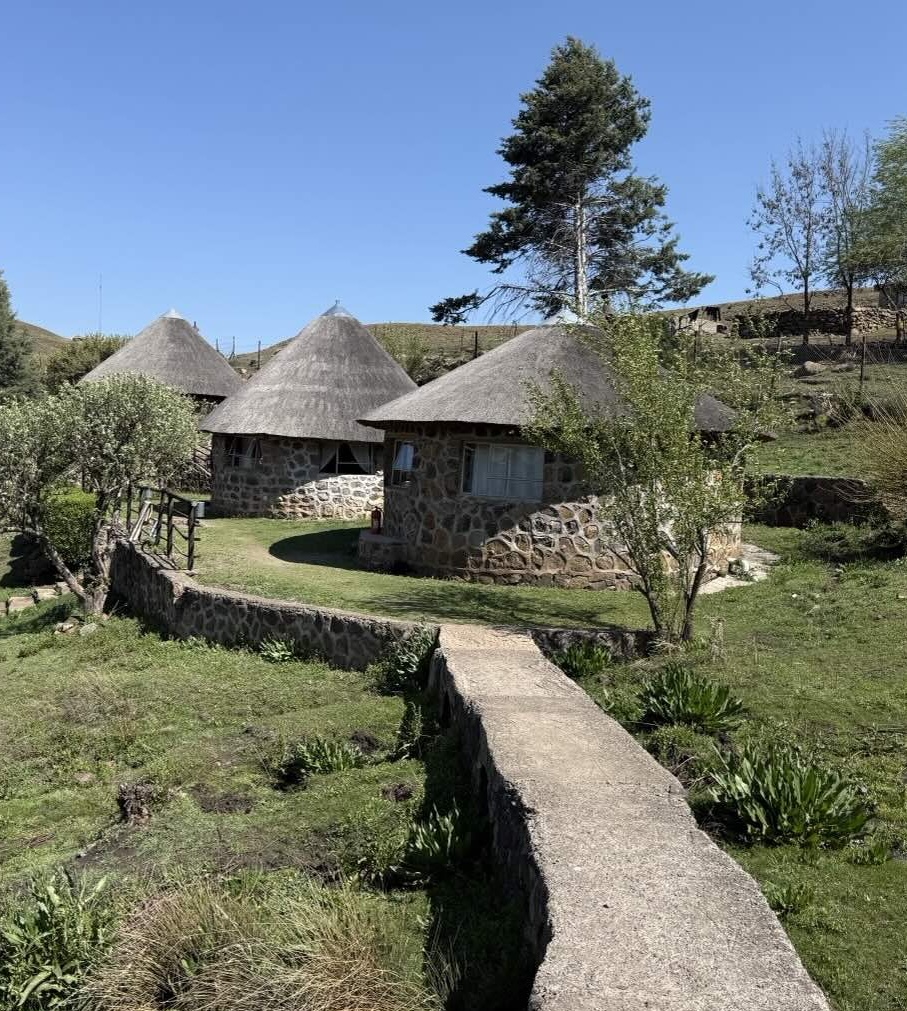
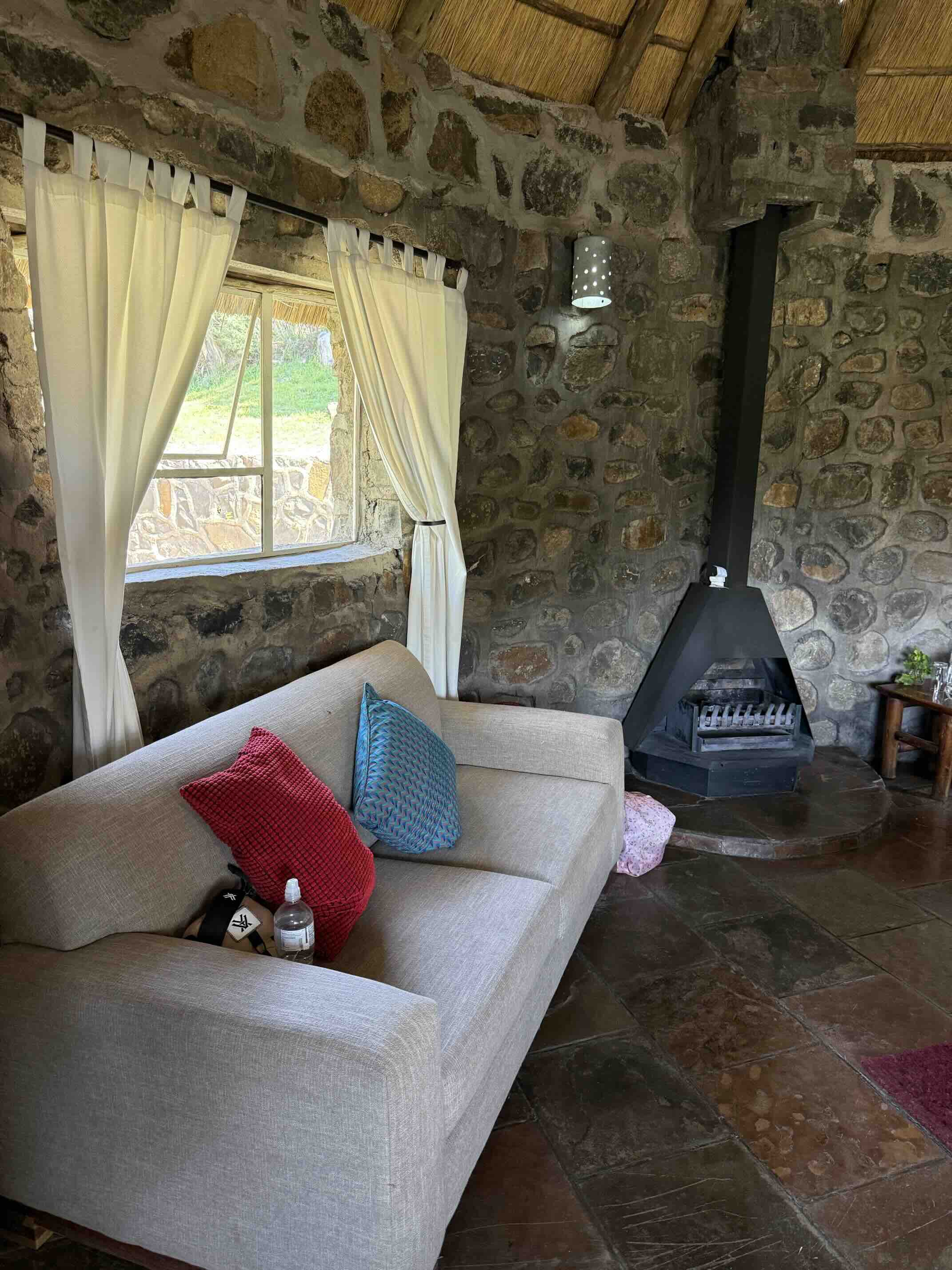
This is what we chose and it was lovely. The rooms are spacious and comfortable, with large windows that offer stunning views of the surrounding mountains. The en-suite bathrooms are clean and well-maintained with hot water during the day. There is a couch and fireplace, which is cozy at night.
The campsite is a great option for those who want to experience the outdoors and save some money. It sits on the banks of the Maletsunyane River and accommodates tents and campervans. They offer braai facilities for cooking and a shared shower facility with hot water.
These dormitories are a more affordable option that are still very comfortable. They have a shared bathroom and a small kitchenette, which is perfect for those who want to cook their own meals. They offer bunk beds that sleep 6–8 people.
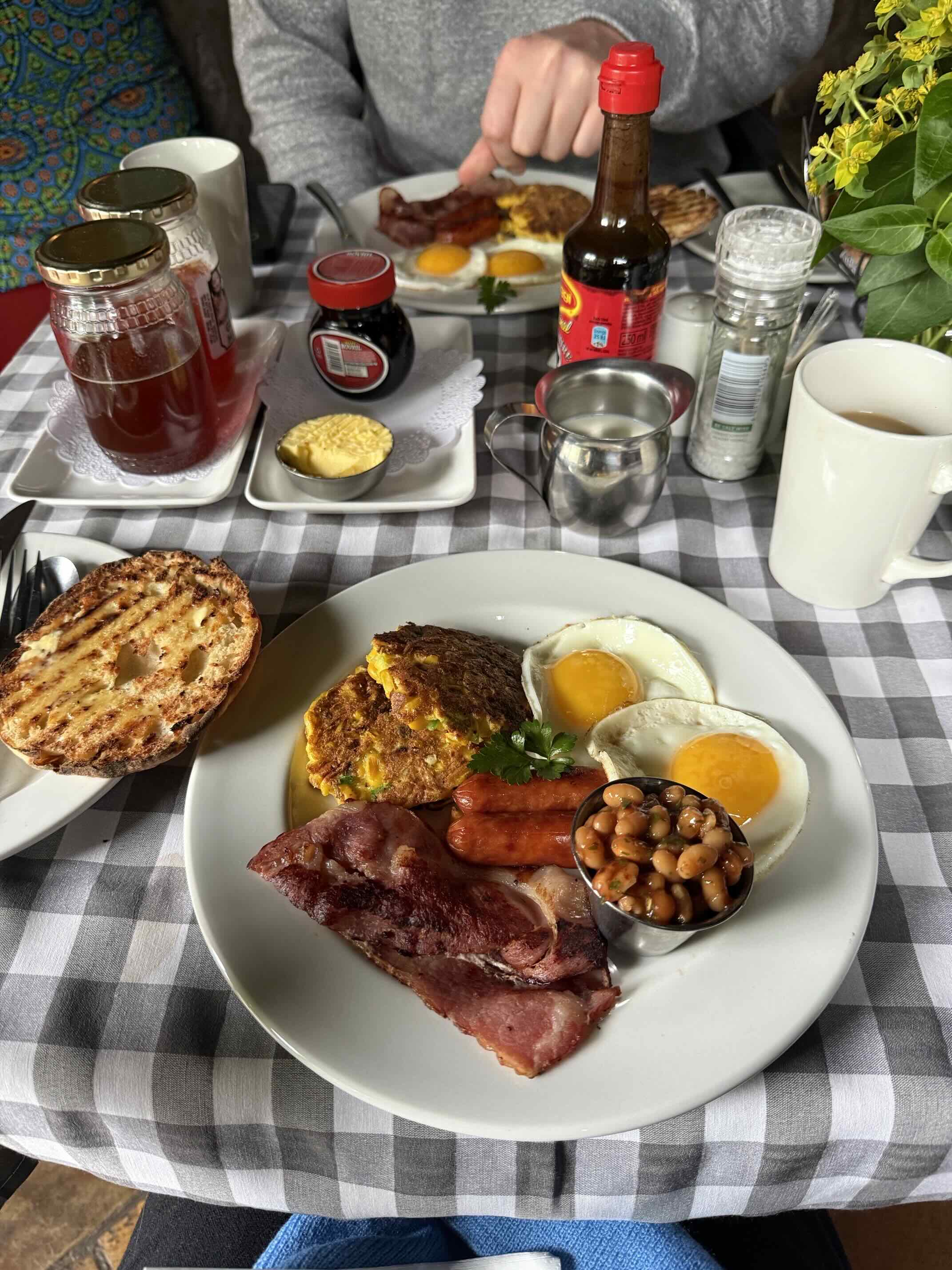
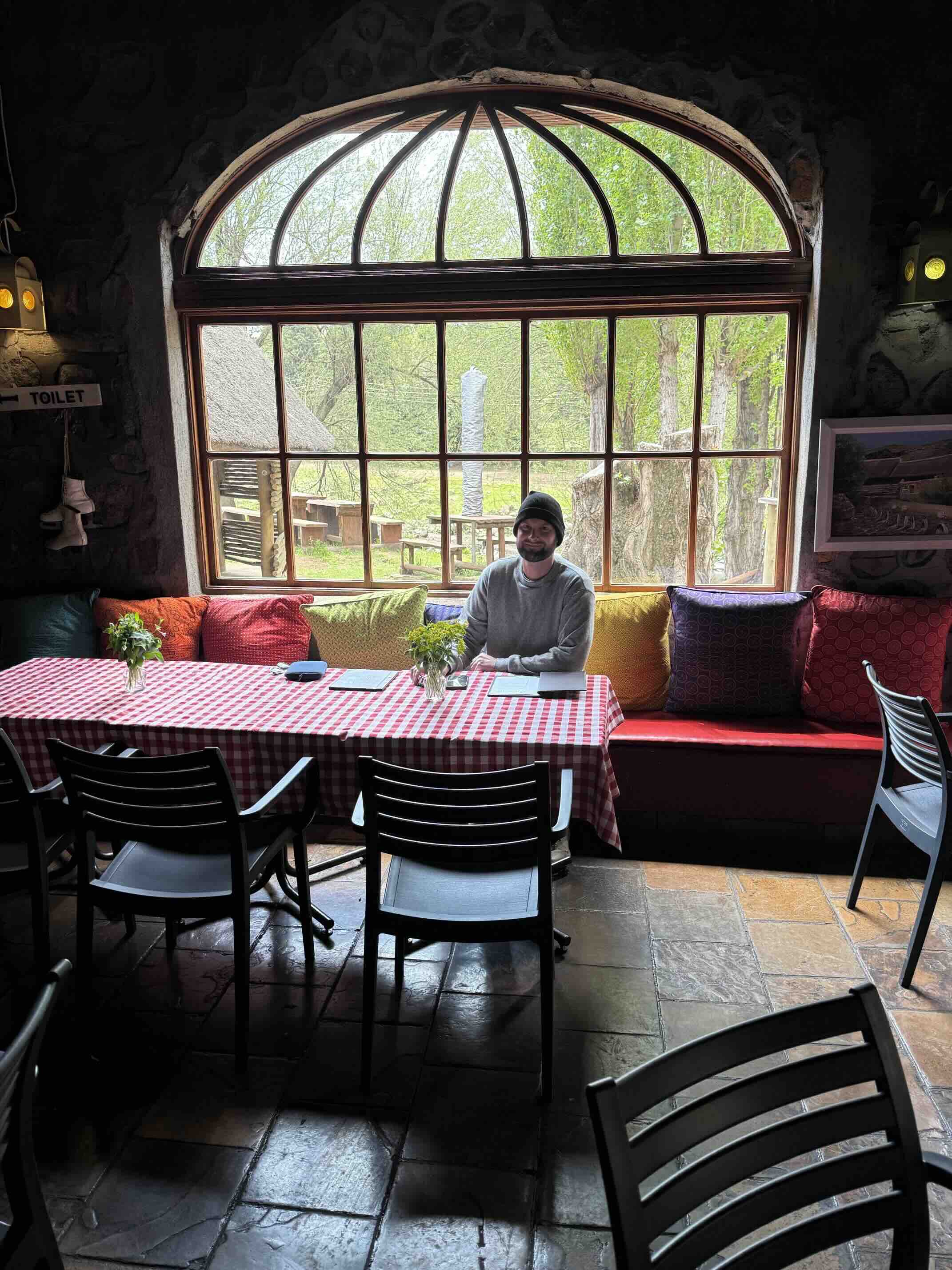
The lodge has a restaurant called the Duck and Donkey Tavern which offers excellent food and drinks. We had all our meals here and the food was delicious and reasonably priced. The menu features a variety of dishes, including traditional Basotho cuisine and international options. The restaurant also has a great selection of local beers and wines, perfect for enjoying while taking in the mountain views. The highlight was the homemade bread served with every meal; it was the best bread we had ever tasted.
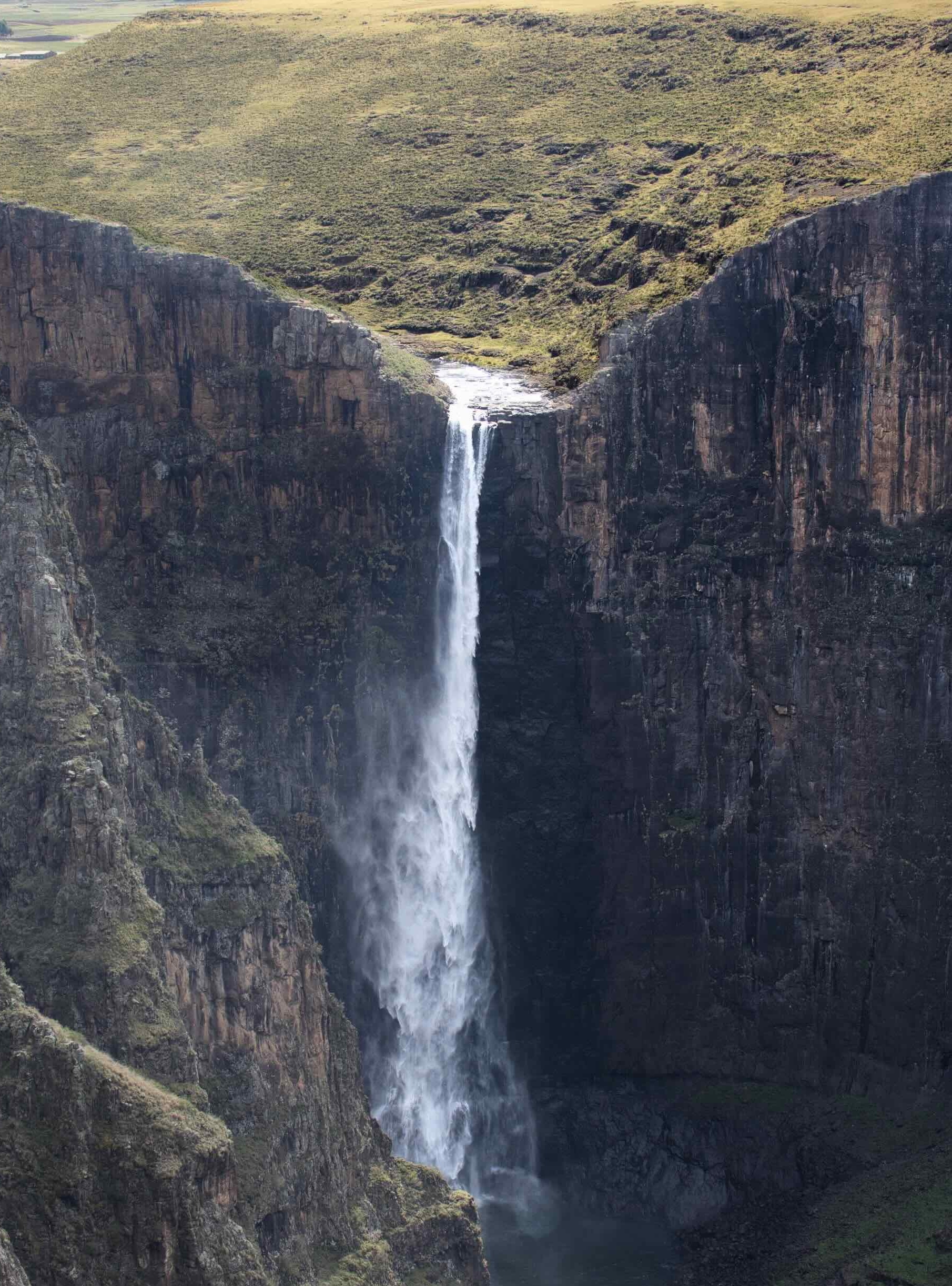
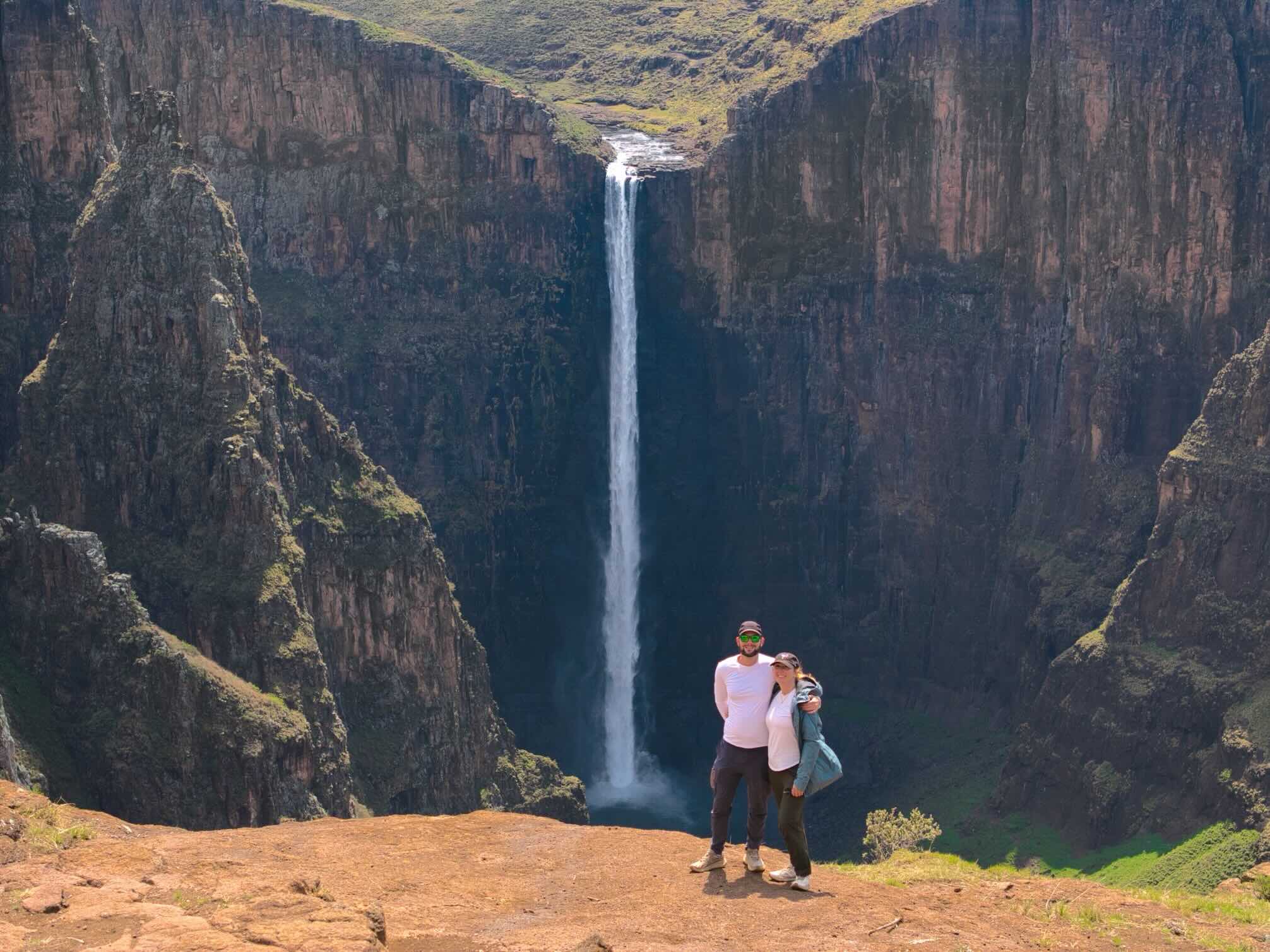
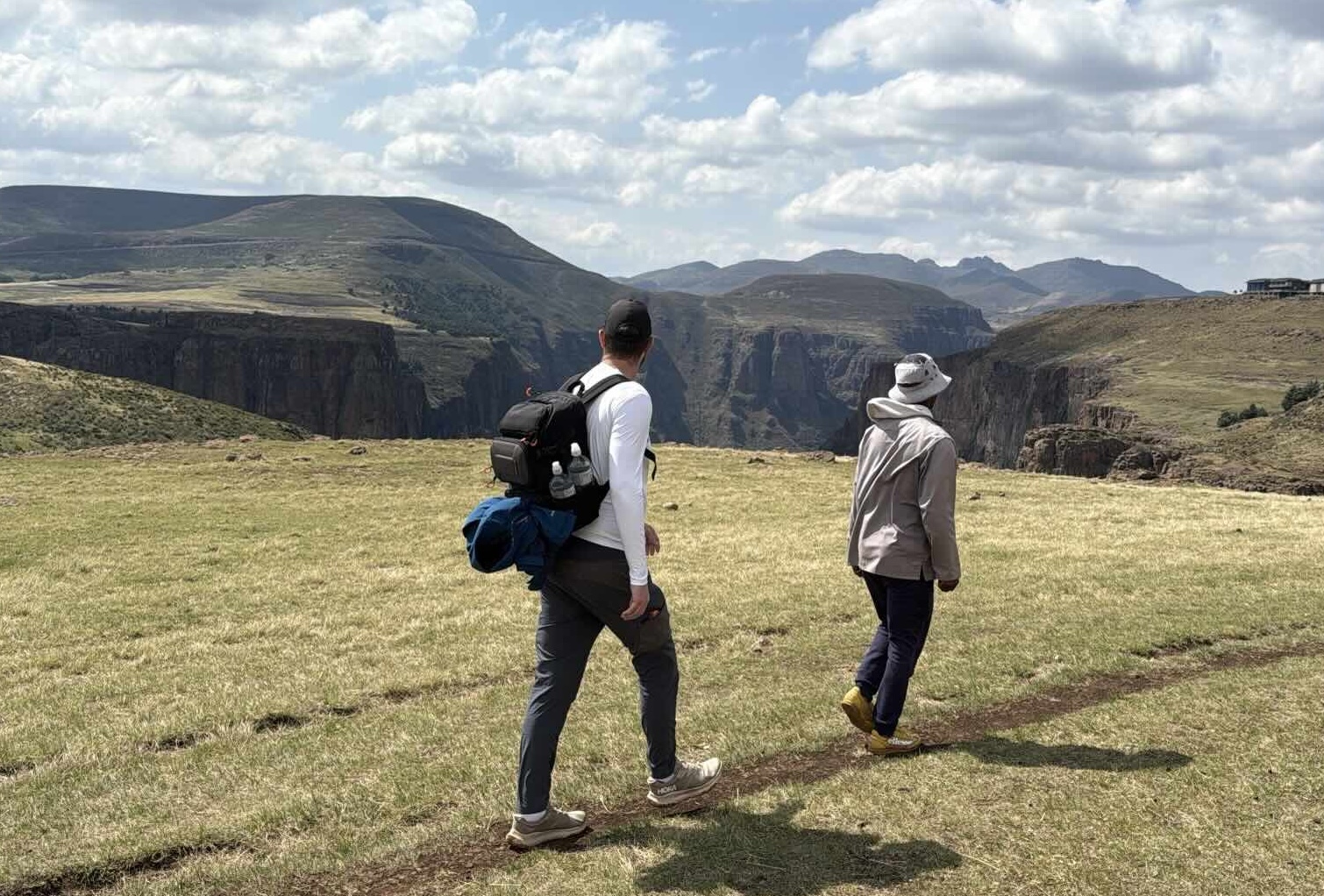
This is the main reason most travelers come to Semonkong, and it's easy to see why. Maletsunyane Falls is the highest single-drop waterfall in Africa, plunging 192 metres into a deep gorge below. The falls are surrounded by stunning Maluti Mountain scenery, making it a truly breathtaking sight. The trailhead is only a 1-hour hike from Semonkong Lodge, and the path is well-marked and relatively easy to follow.
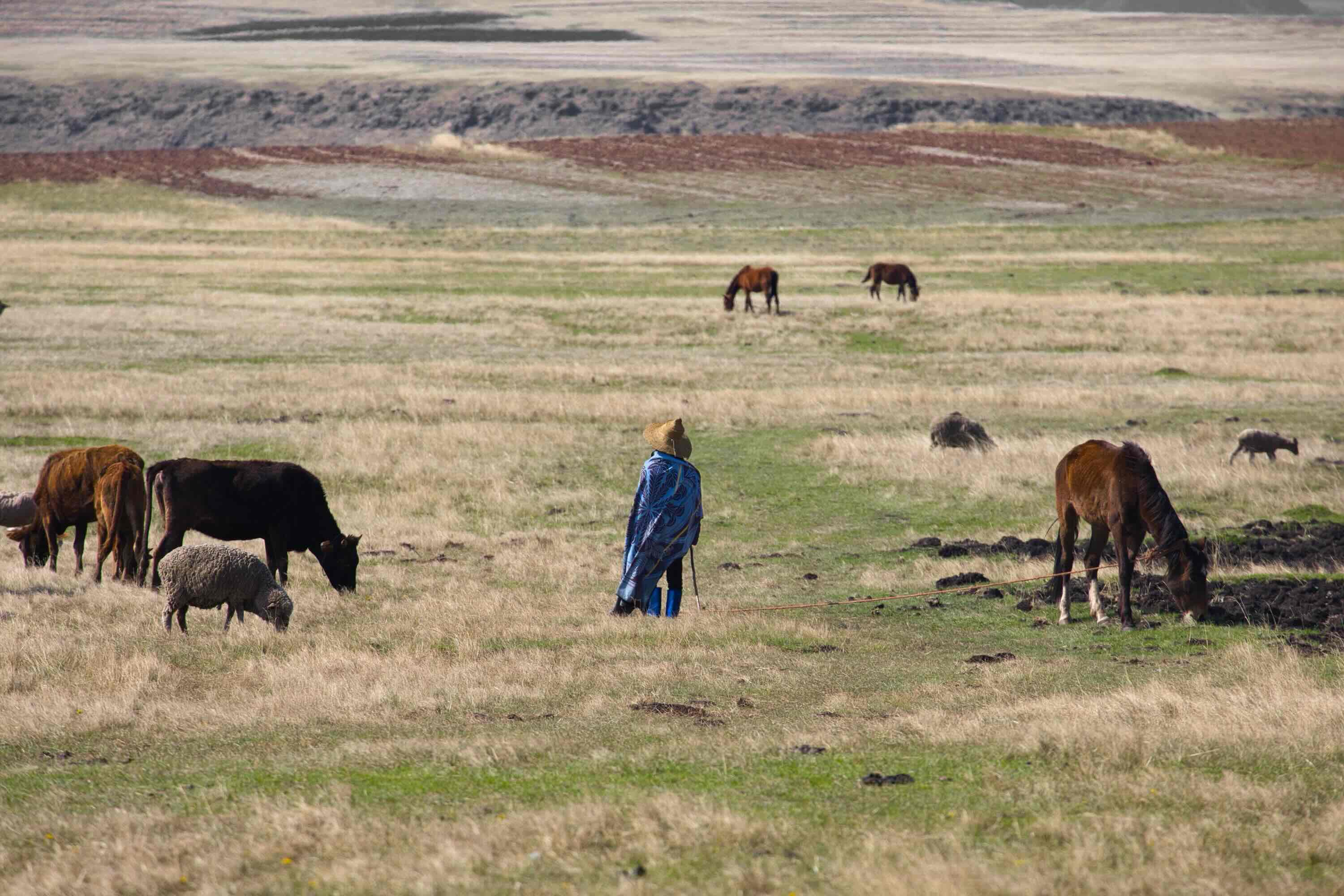
We hired a local guide to take us to the falls, which was a great decision. Our guide was knowledgeable about the area and provided interesting insights into local Basotho culture and history. We had a really great time learning about his community and hearing his stories about the area. The village relies mainly on horses and donkeys for transportation, so he was very curious to hear how a subway worked and how we got around in our daily lives.
You have a few options for how to experience the falls. You can hike down to the base, which is a challenging but rewarding descent that takes about 2–3 hours round trip. The trail is steep and rocky in sections, so sturdy footwear and a reasonable level of fitness are both important. Alternatively, you can take a more leisurely hike to one of the viewpoints along the trail (which is what we did) that offer equally stunning views without the strenuous descent.
For the more adventurous, you can abseil down the falls. The abseil is 192 metres and offers an incredible adrenaline rush as you descend alongside the cascading water. Semonkong Lodge offers abseiling packages that include all the necessary equipment and a trained guide. Current pricing is listed on their activities page.
Semonkong Lodge offers a variety of activities that allow you to explore the natural beauty of Lesotho. Horseback riding through the Maluti Mountains is a particular highlight, and a great way to take in the scenery and experience the local culture, given how central horses are to life in the highlands. The lodge also offers guided hikes, mountain biking, fishing in the nearby rivers, and 4x4 tours to surrounding villages.
One of the most unique experiences on offer is the Donkey Pub Crawl, where you visit local bars on the back of a donkey. It's exactly as fun as it sounds and a genuinely memorable way to meet locals.
The Basotho Blanket Ceremony is also worth doing if you are looking for a cultural experience. Blankets hold deep cultural significance in Basotho society: they're worn daily and given to mark major life milestones including birth, initiation into adulthood, marriage, and mourning. Each blanket pattern carries meaning. During the ceremony, your guide wraps you in a traditional blanket and walks you through what the colours and patterns signify and when different blankets are worn. You keep the blanket at the end, which makes for a far more meaningful souvenir than anything you'd find in a gift shop.
Lesotho has a highland climate with four distinct seasons. April to September is the dry season and the best time for hiking and outdoor activities: days are clear, the mountain air is crisp, and the roads are at their most reliable. June and July bring cold temperatures and snowfall at higher elevations, which makes for a striking landscape but requires warm layers.
October to March is the wet season, with heavy afternoon rains that can make some mountain roads difficult. The trade-off is that Maletsunyane Falls is at its most dramatic in late summer (February–March) when rainfall is at its peak and the water volume is highest.