Egypt is home to the most iconic ancient civilization, and planning a trip that encompasses its best ancient sites can be overwhelming. Having visited recently, I can say it lives up to the hype. There is more ancient history crammed into this country than almost anywhere else on earth, spanning over 6,000 years from the pre-Pharaonic era, through the Greco-Roman colonial eras and more! Most visitors book a pre-planned tour, but we booked half of our trip independently and half on a Nile river cruise. If you're like us, and have spent more time staring at a map wondering what to cut than actually deciding what to see, then read on. This guide is based on first-hand visits and a few honest regrets, and tries to answer one question: if you have limited time, where should you actually go?
We ranked every major site across four criteria:
- must-see status/popularity
- preservation level
- uniqueness
- how easy it is to reach
Guide Recommendation: Finding a good guide can be more challenging than you think. We would highly recommend our guide Mostafa El Hefny for the Luxor-Aswan portion of your trip. He is a very knowledgeable Egyptologist and the best guide we've ever had. He is a great storyteller, passionate about history, communicates very clearly and can read hieroglyphs, which adds a lot to the experience. You can contact him on Whatsapp at +20 106 132 6028.
Note: Keep an eye out for our next blog post about how to plan your trip to Egypt. We'll cover how to get around, where to stay, Nile cruise options, and more.
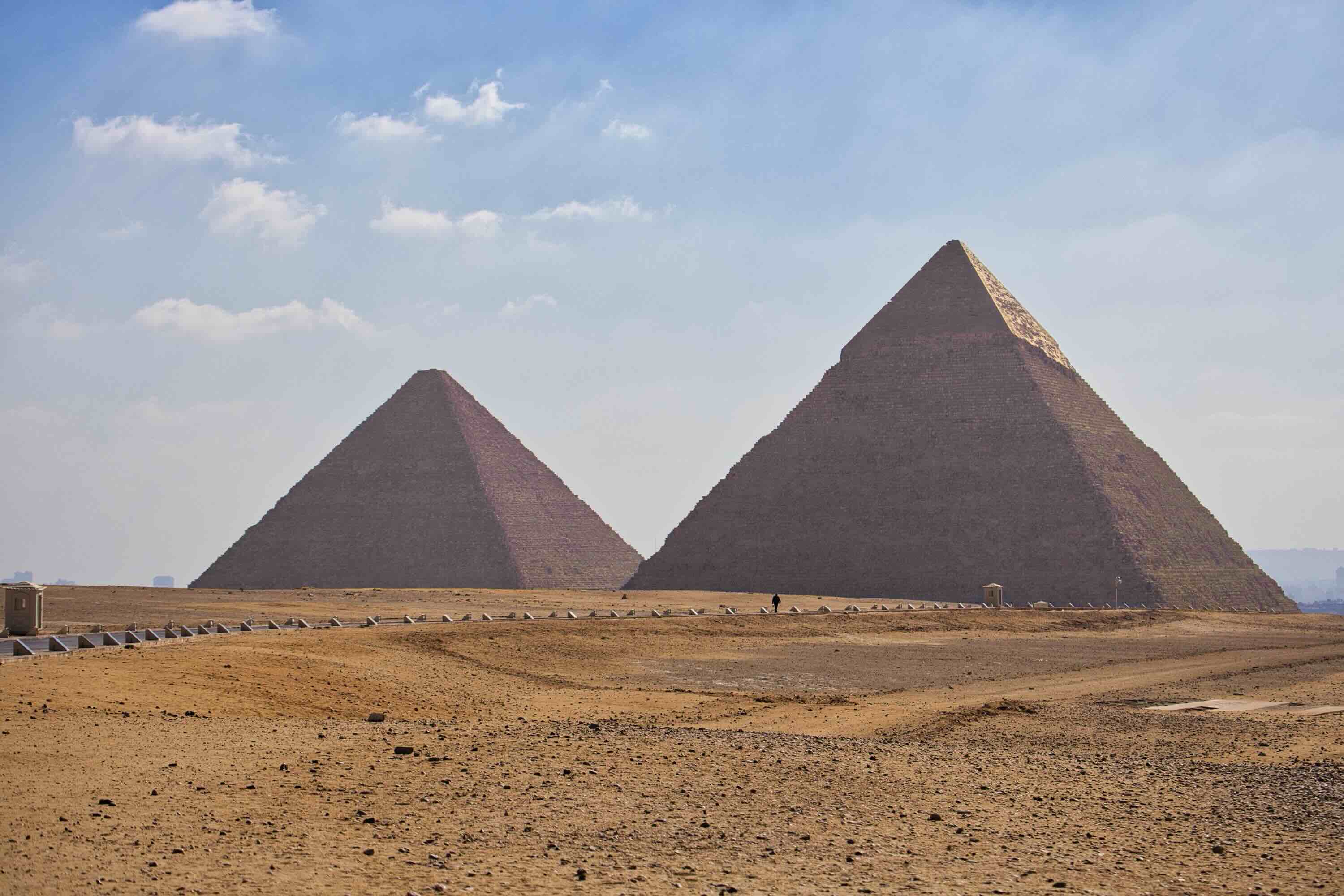
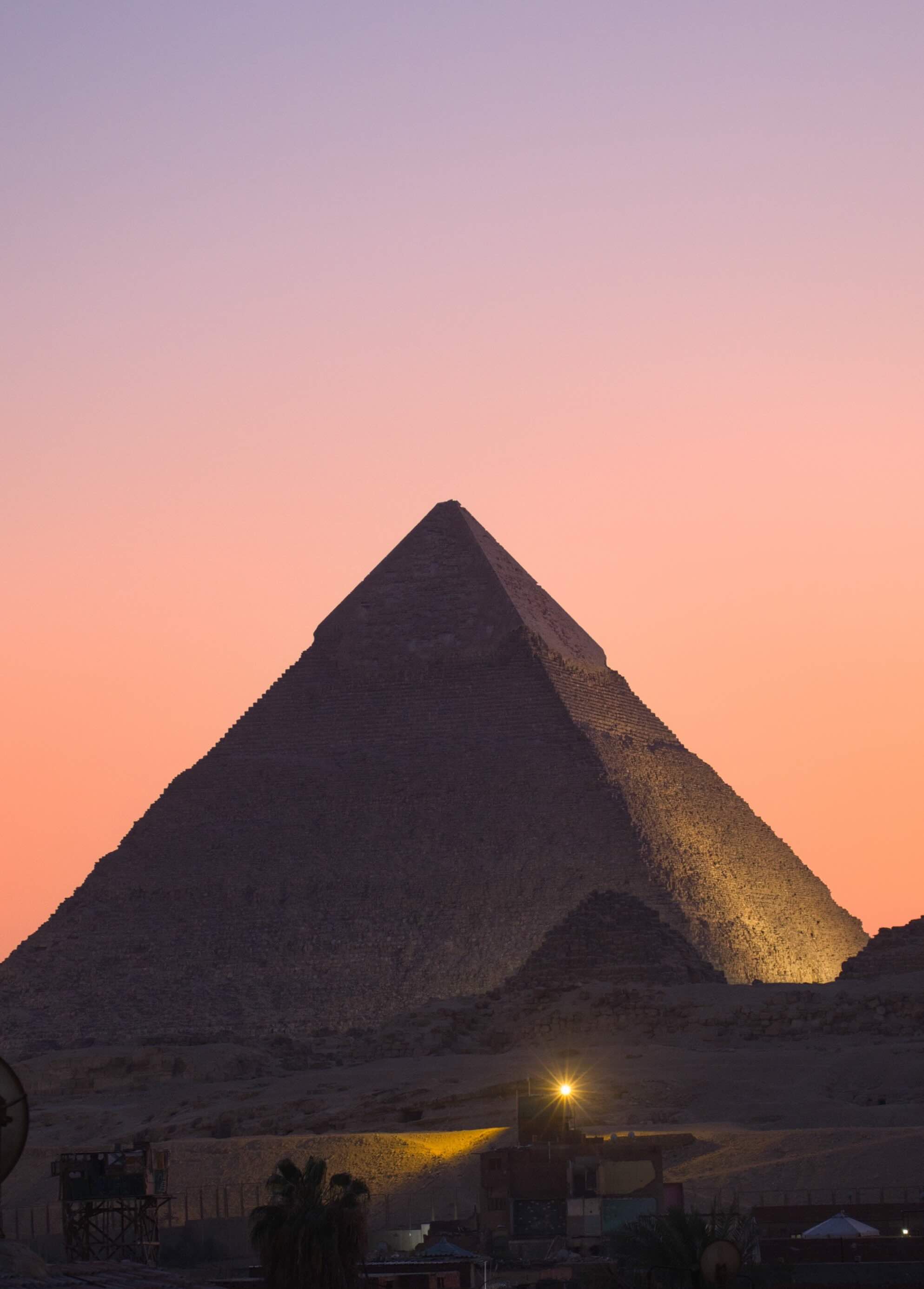
Pyramids Complex
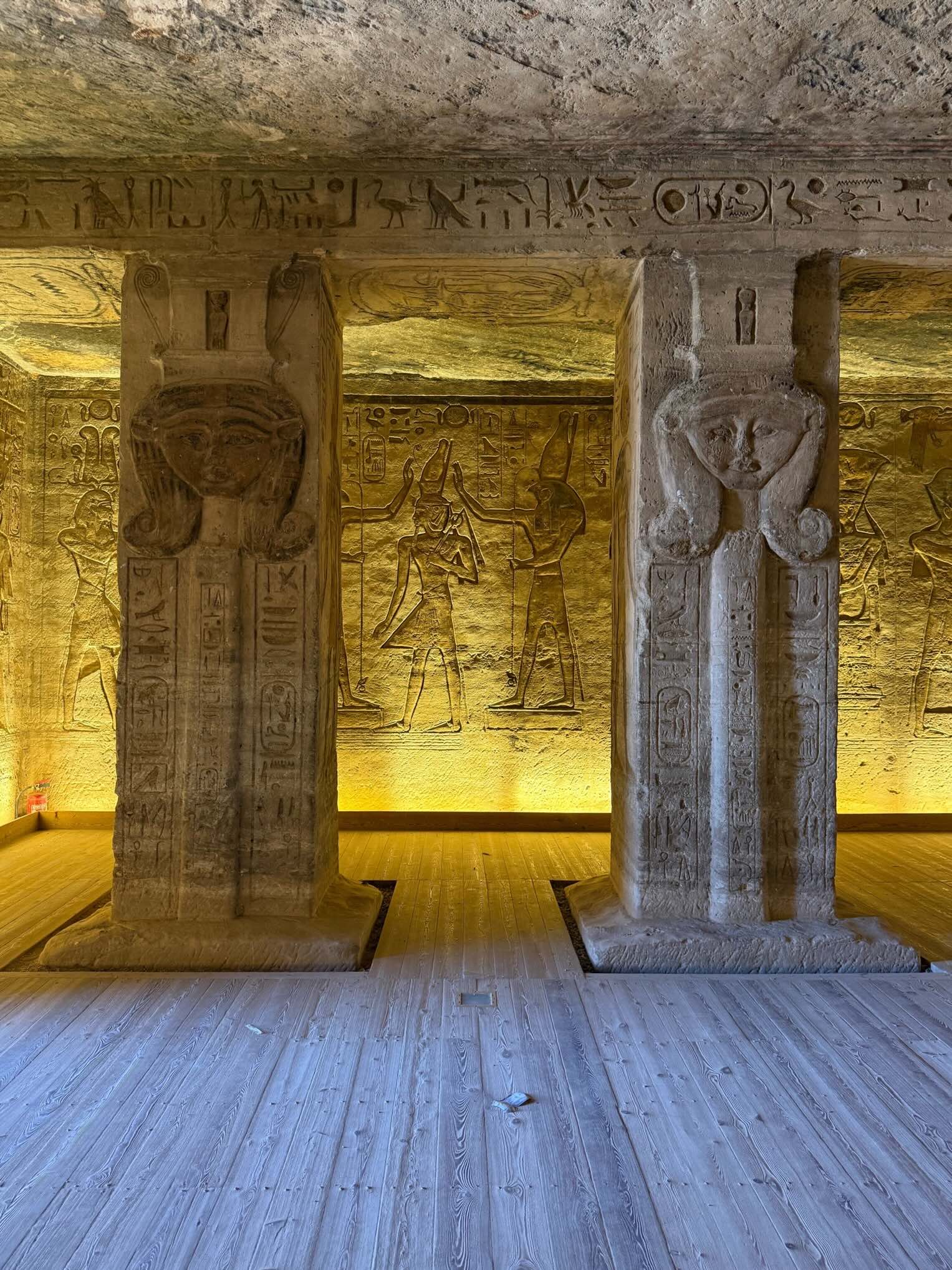
Inside Rameses II temple at Abu Simbel
Visited · Cairo · Easy to reach
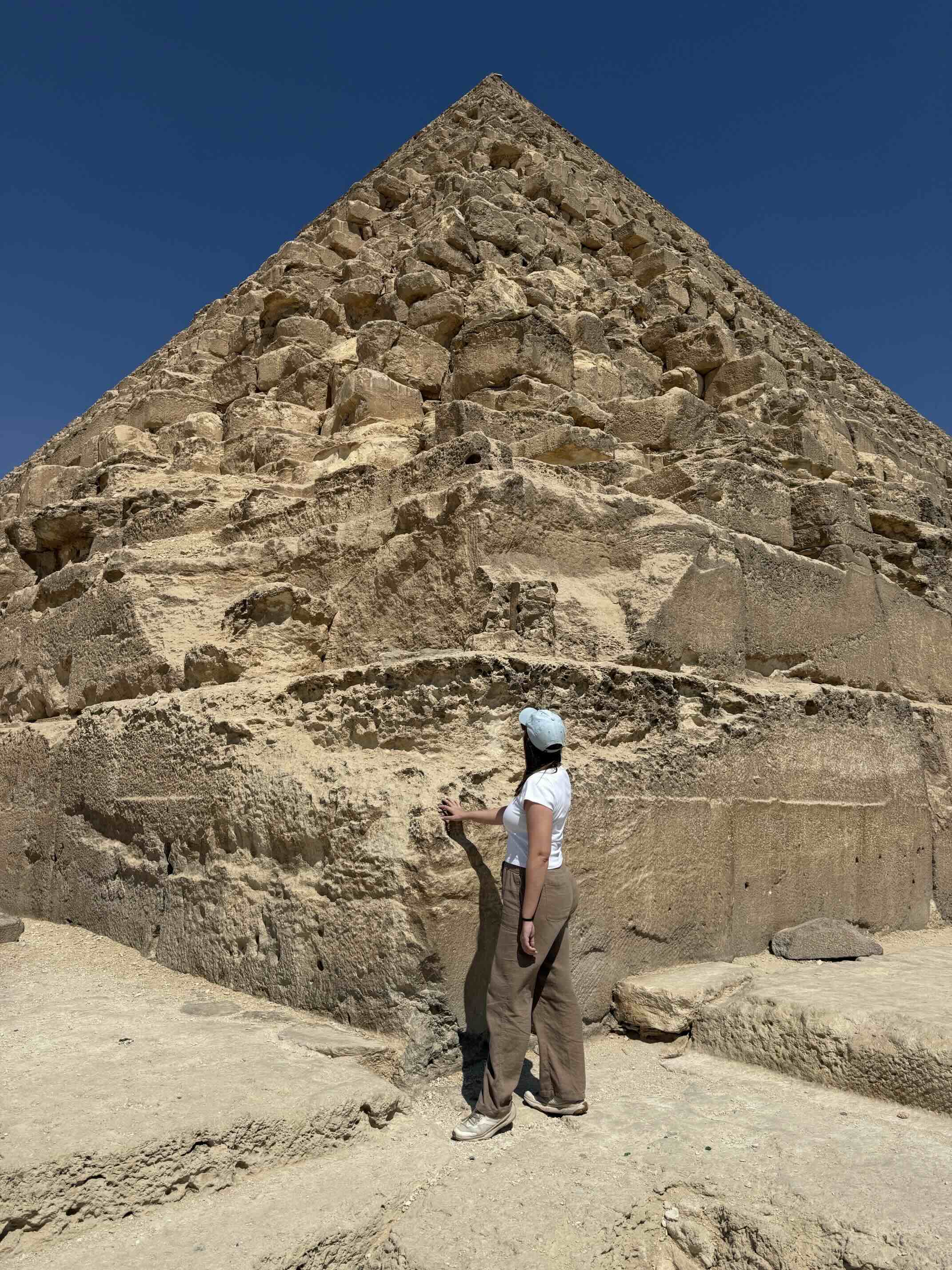
Nothing quite prepares you for the scale. The photographs don't lie, but they also don't convey the sheer mass of these structures rising out of the desert plateau on the edge of a city of 20 million people. The Pyramid Complex at Giza is the single most iconic ancient structure on earth, and unlike many famous landmarks, they really deliver in person. An hour's drive from the airport, and right on the edge of the Cairo Metropolis, they are very easy to access.
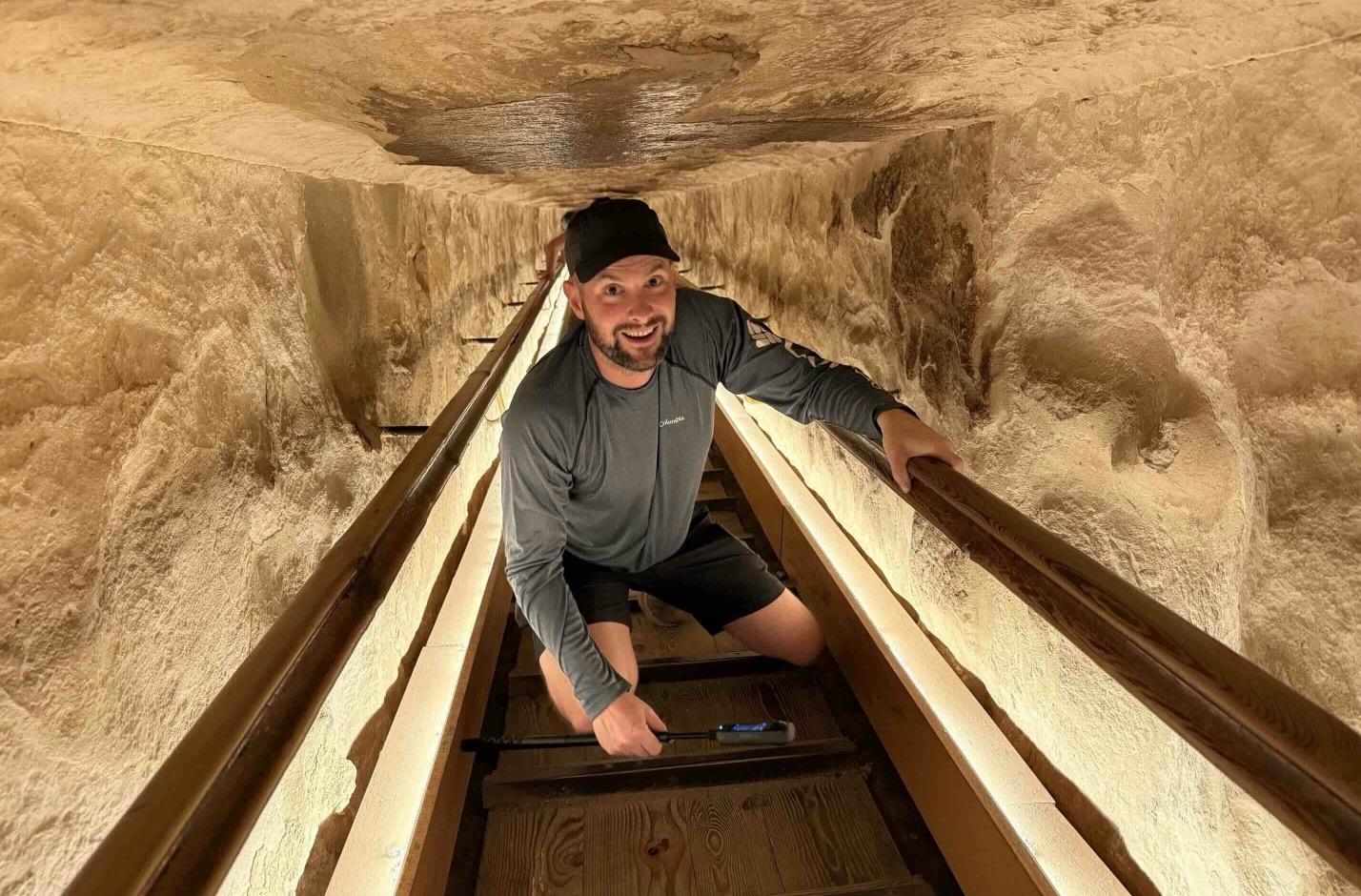
If going inside is on your list, Khufu's pyramid is the one to choose: the experience of standing in a chamber unchanged for 4,500 years is genuinely hard to describe. There is a long narrow shaft leading up to the chamber which will be hot, steep, and claustrophobic, so go early and be prepared.
When to go: Arrive at opening time (8am) to beat both the crowds and the midday heat. Arriving even an hour later will be a very different experience.
Important note: Khufu's pyramid interior requires a separate ticket.
Facts worth knowing:
- Khufu's pyramid stood as the tallest human-made structure on earth for over 3,800 years, beaten only by the Eiffel Tower in 1887!
- Khufu's pyramid was found almost entirely empty in modern times, and his mummy has never been found, likely looted.
- The three main pyramids were built within roughly 85 years of each other, during the Fourth Dynasty (c. 2580–2490 BCE).
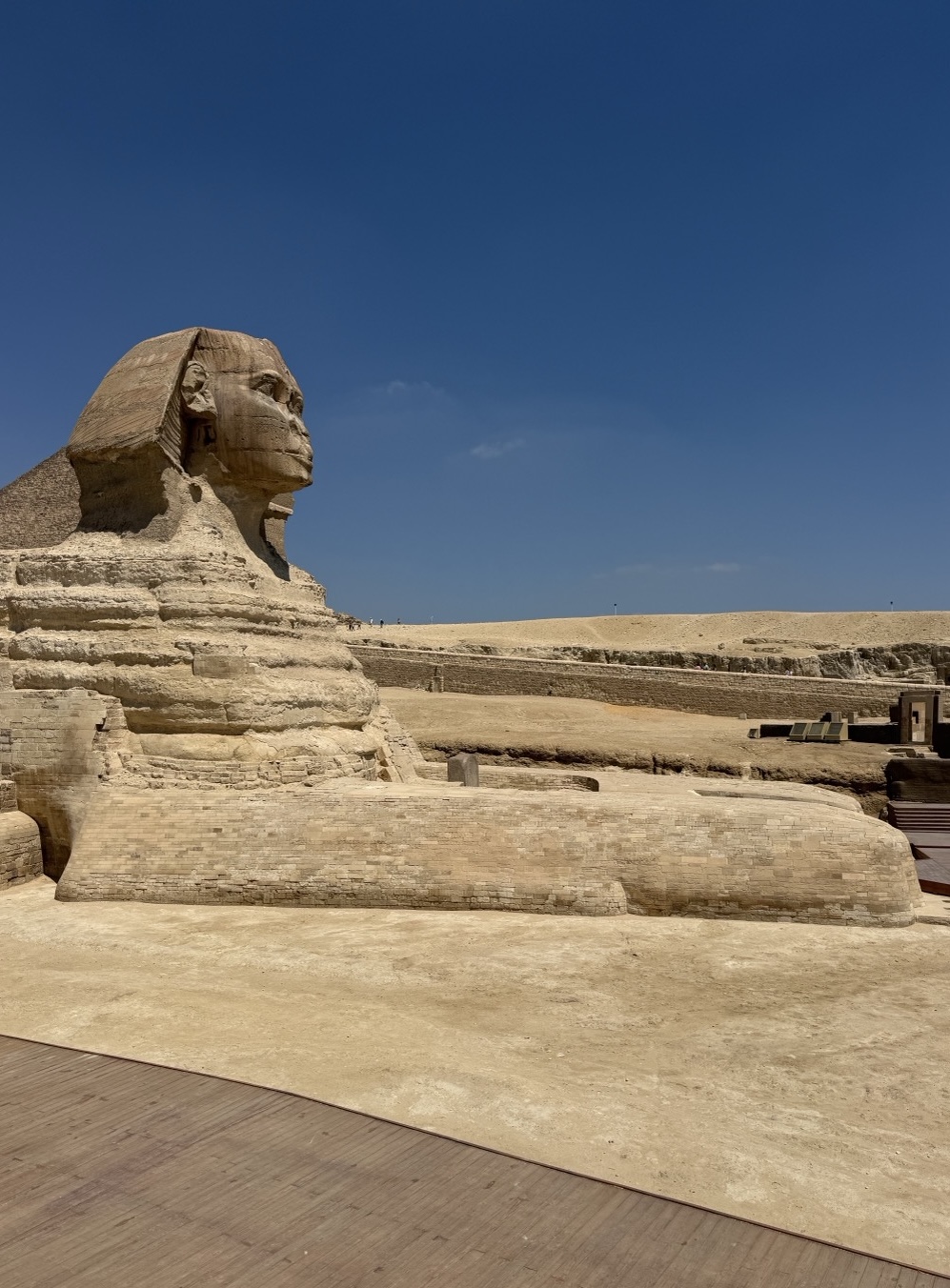
- The Great Sphinx, carved from a single ridge of limestone, is the largest monolithic statue in the world.
Visited · Luxor · Easy to reach · Nile Cruise Stop
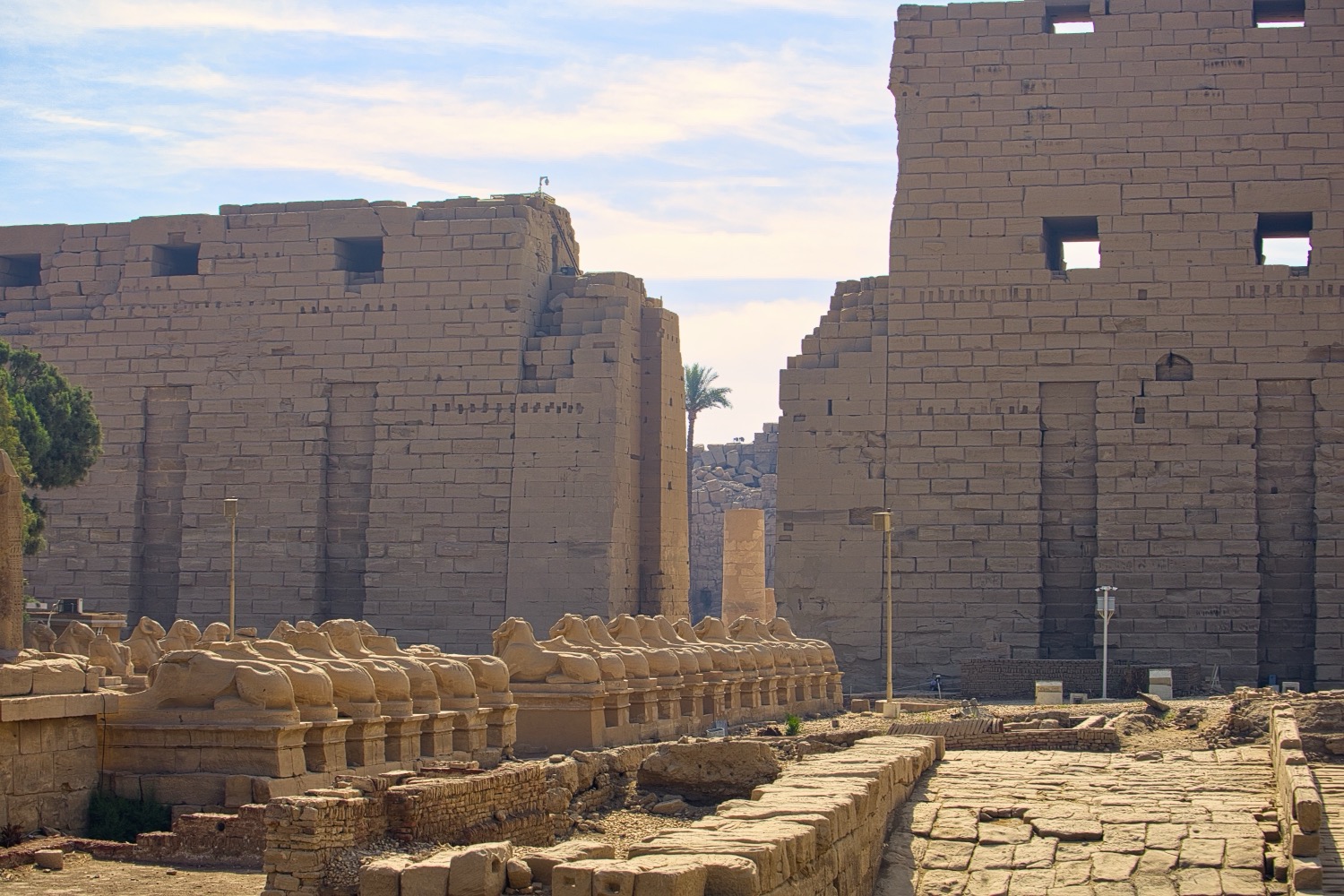
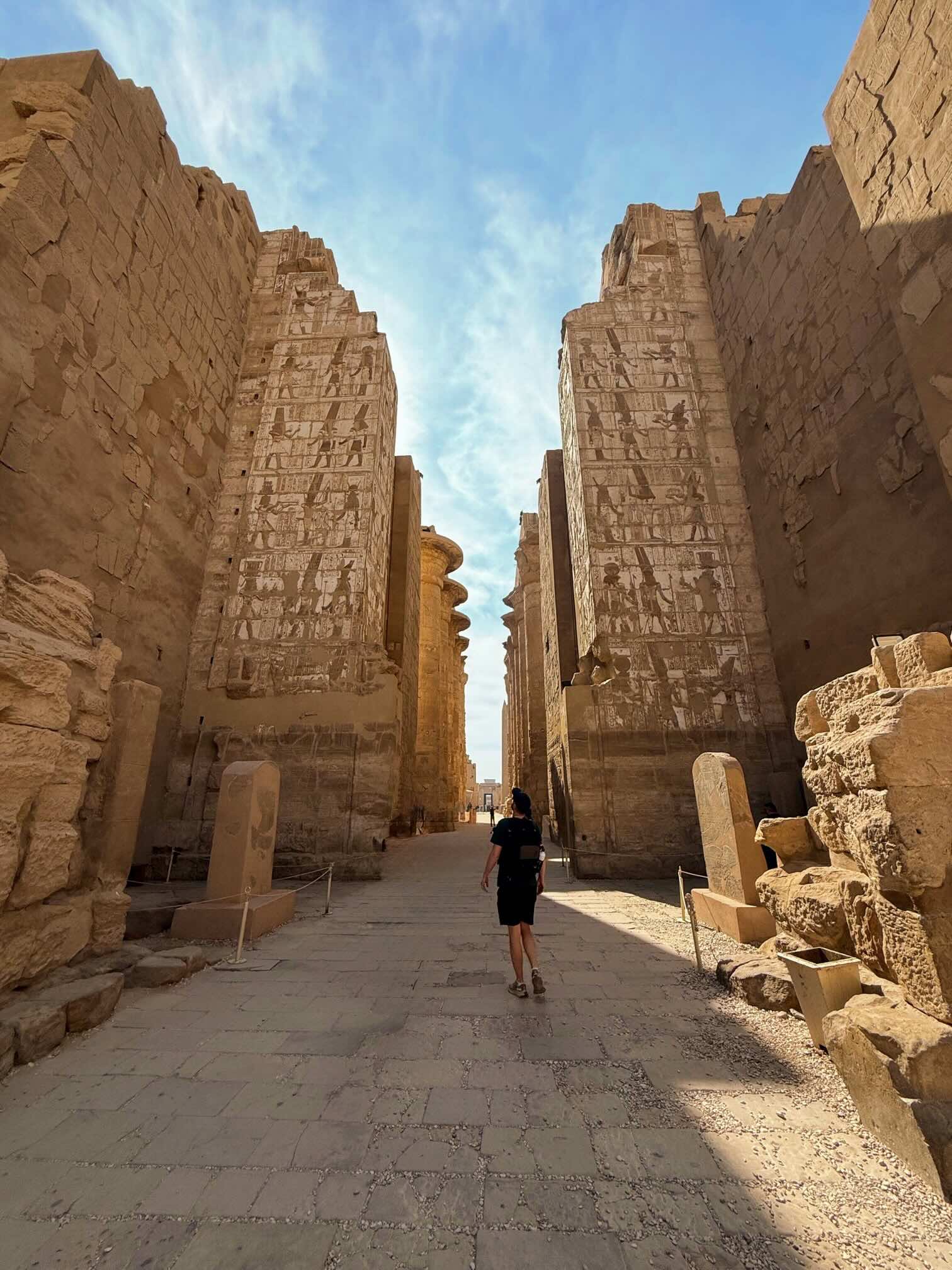
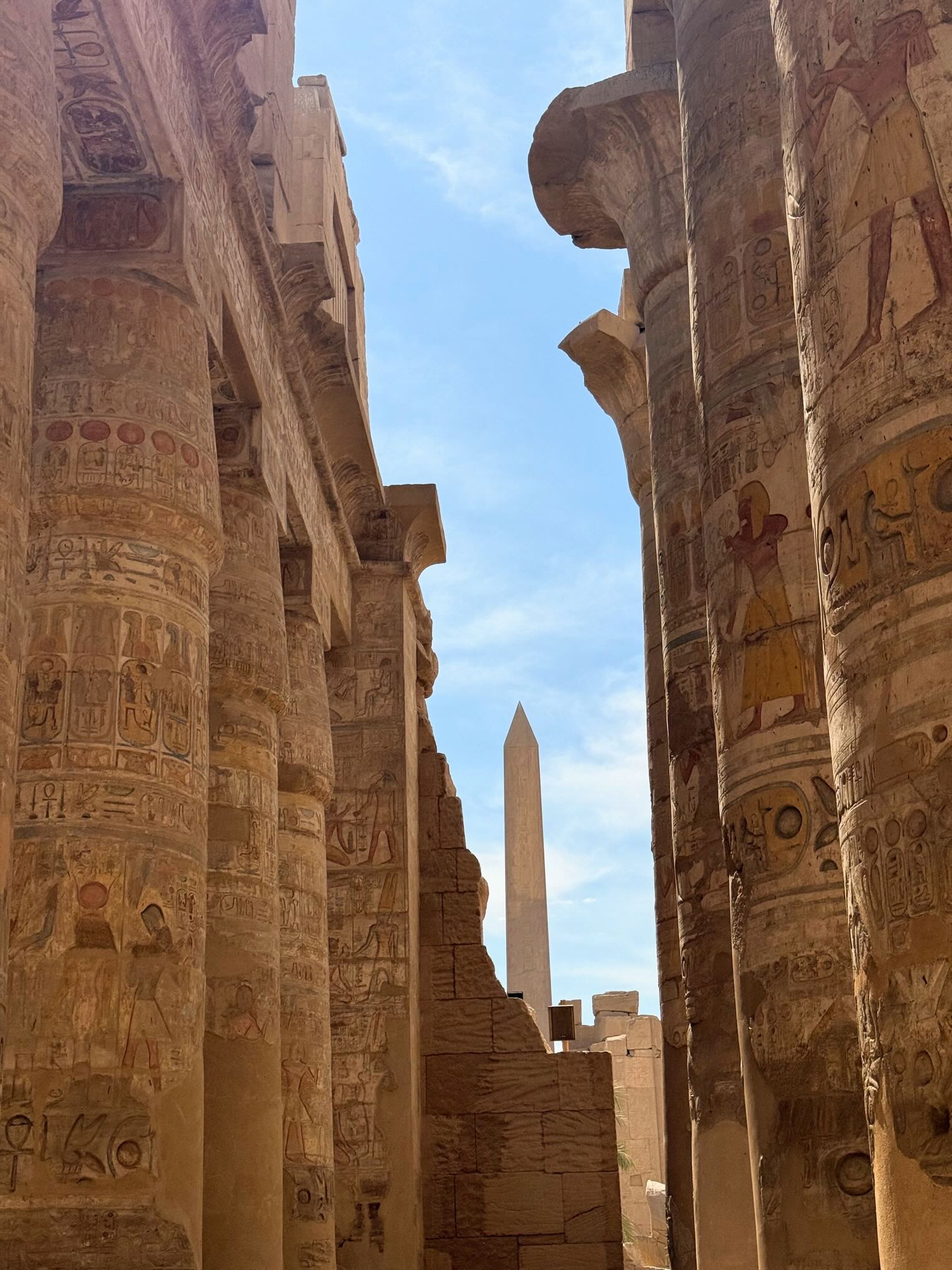
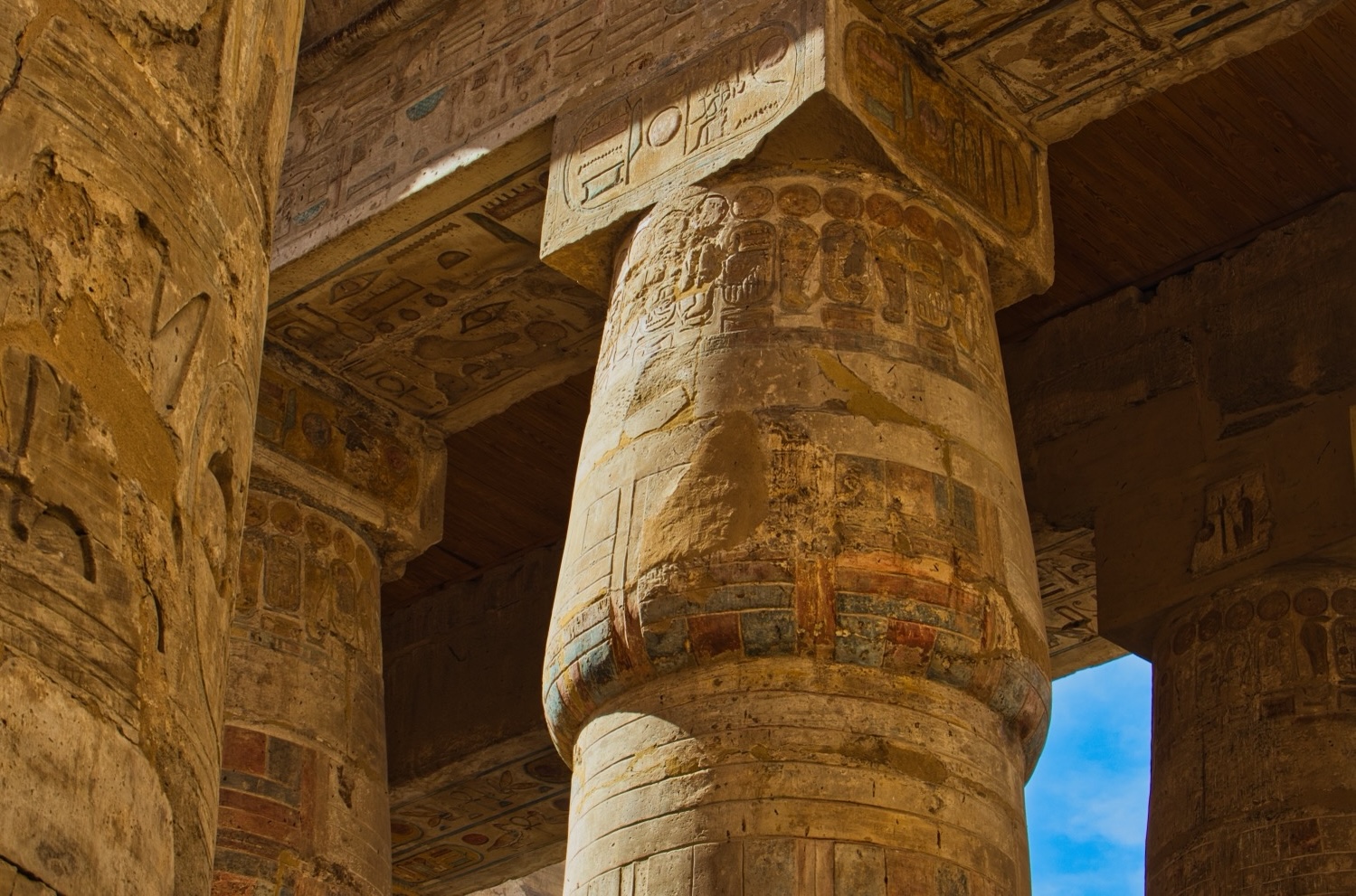
Of the two major Luxor temple complexes, Karnak is the one to prioritise. This is not a single temple but a vast walled city of temples, chapels, pylons, and obelisks built and expanded over more than two thousand years. What sets it apart from photographs is the colour: in sheltered spots between the columns, vivid reds, blues, and yellows survive on the carved reliefs, giving you a rare sense of what these spaces actually looked like as living religious centres.
When to go: We visited around 8am, which was when most of the other Nile cruise groups arrived, so it felt a little busy. Going in the late afternoon would definitely be hotter, but quieter as all of the main tour groups have boarded their ships and are long gone.
Facts worth knowing:
- The Hypostyle Hall contains 134 massive sandstone columns; the largest stand 21 metres tall and are wide enough that 10 people holding hands can barely encircle one.
- Construction began around 2055 BCE and continued for over 2,000 years, involving at least 30 different pharaohs.
- The Sacred Lake within the complex, still intact, was used by priests for ritual purification and measures approximately 120 by 77 metres.
Visited · Cairo · Easy to reach
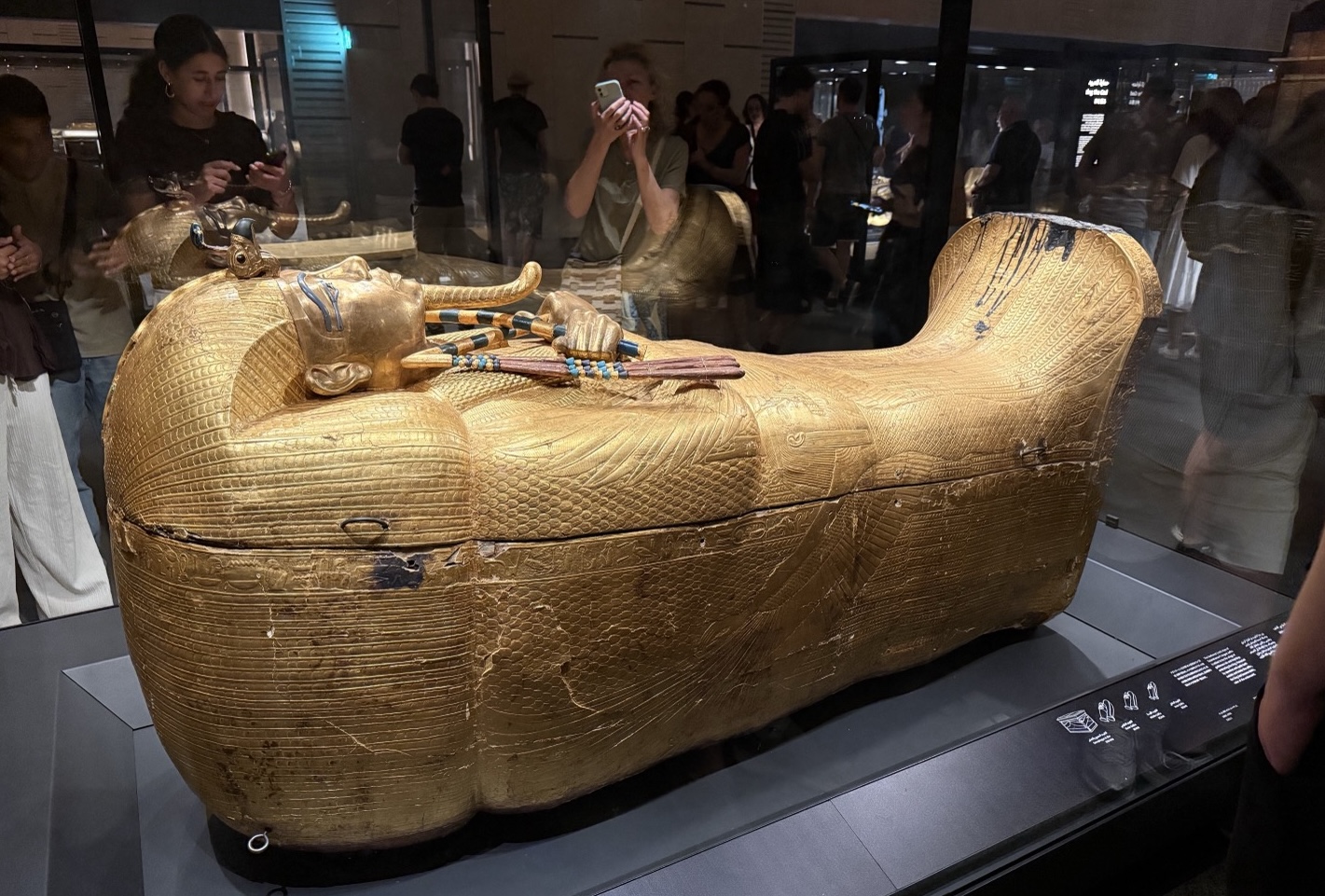
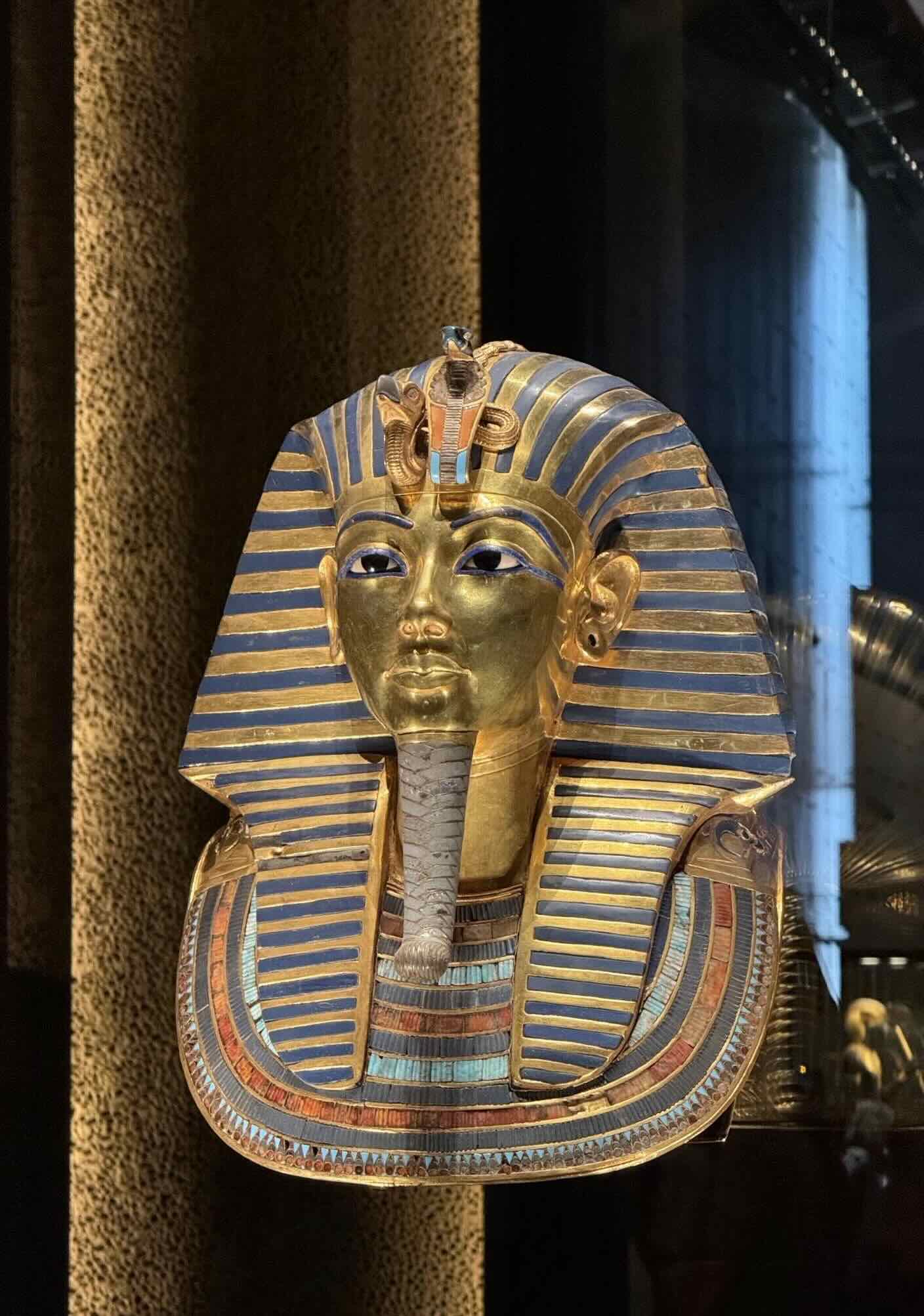
The GEM opened in 2023 and houses the most significant collection of ancient Egyptian artefacts ever assembled under one roof. Pair it with the Pyramids; they're minutes apart and the combination makes for a full, well-rounded day without feeling rushed. Budget 2–3 hours inside, which is enough to see the highlights properly without museum fatigue setting in. The highlight exhibition includes the complete contents of Tutankhamun's tomb. All the pieces are being displayed together for the first time since their discovery in 1922. Soon King Tut's mummy will be moved here from the Valley of the Kings. You can spend an hour just in this one exhibit. Several good restaurants on site serving Egyptian food make for a comfortable break mid-visit.
When to go: It's busy all day, so go whenever suits you.
Important note: Make sure to buy the right ticket online, specifically "Other Nationality". Ticket link
Facts worth knowing:
- The GEM houses over 100,000 artefacts, including the complete contents of Tutankhamun's tomb, with many pieces displayed together for the first time since their discovery in 1922.
- The building covers 490,000 square metres, making it the largest archaeological museum in the world.
- The main atrium staircase is flanked by 87 royal statues, curated to span the full arc of ancient Egyptian civilization.
Not visited · Between Luxor and Cairo · Moderate to reach
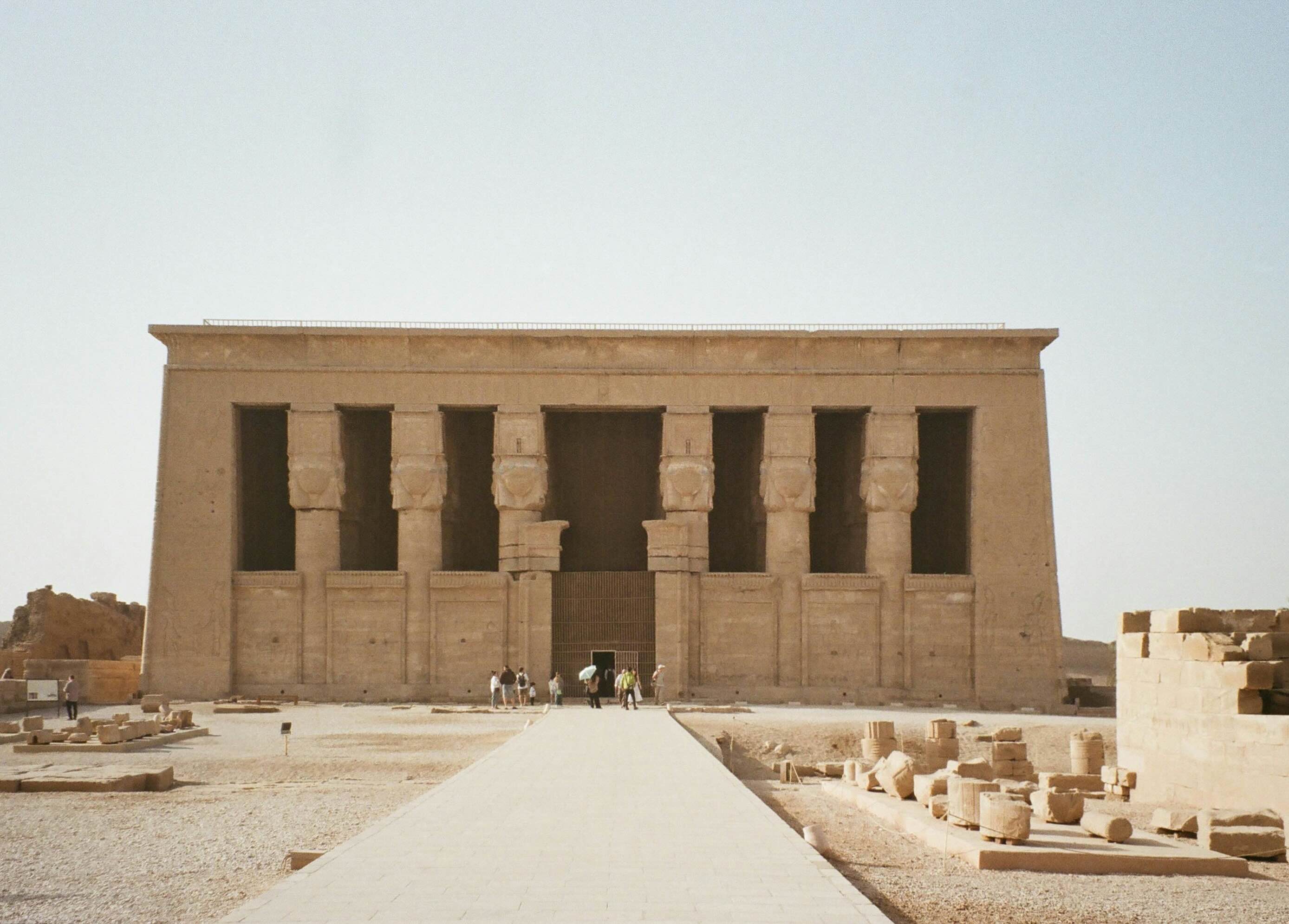
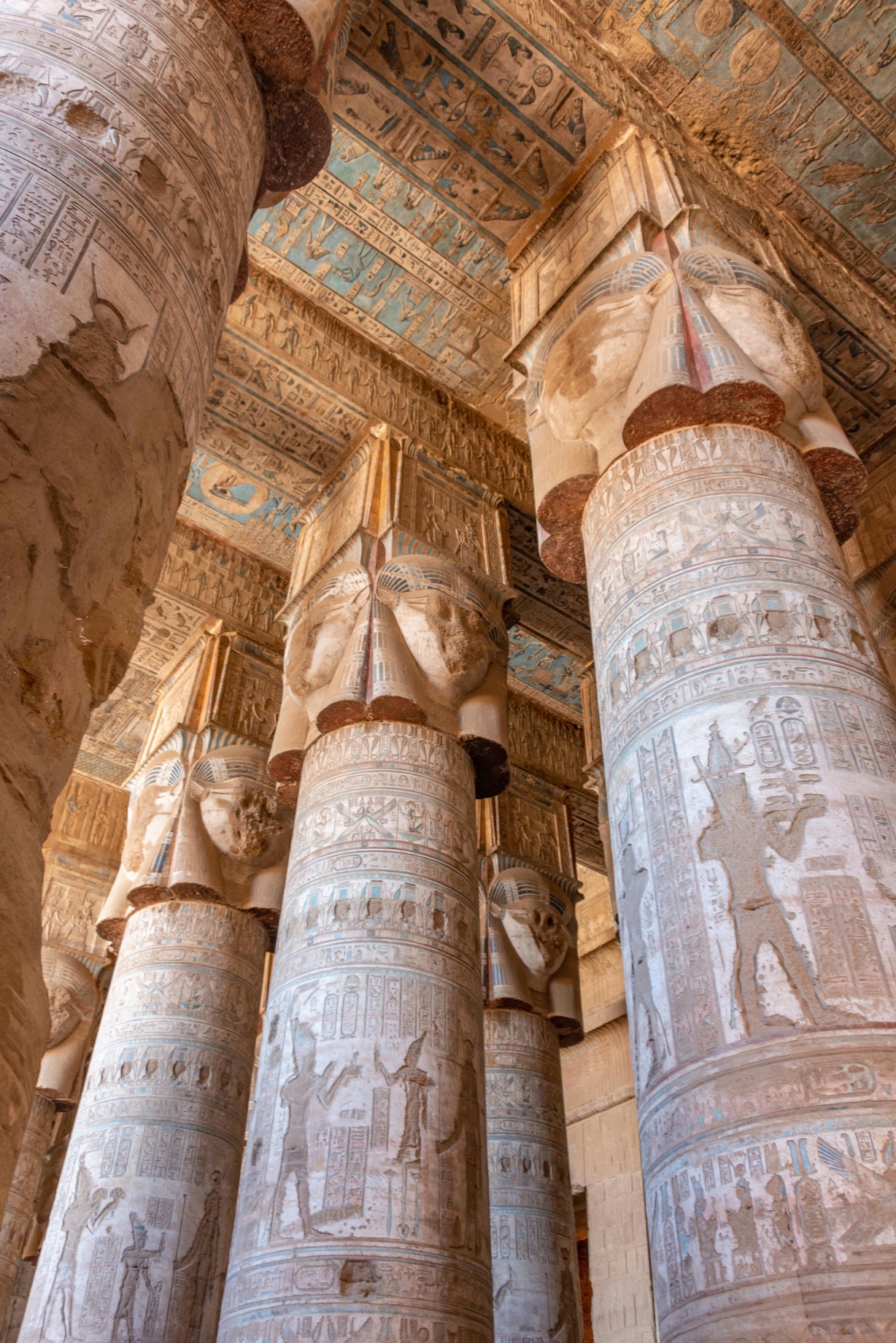
One of the bigger regrets from this trip. Dendera is widely considered the best-preserved temple in all of Egypt, and it's notable for something you rarely see elsewhere: extraordinary survival of original painted colour. The interior ceilings retain vivid astronomical paintings that look almost freshly made. Some argue this beats Karnak for sheer visual impact. It sits between Luxor and Cairo, making it a plausible stop en route. If we were planning this trip again, it would be non-negotiable.
When to go: Arrive at opening time, 8am. It's not typically part of the cruise itineraries, so it's less busy in the cooler morning hours than Karnak.
Facts worth knowing:
- The Temple of Hathor at Dendera contains the famous Dendera Zodiac, a carved circular ceiling relief depicting the night sky; the original is now in the Louvre, with a copy in situ.
- The interior ceilings preserve some of the most complete astronomical paintings surviving from antiquity, including detailed star catalogues.
Credit Alexey K
Credit Diego F Parra
Visited · Luxor · Easy to reach · Nile Cruise Stop
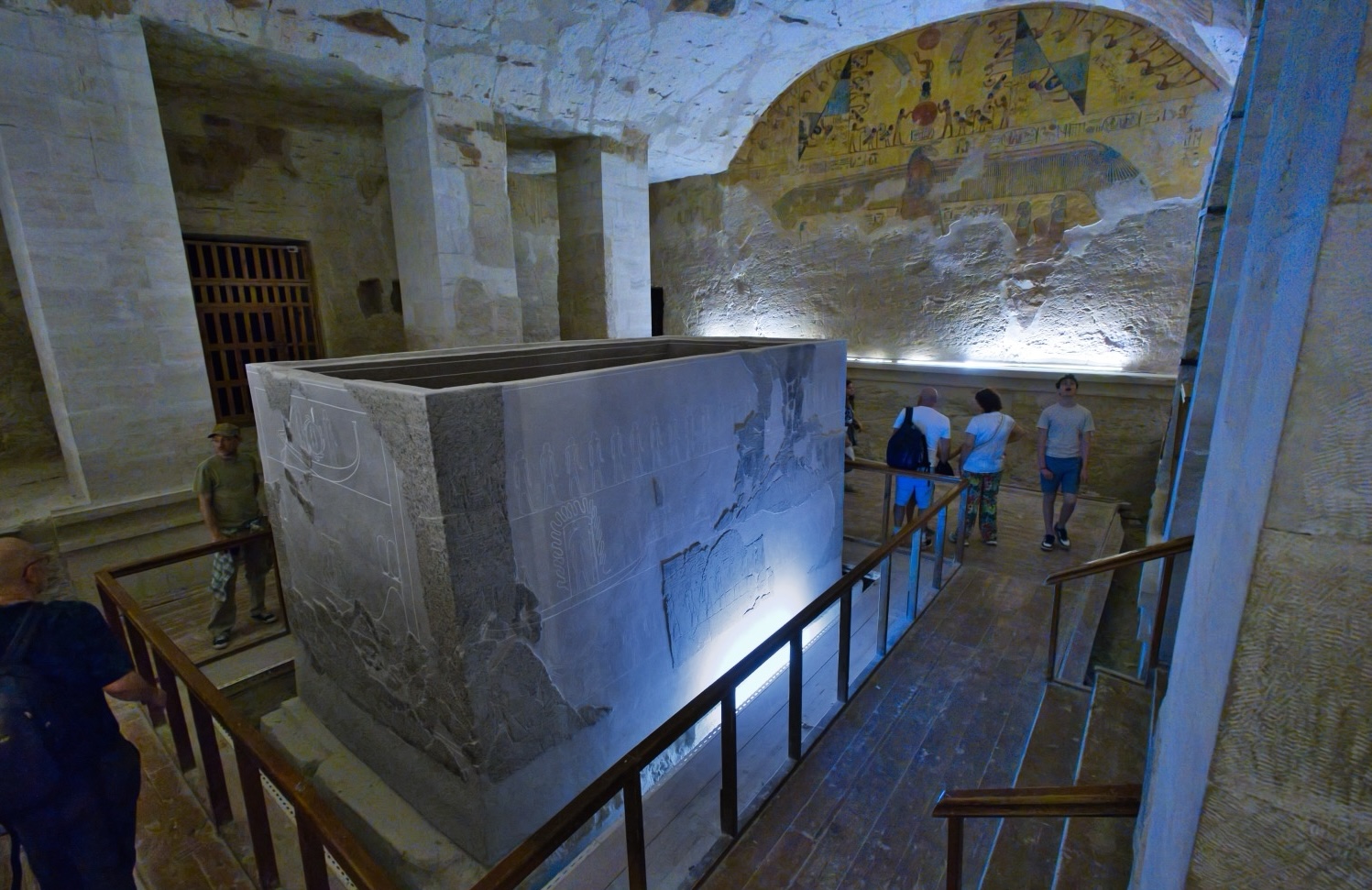
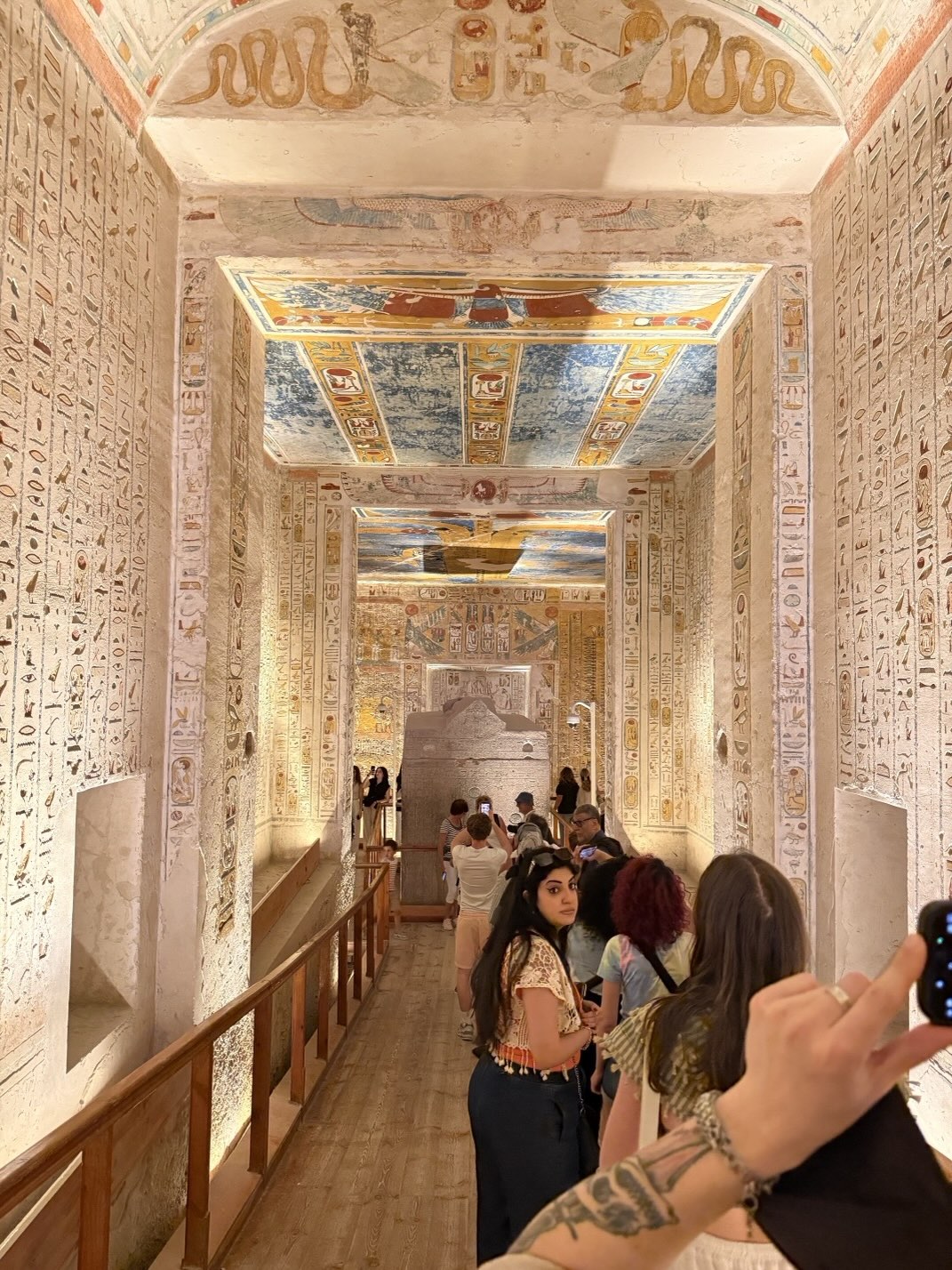
The royal burial ground of the New Kingdom pharaohs, carved into the limestone cliffs on the west bank of the Nile near Luxor. Seeing the interior burial chambers in person, the scale of the decorated passages, the depth of the tombs, the sheer ambition of it all, is something no photograph properly conveys. With 63 tombs discovered and counting, the site rewards as much time as you can give it. Bring an umbrella to provide some shade. Some of the tombs have lines leading out the door, and you could be waiting in the sun for an hour in peak season. The valley itself is not a lot to look at, mostly sandy rocks, but the tombs are well worth the visit.
When to go: The site opens at 8am, and that's typically when all of the cruise tours arrive too, so late afternoon is a better bet if you can handle the heat.
Important note: Your ticket covers the entrance into 3 tombs of your choosing, out of a total of 8-12. Tutankhamun (KV62), Seti I (KV17), and Ramses V/VI (KV9) tombs require separate tickets. We entered Tombs KV11, KV8 and KV2, at our tour guide's recommendation because they have the best-preserved colour.
Facts worth knowing:
- Tutankhamun's tomb (KV62), discovered by Howard Carter and Hussein Abdul Rasoul in 1922, contained over 5,000 artefacts, now largely housed in the GEM.
- The tomb of Seti I (KV17) is considered the longest and most elaborately decorated tomb in the Valley, extending over 137 metres into the rock.
- Workers who built the tombs lived in a purpose-built village called Deir el-Medina nearby; their records survive and give an unusually detailed picture of everyday life in ancient Egypt.
Visited · 280km south of Aswan · Hard to reach · Nile Cruise Stop
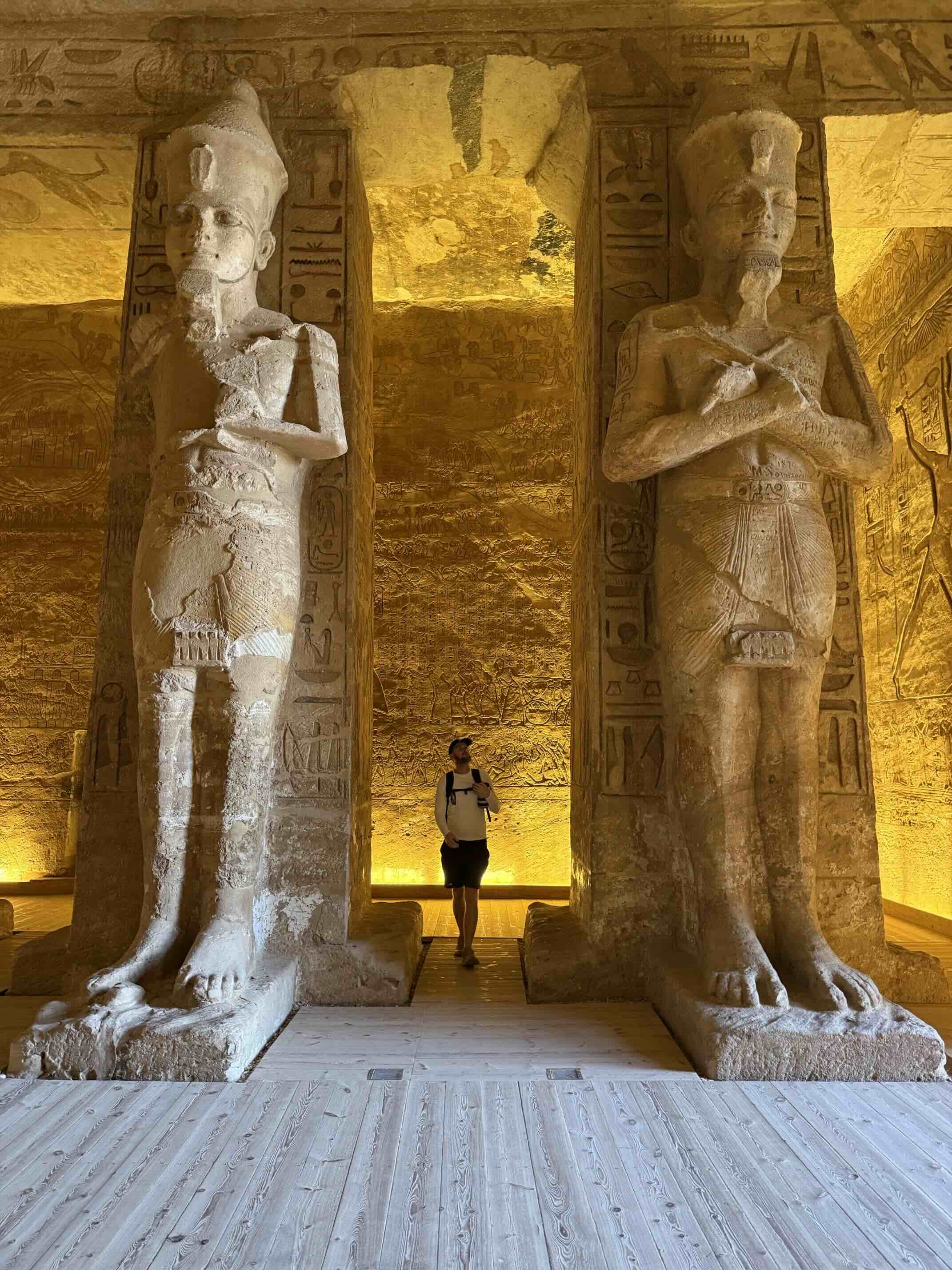
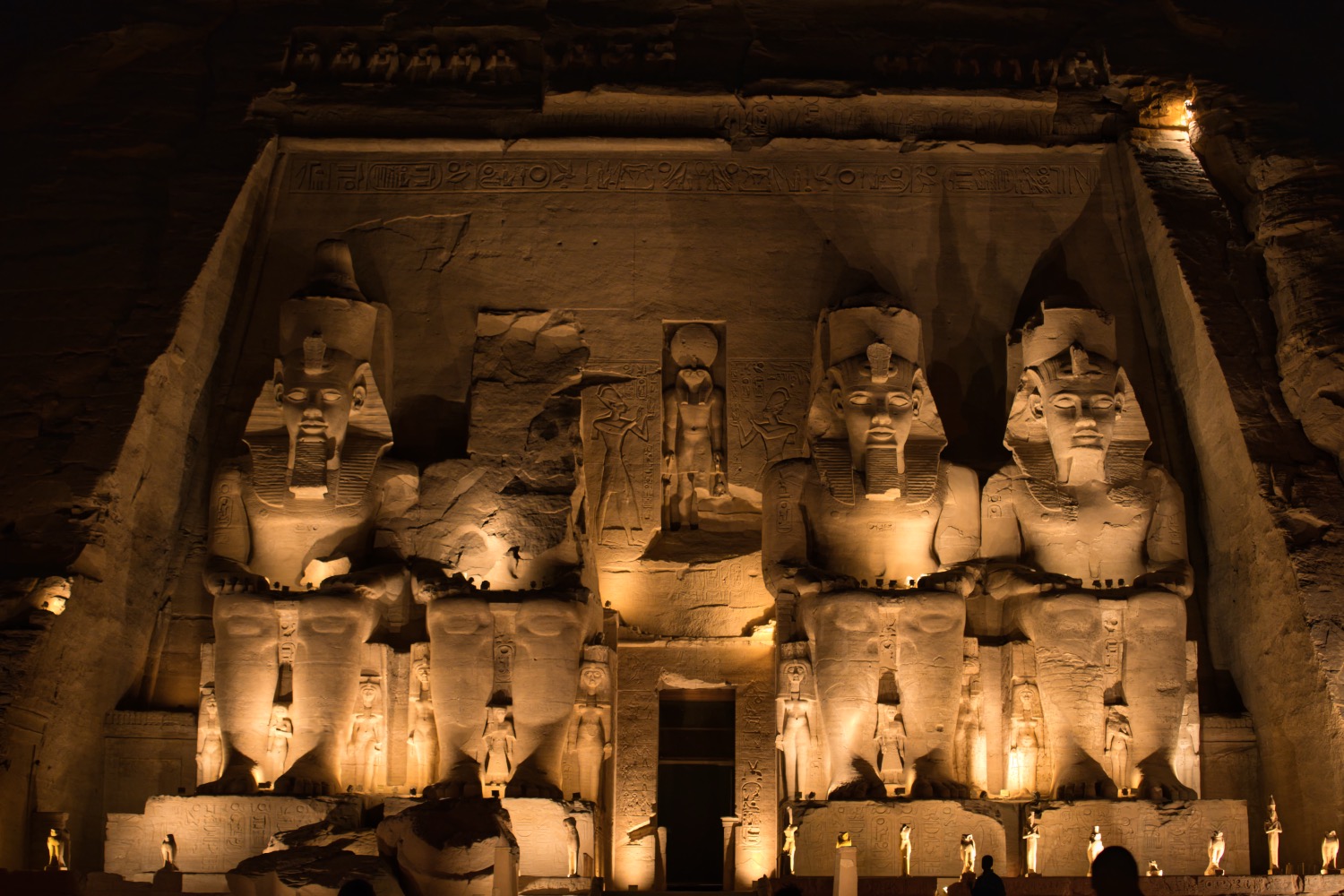
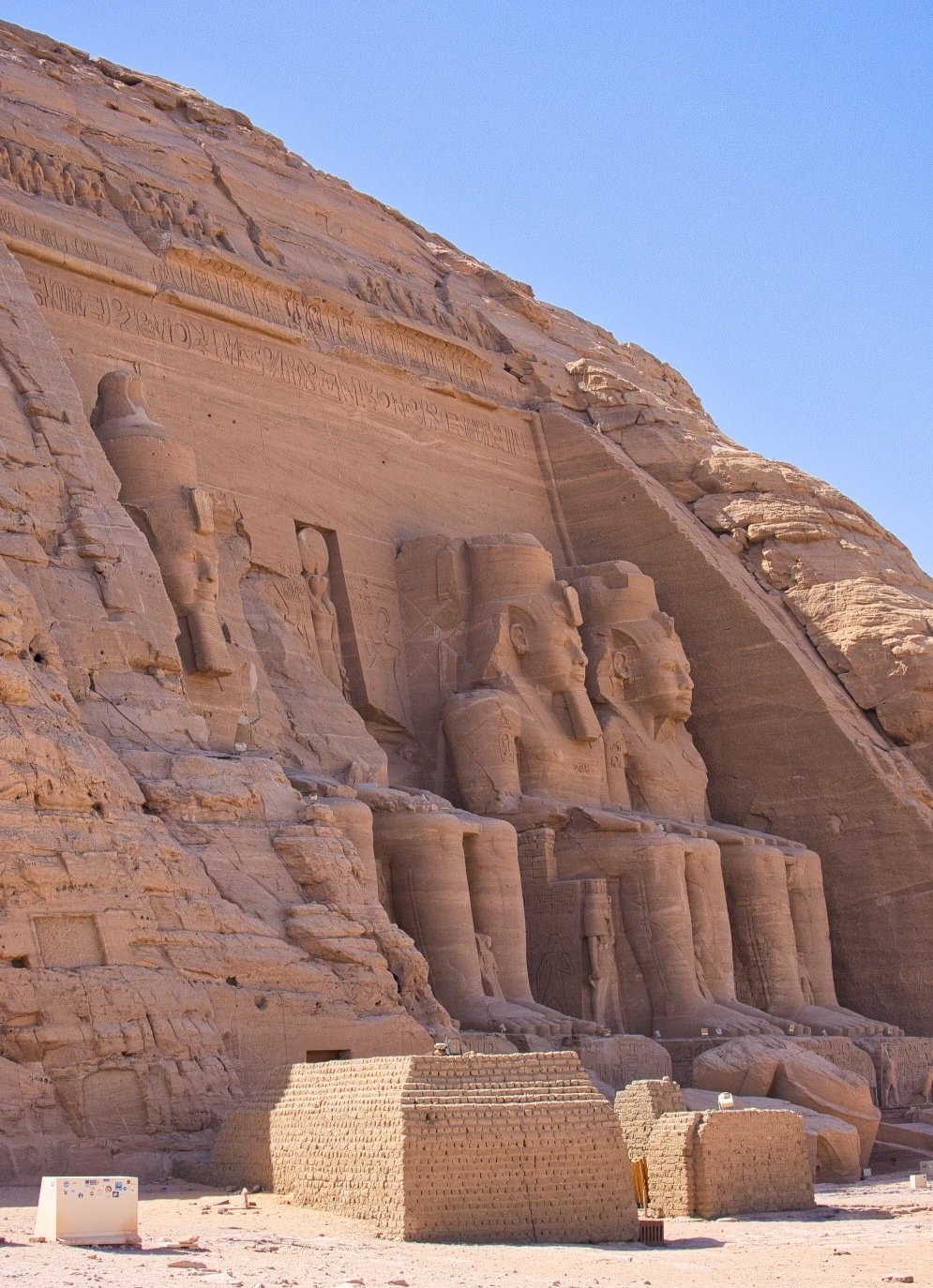
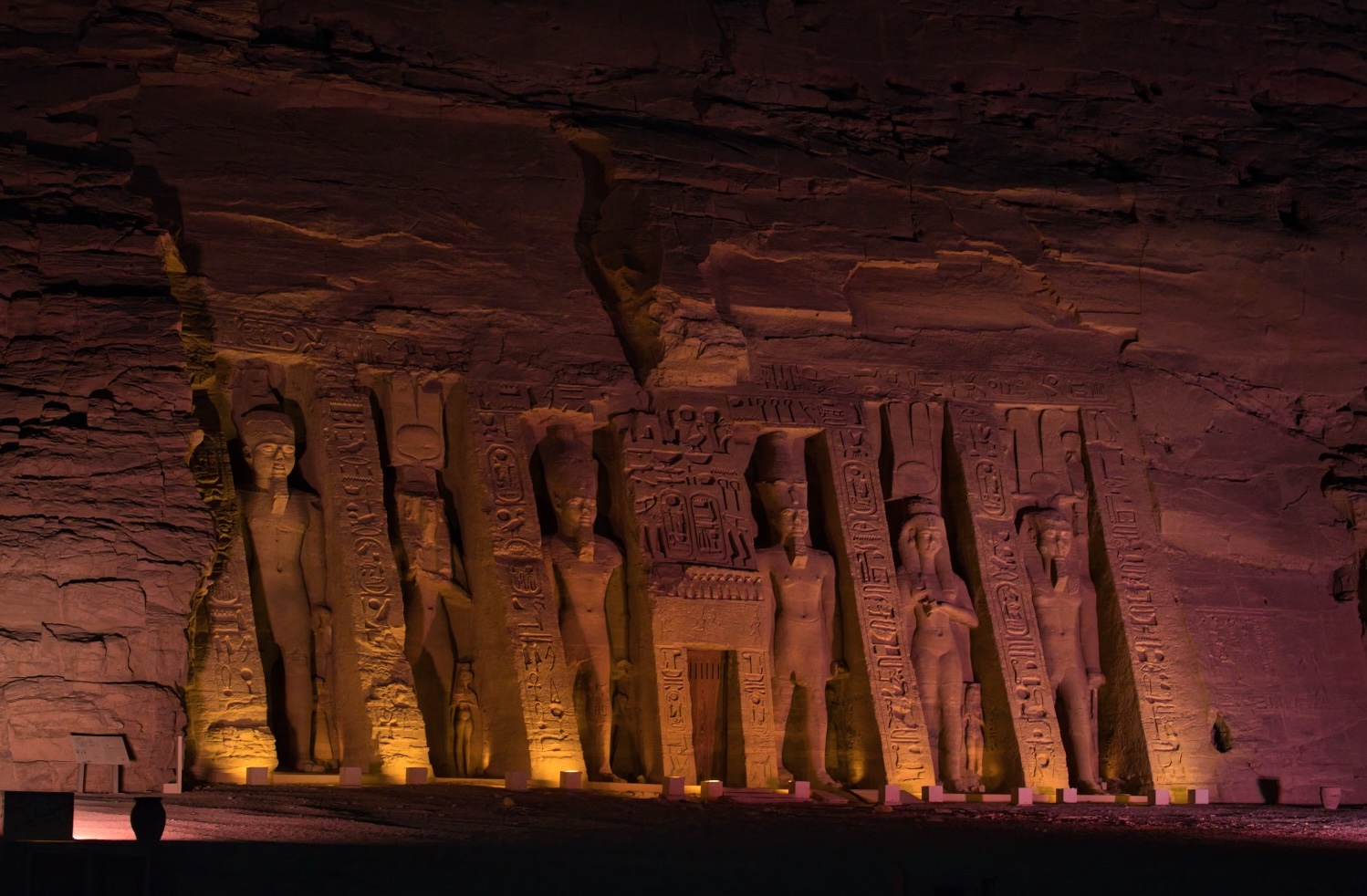
Abu Simbel presents a genuine dilemma. The site is extraordinary: two temples carved directly into a sandstone cliff face, fronted by four colossal statues of Ramesses II standing over 20 metres tall. However, it sits 280km south of Aswan. The story of the site's relocation rivals the site's history itself: the entire facade and interior were cut out of the cliff and reassembled on higher ground in the 1960s to save them from the rising waters of the Aswan High Dam. The remoteness keeps crowds manageable, which is its own reward, but factor in the journey when planning. There's not a lot to do in Abu Simbel, so you only need one night here.
When to go: Most tours arrive around 8am, so the mornings are busiest. We visited at 3pm and it was a ghost town, with maybe 10 tourists on the site in total.
Light Show: Many of the sites have a light show but this temple has a really excellent one. It's 40 minutes long and gives you a full history of the site with beautiful projections showing you how the temple was built and what it looked like in its heyday.
How to get there:
You have three main options:
- a day trip from Aswan: starting at 4:30am, followed by a 4 hour drive, a brief visit and lunch, and a 4 hour drive back to Aswan.
- Overnight trip, fly from Aswan: about an hour, limited availability.
- Overnight trip, Drive from Aswan (what we did): 4 hours, but you can leave Aswan at your leisure and see the sound and light show in the evening.
Facts worth knowing:
- The temples were oriented so that twice a year, believed to be Ramesses II's birthday and coronation day, sunlight penetrates 60 metres into the inner sanctuary to illuminate the statues of the gods. The relocation preserved this alignment almost exactly.
- When the High Dam was built, UNESCO moved the entire complex to higher ground. The move involved cutting the mountain into over 1,000 blocks weighing up to 30 tonnes each; the rebuilt cliff is an artificial concrete dome disguised as rock.
- The smaller temple was dedicated to Ramesses II's chief wife Nefertari, one of only a handful of Egyptian temples ever built to honour a queen.
Visited · Lake Nasser, near Aswan · Moderate to reach · Nile Cruise Stop
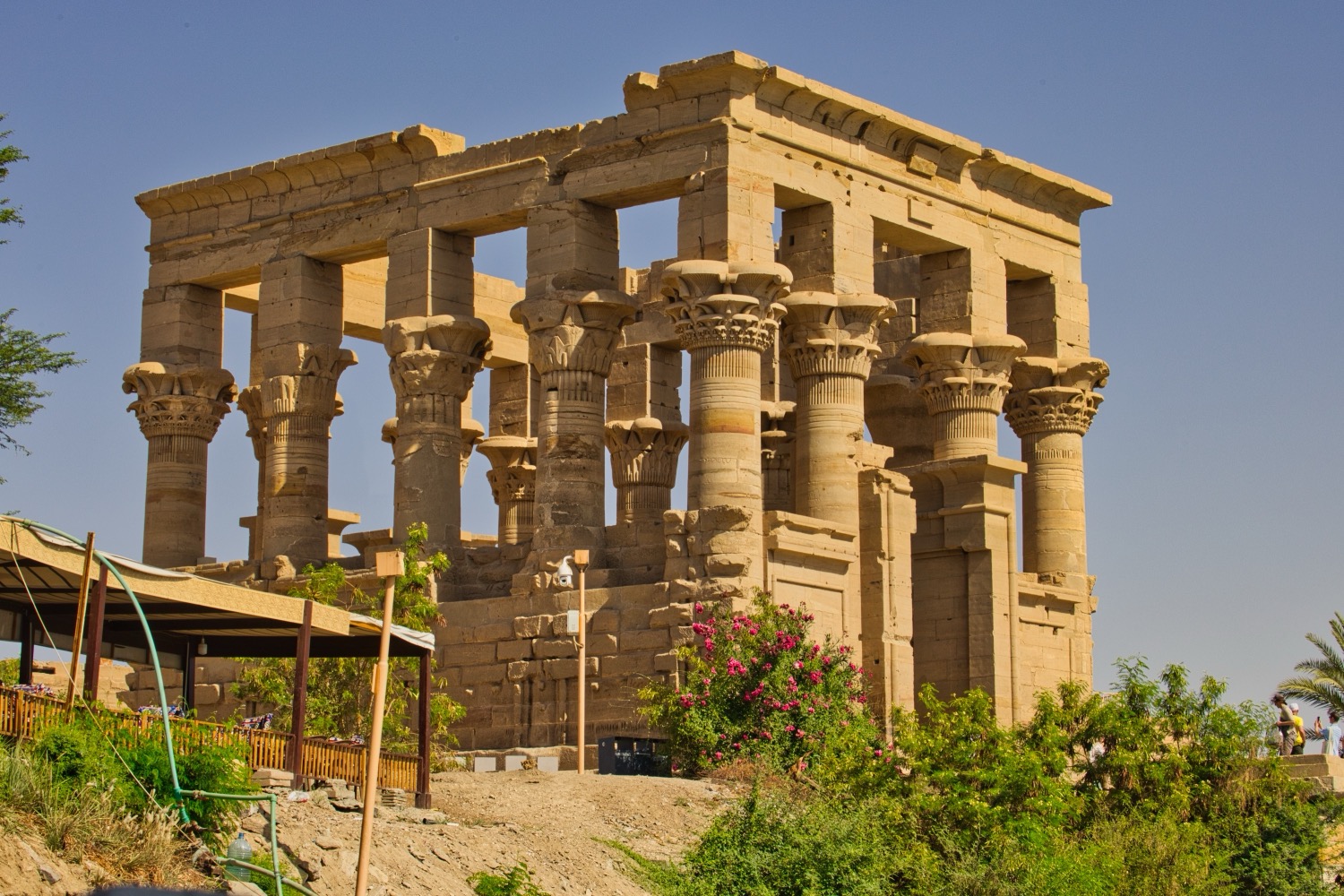
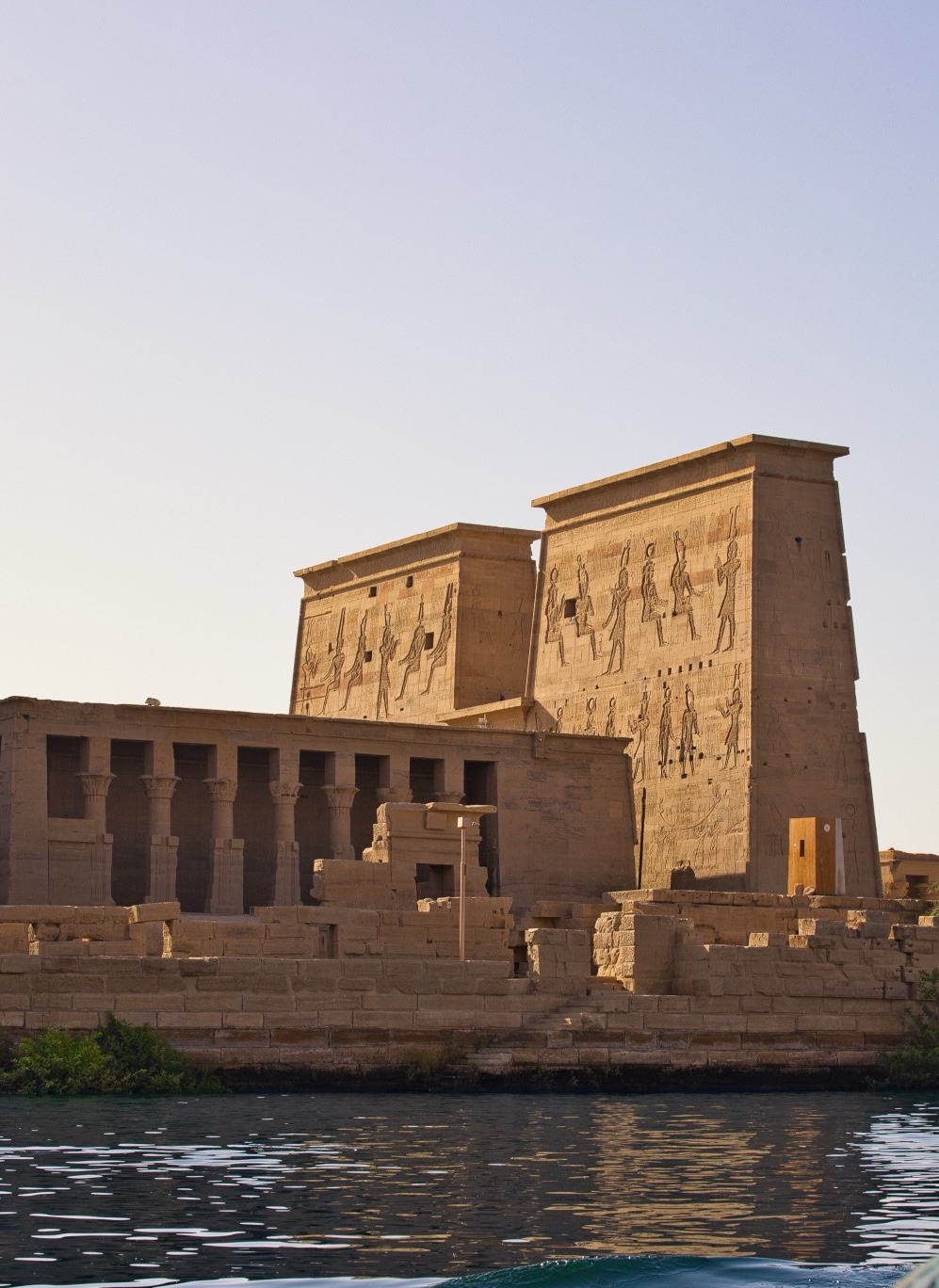
Philae is unique: a temple complex sitting on an island in Lake Nasser, reached by a short motorboat ride from the shore. The combination of water, setting, and largely intact structure makes for an experience unlike anything else on this list. But the back story may be the most impressive part. The entire complex was dismantled block by block and relocated to higher ground in the 1970s to save it from the Aswan High Dam. Whether the temple or the engineering feat is more extraordinary is a fair debate.
Facts worth knowing:
- The temple was primarily dedicated to Isis and remained an active religious centre into the 6th century CE, making it one of the last pagan temples to close in the Roman Empire.
- Philae was one of UNESCO's most ambitious salvage operations: 45,000 blocks were removed, catalogued, and reassembled on nearby Agilkia Island between 1972 and 1980.
- The original island of Philae is now permanently submerged; the island you visit was deliberately reshaped to match the original's topography.
Visited · Luxor · Easy to reach · Nile Cruise Stop
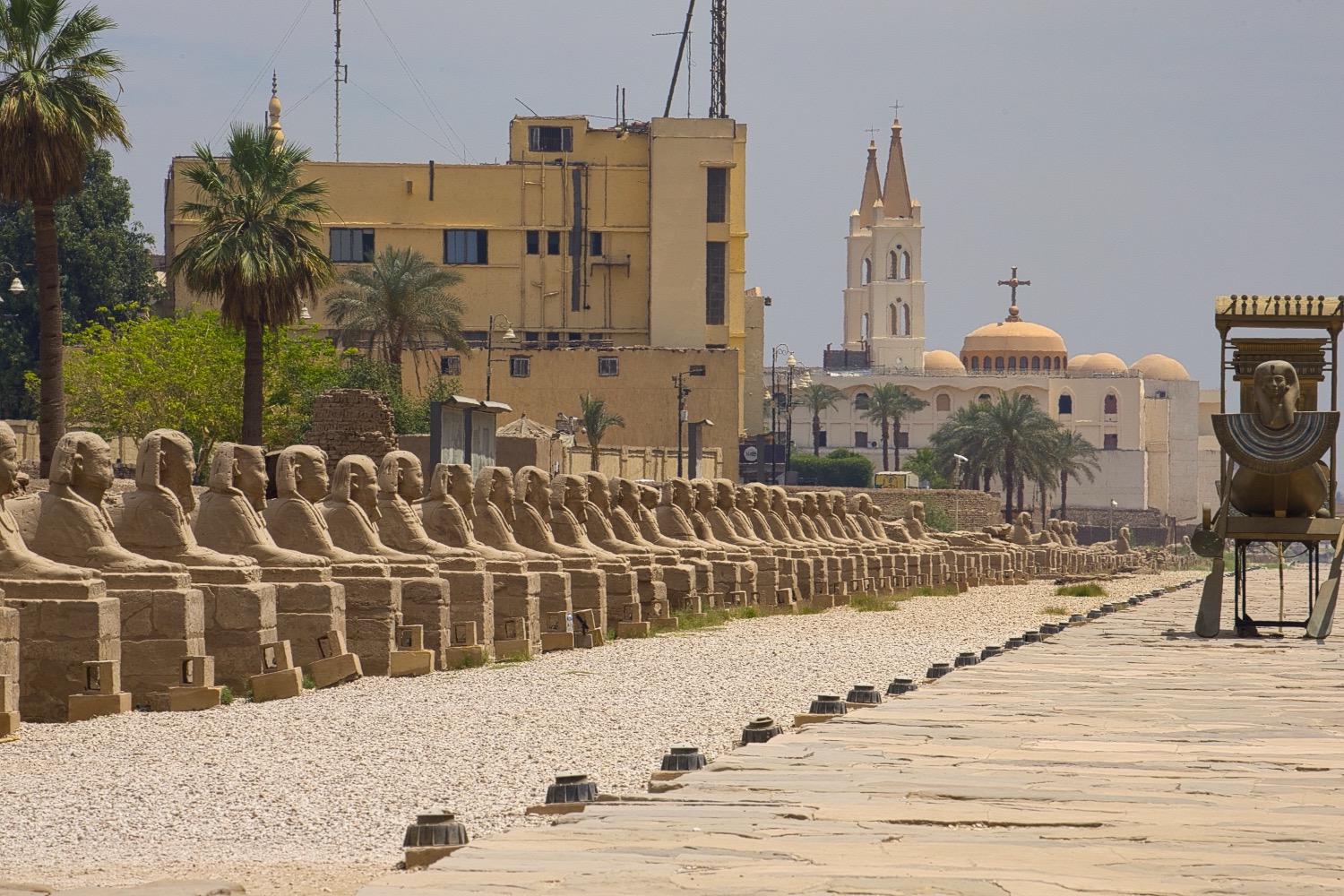
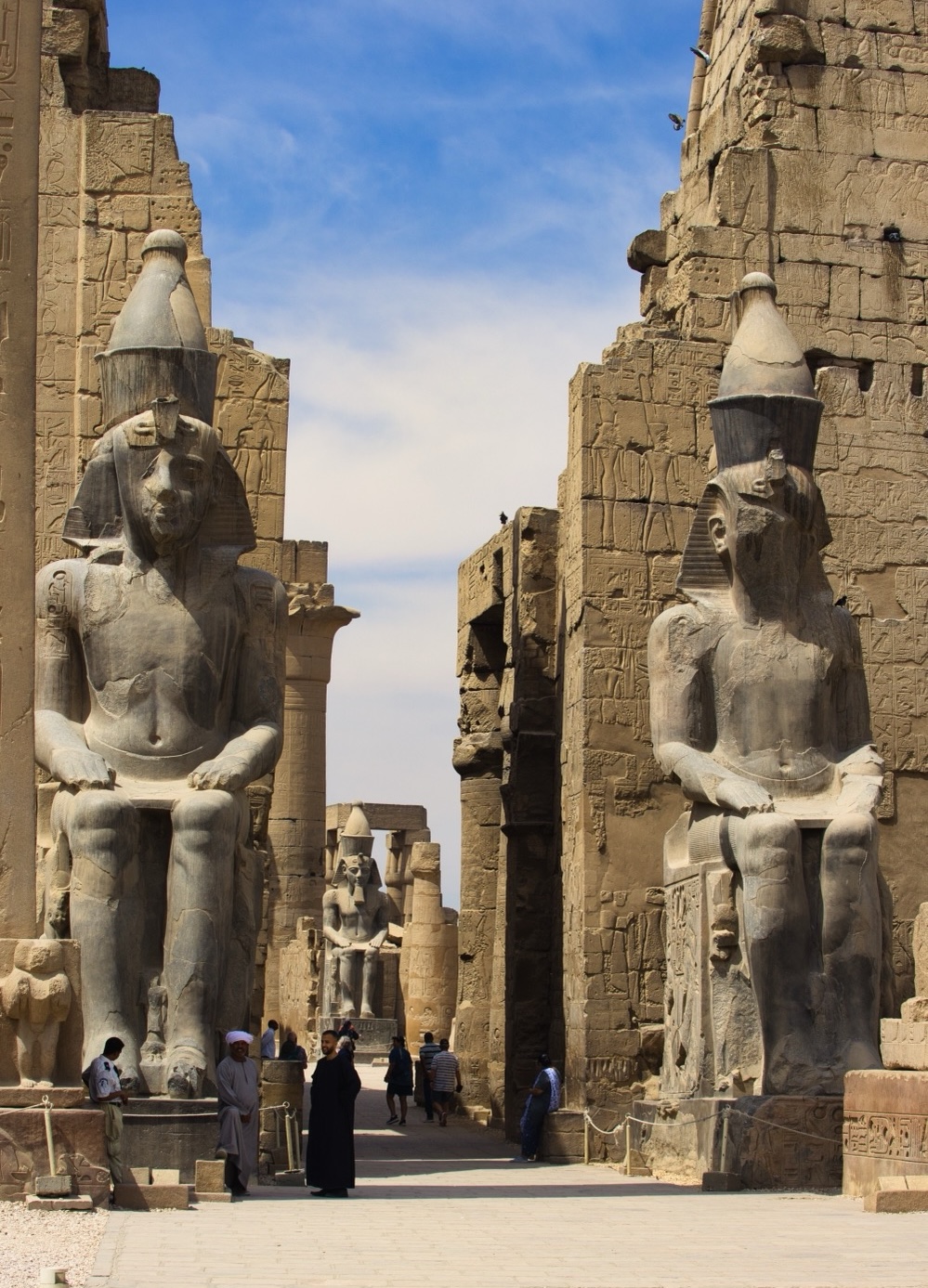
While Karnak edges it for scale, Luxor Temple holds its own, and the recently restored Avenue of Sphinxes running nearly 3km between the two complexes is one of the great processional ways of the ancient world. The colossal seated statues of Ramesses II at the entrance set an appropriately imposing tone. Luxor Temple is also one of the better sites to visit after dark, when it's lit up and the heat is more manageable.
Facts worth knowing:
- The Avenue of Sphinxes, originally lined with over 1,350 human-headed sphinxes, was fully excavated and restored in recent years and now stretches the complete 2.7km between the Karnak and Luxor Temples.
- A functioning mosque, Abu Haggag, sits on top of the temple's first courtyard, built when the temple below was still buried, and still active today.
- A shrine to Alexander the Great sits within the complex, and you'll see many alterations made by the Romans and early Christians.
Visited · Luxor west bank · Easy to reach · Nile Cruise Stop
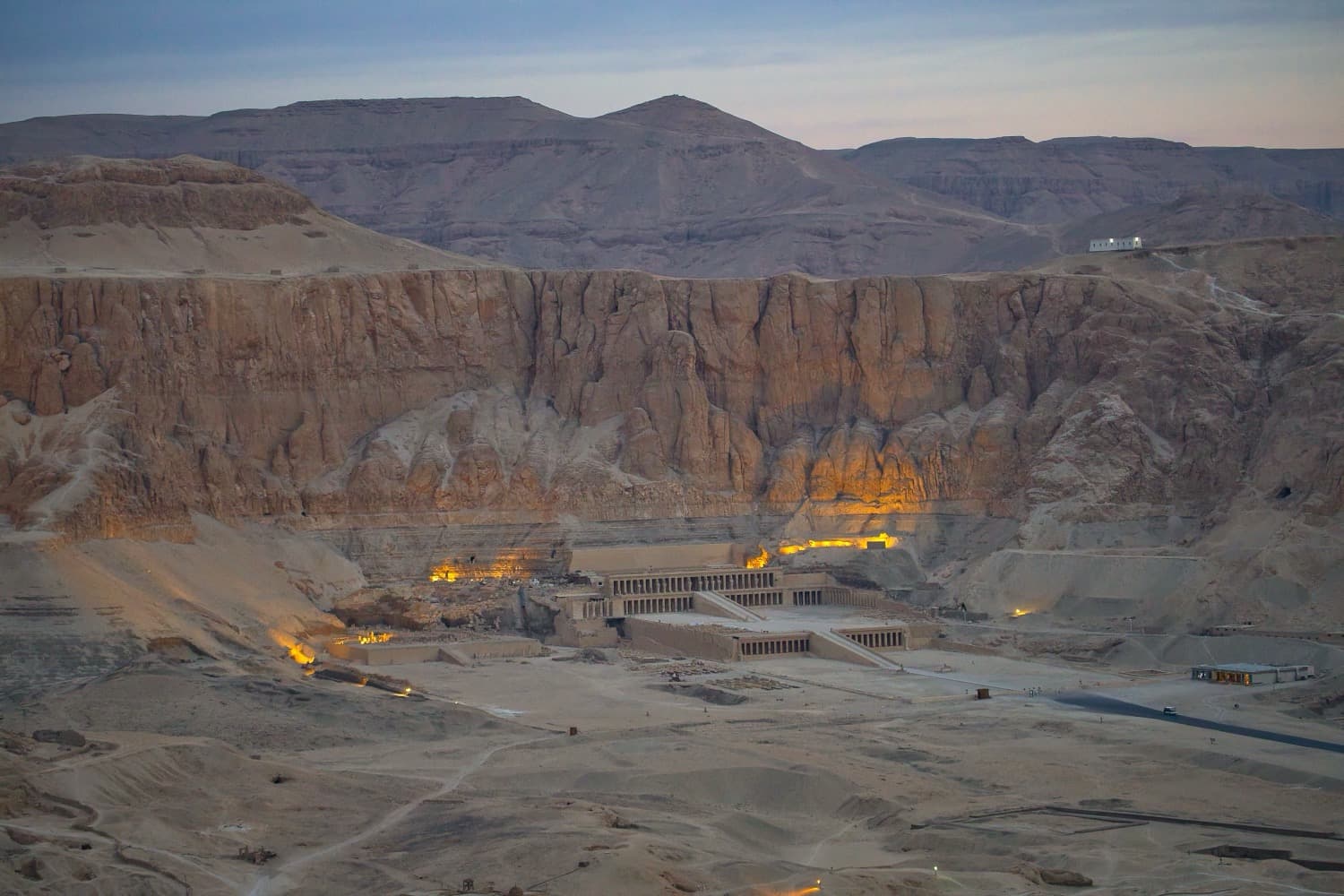
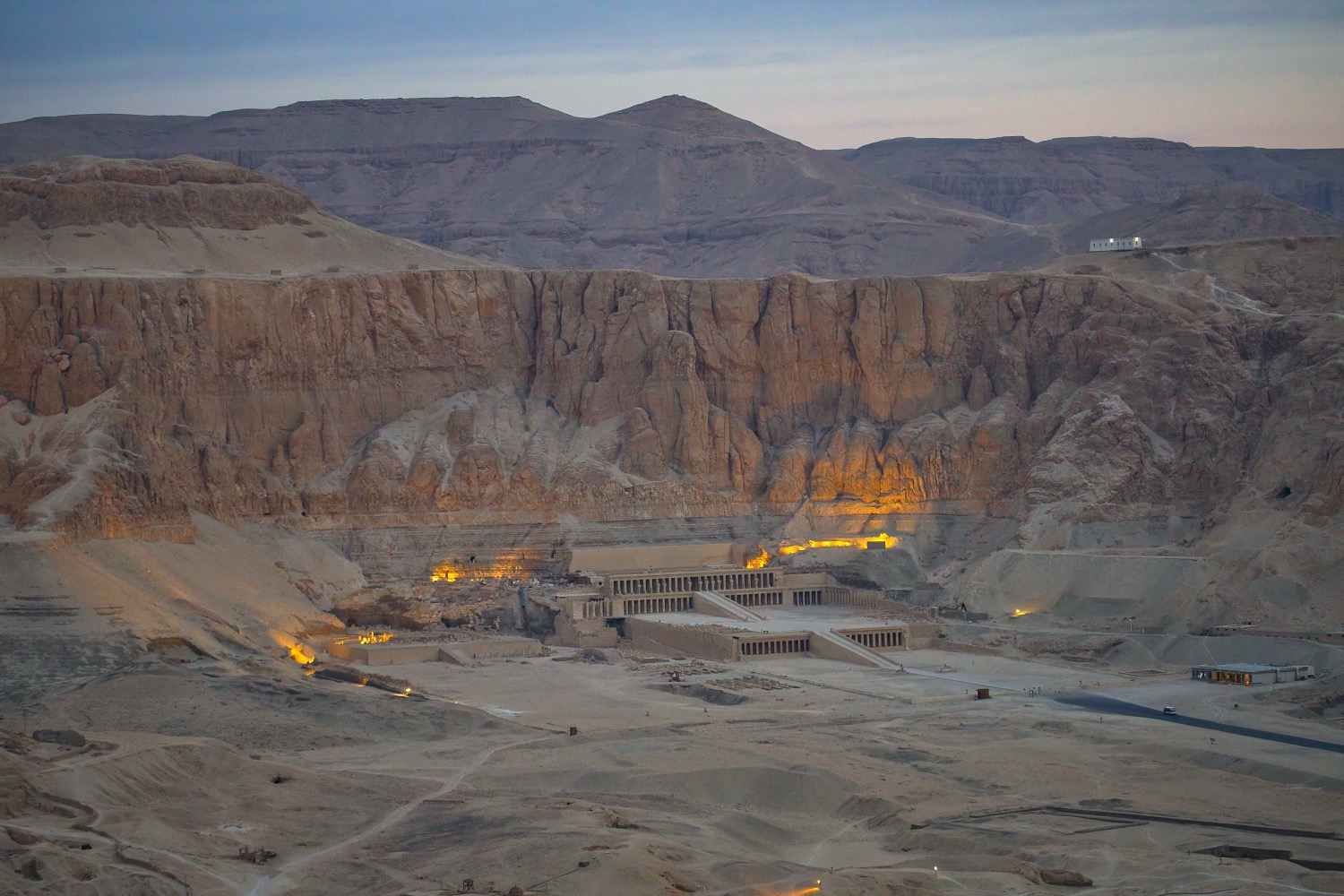
A mortuary temple rather than a religious complex, Queen Hatshepsut's temple at Deir el-Bahri is remarkable for its architecture. Three colonnaded terraces rise against the sheer face of a limestone cliff, unlike anything else built in ancient Egypt. The interior is sparser than most temple complexes, but the story of Hatshepsut herself, one of the few female pharaohs, who ruled effectively for around 20 years before being written out of history by her successor, is worth knowing before you visit.
Facts worth knowing:
- After Hatshepsut's death, her successor Thutmose III had her name and image systematically erased from monuments across Egypt, one of history's most deliberate attempts to erase a ruler from the record.
- The temple design, attributed to her architect Senenmut, was revolutionary and inspired no direct successors, making it genuinely one-of-a-kind in Egyptian architectural history.
Visited · Between Luxor and Aswan · Easy to reach · Nile Cruise Stop
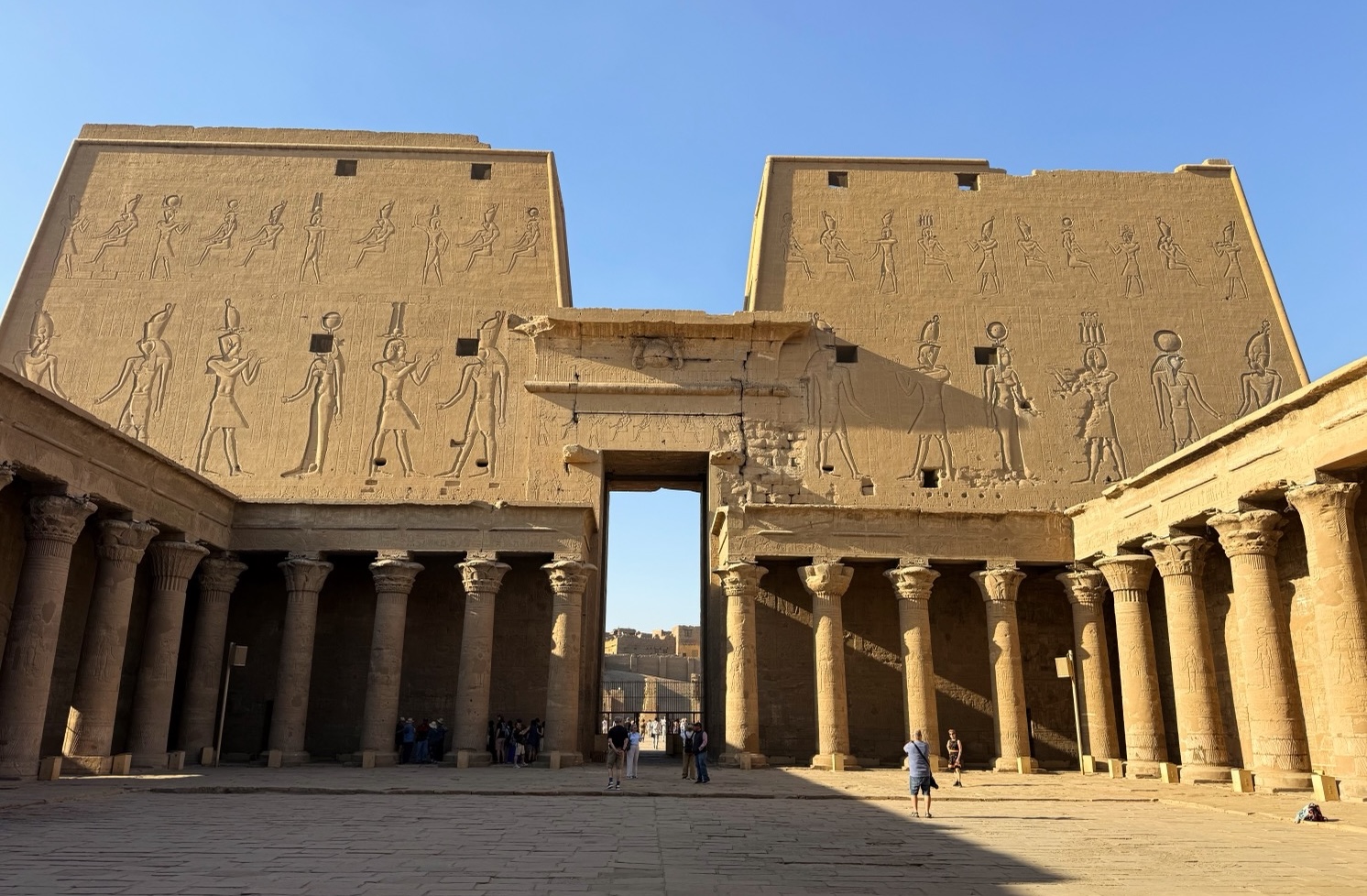
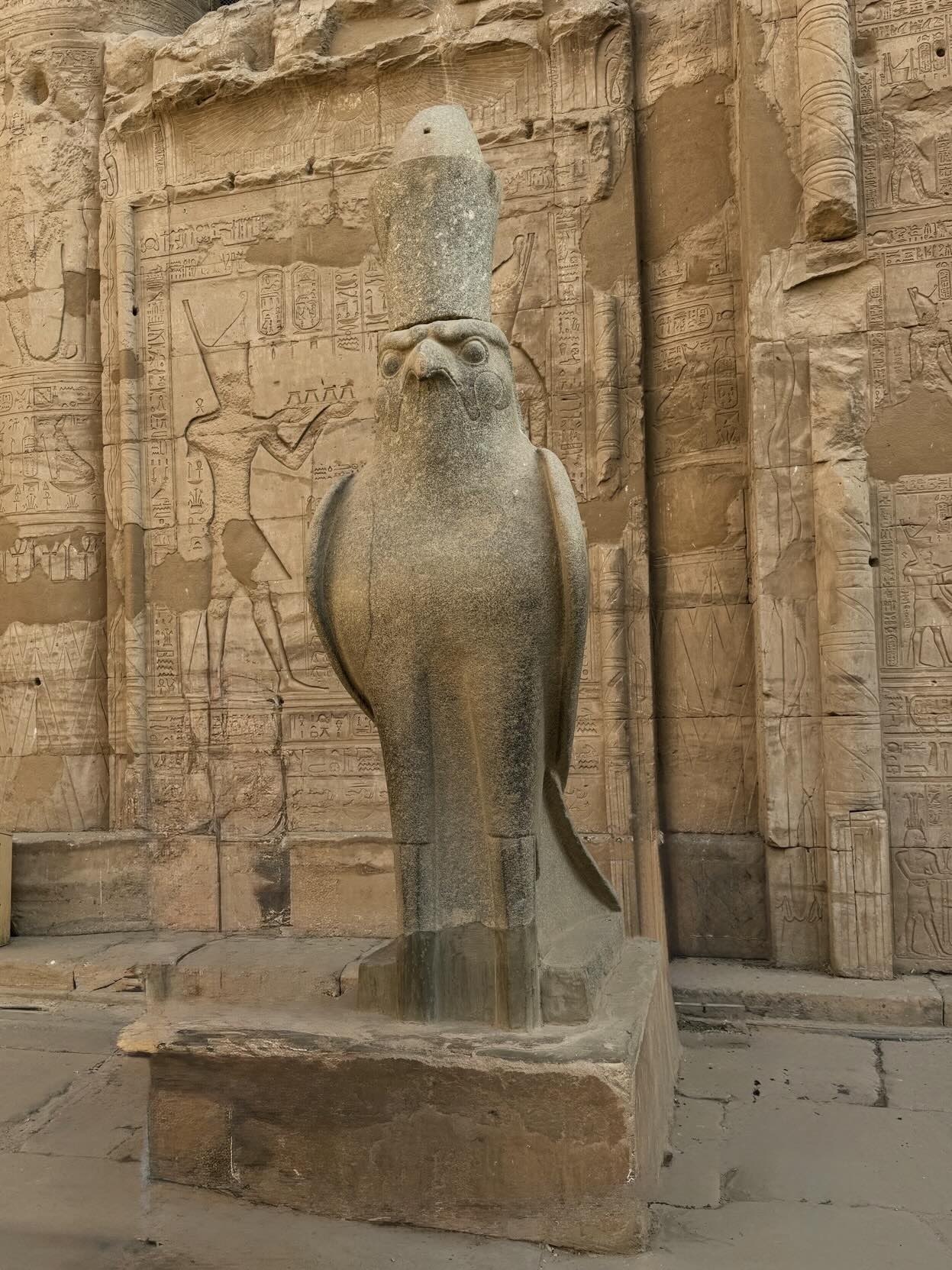
Edfu is the most structurally complete ancient Egyptian temple still standing, and its 36m entrance pylons create a genuinely imposing first impression. The flip side is that it has paid a visible price for surviving so long. Two centuries of tourist graffiti cover sections of the walls, and bullet holes left by Napoleon's bored brigades are visible in some of the carved faces. Large areas of decoration were deliberately defaced, first by early Christians erasing images of the gods, later by Arab settlers who used the interior as housing, leaving smoke stains on the ceilings. It is, in its way, a record of Egypt's complicated layers of history.
Facts worth knowing:
- A granite statue of Horus in falcon form at the entrance to the inner sanctuary is one of the best-preserved ancient sculptures in Egypt.
- The temple was built during the Ptolemaic period (237–57 BCE), long after the classical pharaonic era, but constructed deliberately in the older architectural style to assert continuity.
- The interior was buried under metres of sand for centuries, which paradoxically helped preserve its structure, and saved some carvings from being defaced; it was excavated by Auguste Mariette between 1860 and 1880.
Not visited · Between Luxor and Cairo · Harder to reach
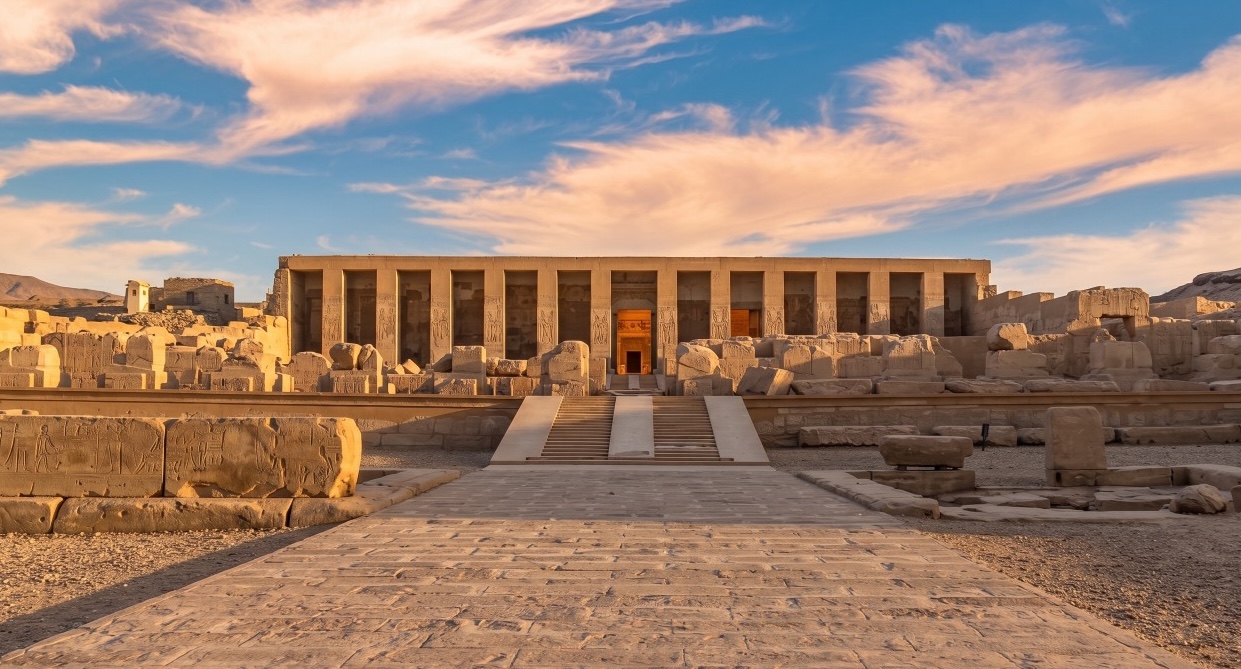
One of the oldest cities in ancient Egypt and home to the Temple of Seti I, which contains some of the finest carved and painted relief work surviving anywhere in the country. It sits well off the main tourist circuit, which keeps crowds low and the atmosphere quieter than most sites on this list, a genuine reward for those willing to make the detour.
Facts worth knowing:
- The Temple of Seti I contains the Abydos King List, a carved record of 76 pharaohs in sequence, one of the most important historical documents to survive from ancient Egypt.
- Abydos was considered the gateway to the afterlife in ancient Egyptian religion; pilgrims travelled here for thousands of years to leave offerings near the tomb of Osiris.
Not visited · Near Cairo · Easy to reach
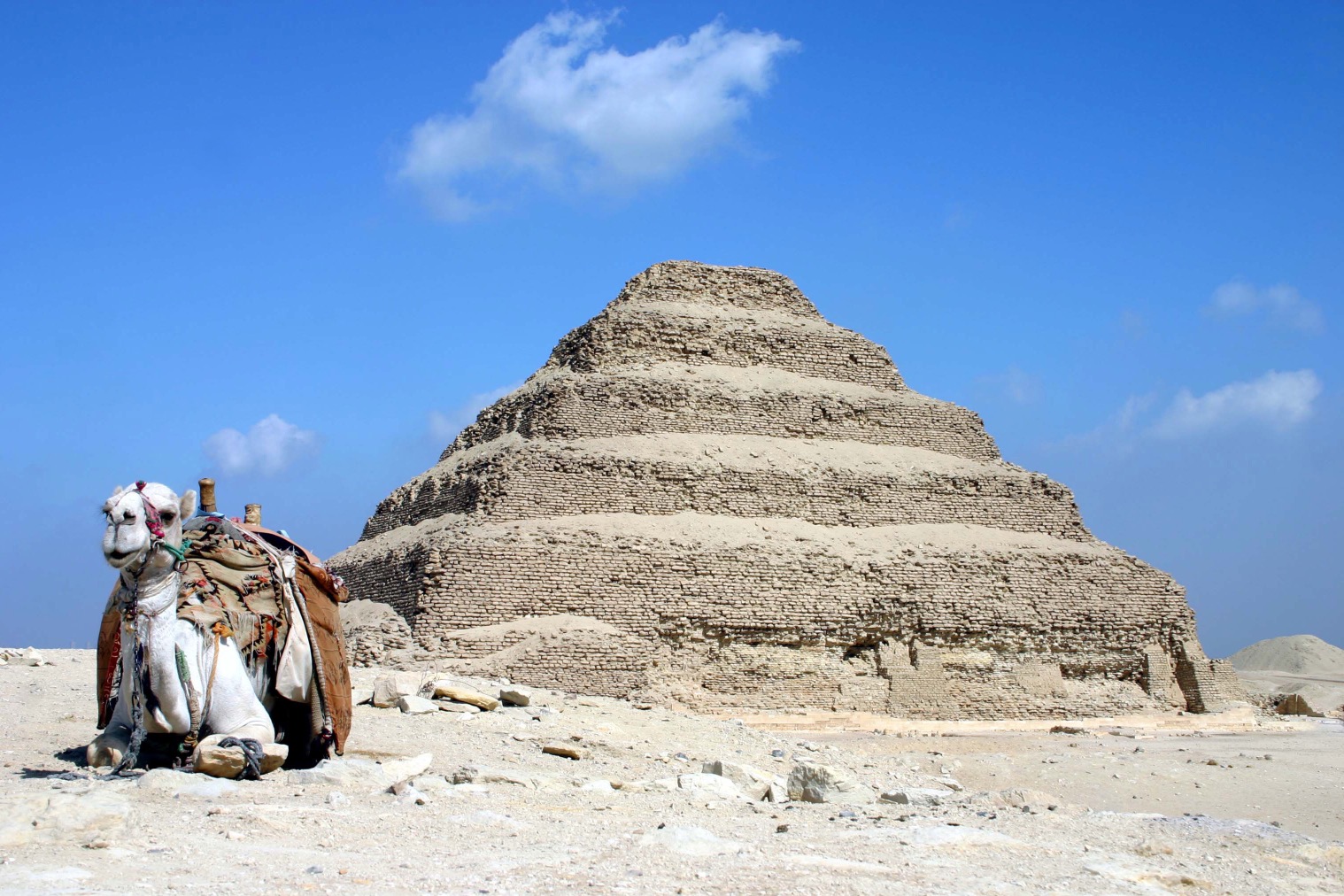
Saqqara predates Giza and offers a broader picture of how pyramid building evolved. It contains earlier, more experimental forms; the Step Pyramid of Djoser is the oldest large-scale stone structure in the world, and the cluster of differently shaped pyramids across the site shows the architectural development that eventually led to the smooth-sided perfection at Giza. Worth pairing with Giza if you have an extra half-day.
Facts worth knowing:
- The Step Pyramid of Djoser (c. 2650 BCE) was designed by the architect Imhotep, who was later deified for his achievements.
- Saqqara served as the necropolis for the ancient capital Memphis and contains tombs spanning 3,000 years, from the First Dynasty to the Coptic era.
Credit: Charles J Sharp
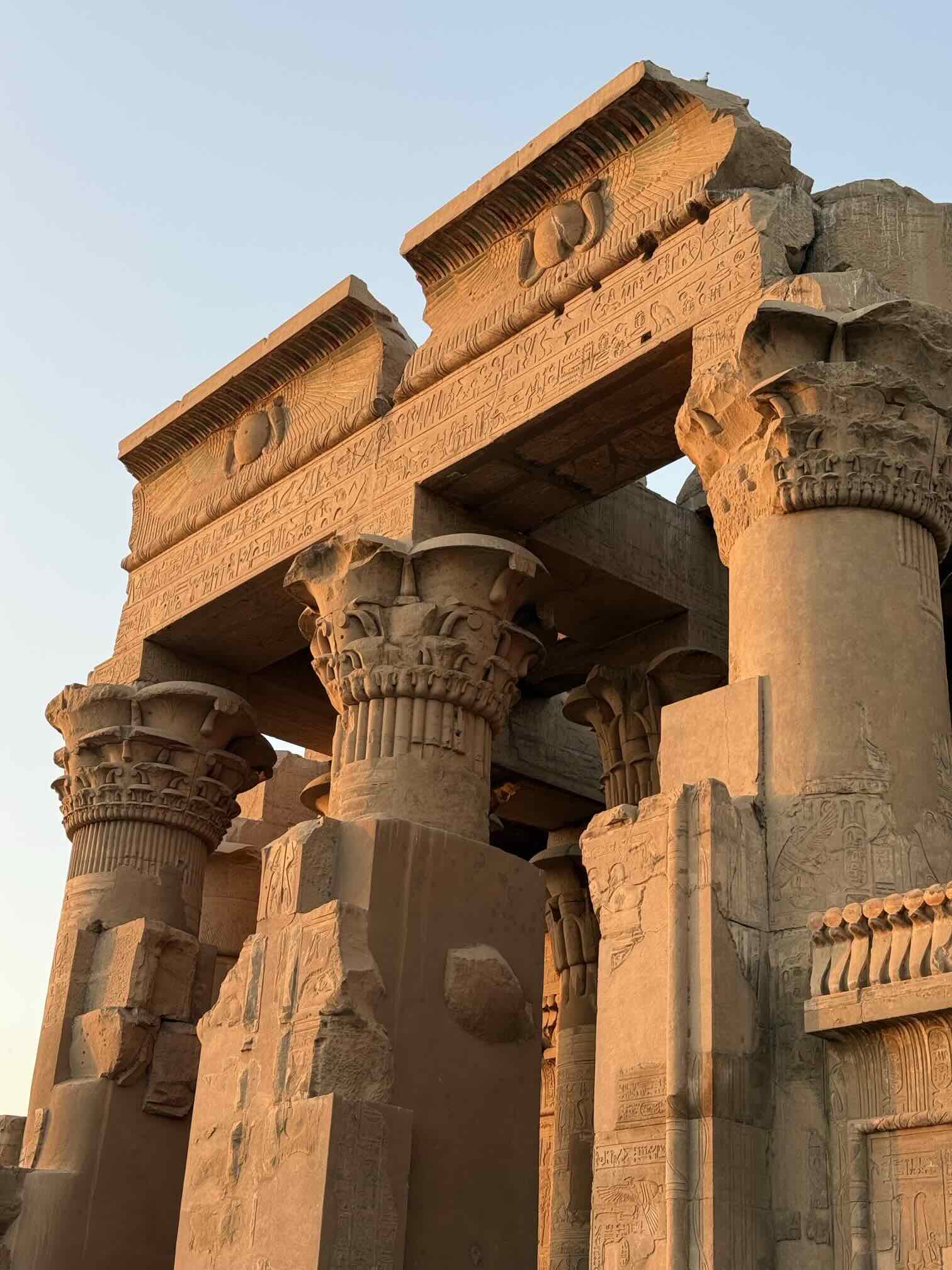
Visited · On the Nile, between Edfu and Aswan · Easy to reach · Nile Cruise Stop
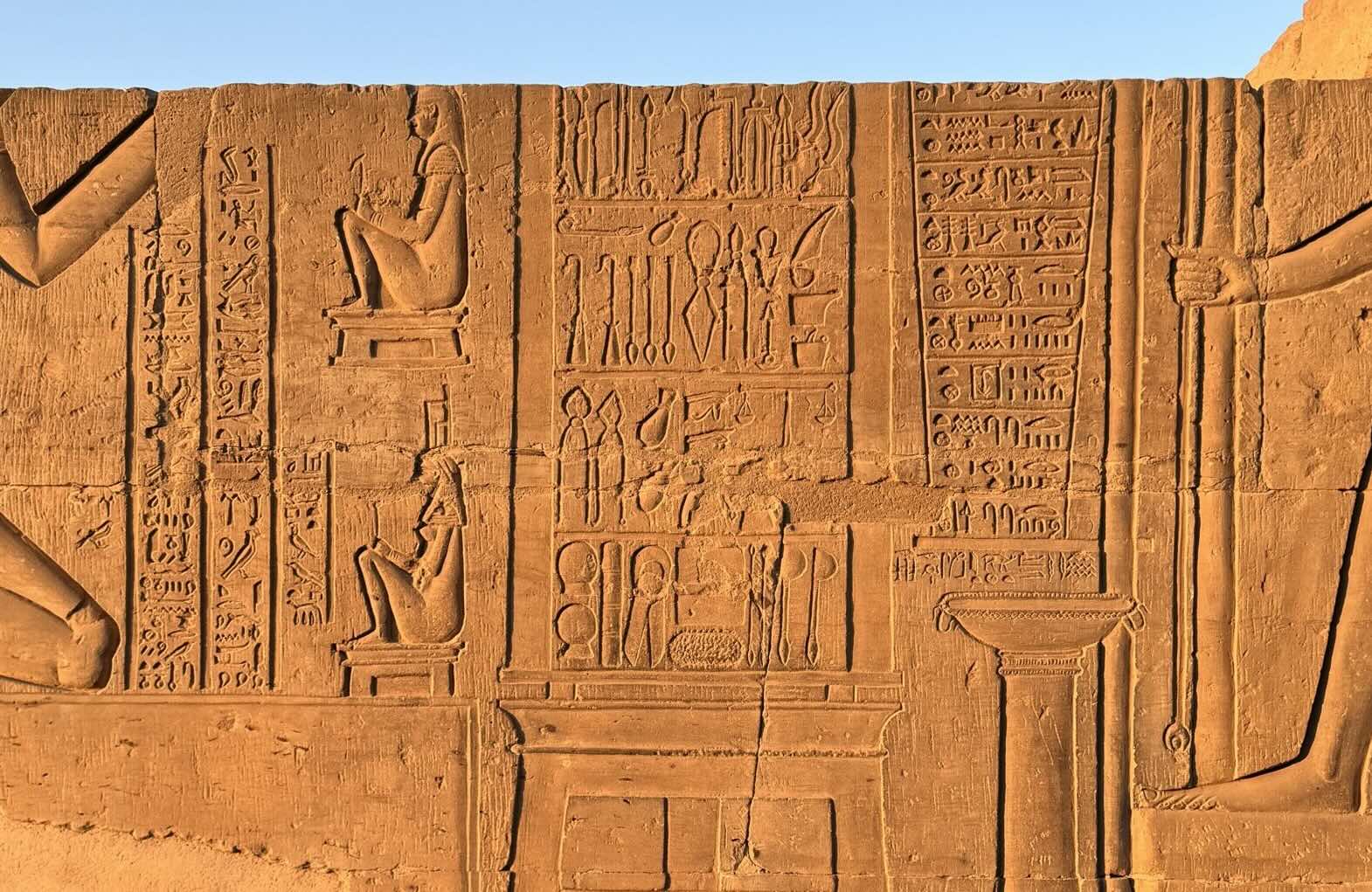
Kom Ombo is more ruined than most sites on this list, but it makes up for it with a striking setting and some genuinely unusual stories. Catching it at sunset from the Nile bank is one of the more photogenic moments of any Egyptian itinerary. Its most distinctive feature is its perfectly symmetrical dual design; the whole complex was built to honour two gods simultaneously, with twin sanctuaries, twin entrances, and twin sets of rooms running side-by-side throughout.
Facts worth knowing:
- Kom Ombo is the only ancient Egyptian temple dedicated equally to two gods: Sobek the crocodile god, and Horus the Elder.
- Carvings on one of the outer walls depict what may be the earliest known surgical instruments, including scalpels, forceps, and bone saws.
- Over 300 mummified crocodiles were found buried nearby; many are now displayed in the on-site Crocodile Museum.
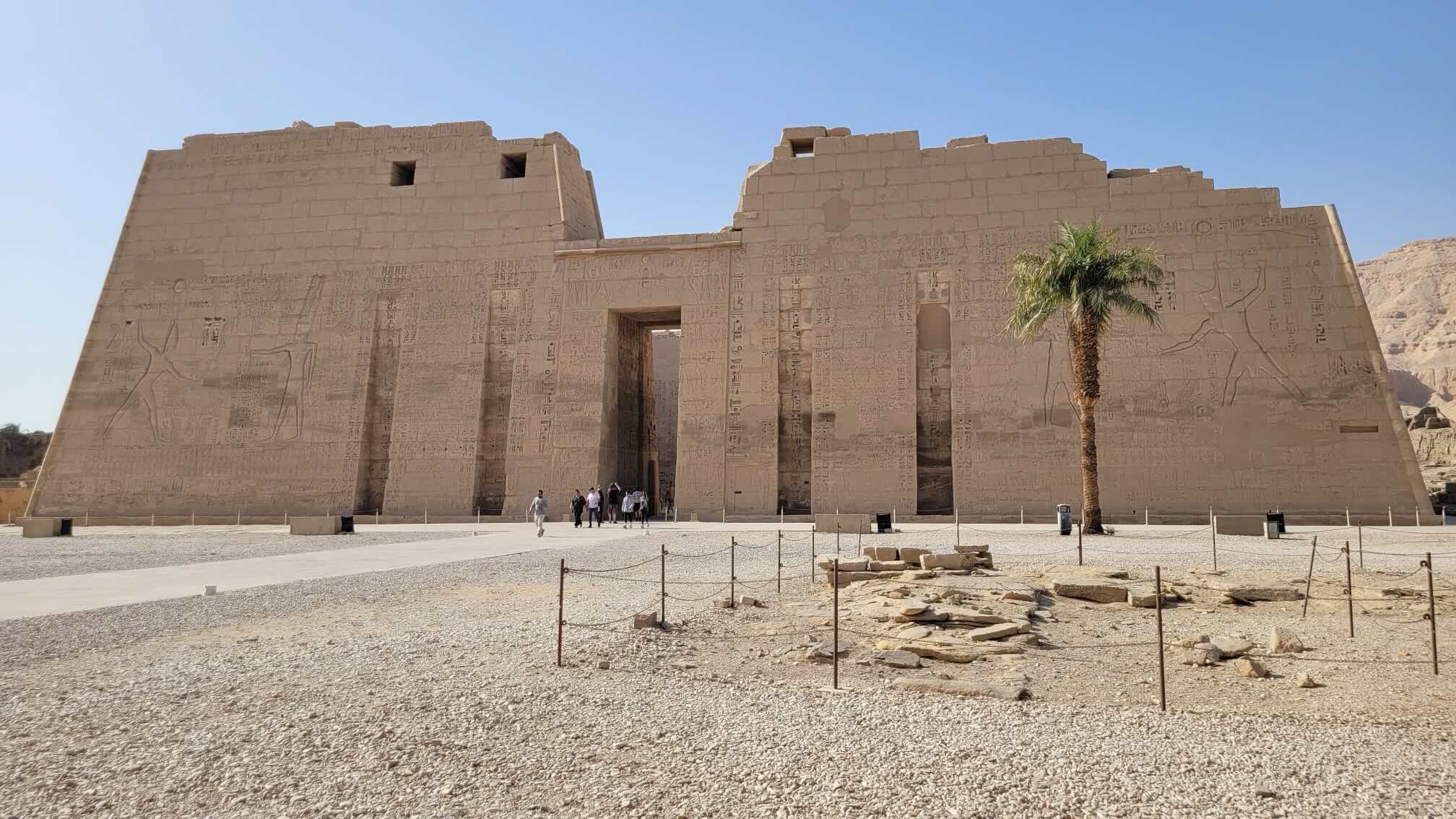
Not visited · Luxor west bank · Easy to reach
The mortuary temple of Ramesses III is less visited than Karnak or Luxor Temple but arguably rivals them for the quality of its painted reliefs, including detailed and vivid battle scenes. If you've already covered the main Luxor sites and have time on the west bank, this is the natural extension.
Facts worth knowing:
- Medinet Habu contains some of the most detailed military reliefs in ancient Egypt, including records of the Sea Peoples invasion, one of the few surviving ancient accounts of this mysterious group.
- The complex served as an administrative centre and refuge during times of instability in the late New Kingdom, and was continuously inhabited well into the Islamic period.
Credit Nabeggat
Not visited · Near Cairo · Easy to reach
Home to the Bent Pyramid and the Red Pyramid, the transitional forms between step and true pyramids that explain how Giza became possible. Rarely crowded, the Red Pyramid can be entered, and the site pairs naturally with Saqqara. For pyramid enthusiasts this is a priority; for everyone else, Giza and Saqqara will satisfy.
Facts worth knowing:
- The Bent Pyramid's distinctive shape (it changes angle midway up) is thought to reflect a mid-construction change in design, possibly after structural problems emerged.
- The Red Pyramid is the third largest pyramid in Egypt and the first true smooth-sided pyramid ever completed, predating Giza's Great Pyramid by a generation.
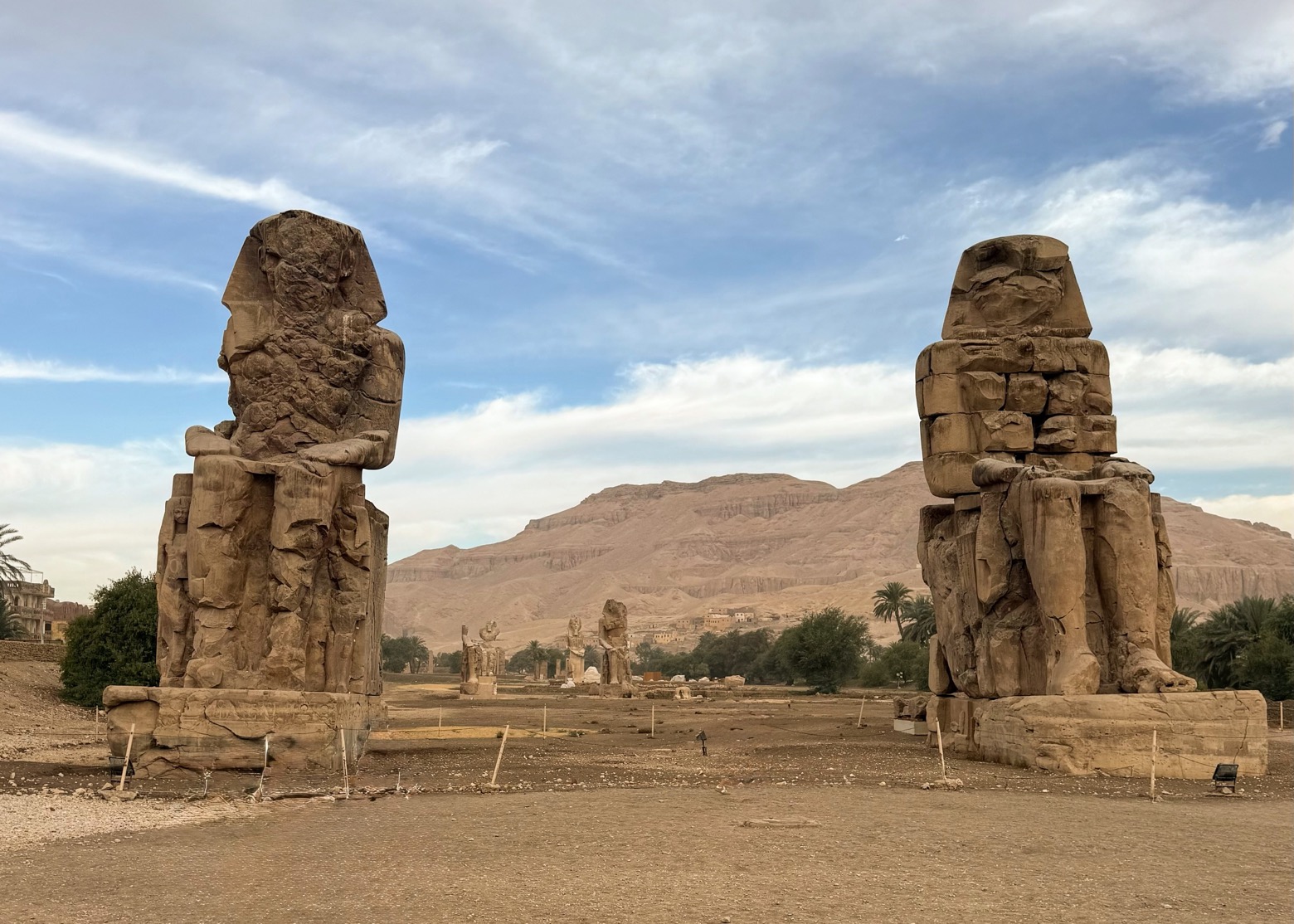
Visited · Luxor west bank · Easy to reach · Nile Cruise Stop
Two massive 18-metre seated statues on the Luxor west bank are all that remains of what was once the largest mortuary temple in Egypt. Free to visit and impossible to miss if you're already on the west bank. Worth a stop, but this is not a destination in itself.
Facts worth knowing:
- For centuries, one of the statues emitted a singing or whistling sound at dawn, likely caused by temperature-driven air movement through cracks; ancient tourists came specifically to hear it. The sound stopped after Roman restoration work in 199 CE.
- The temple behind the statues, the Mortuary Temple of Amenhotep III, was largely demolished in antiquity; its stones were recycled for other building projects.
Keep an eye out for our next blog post about how to plan your trip to Egypt. We'll cover how to get around, where to stay, Nile cruise options, and more.